It is one of the most alluring opportunities in global energy.
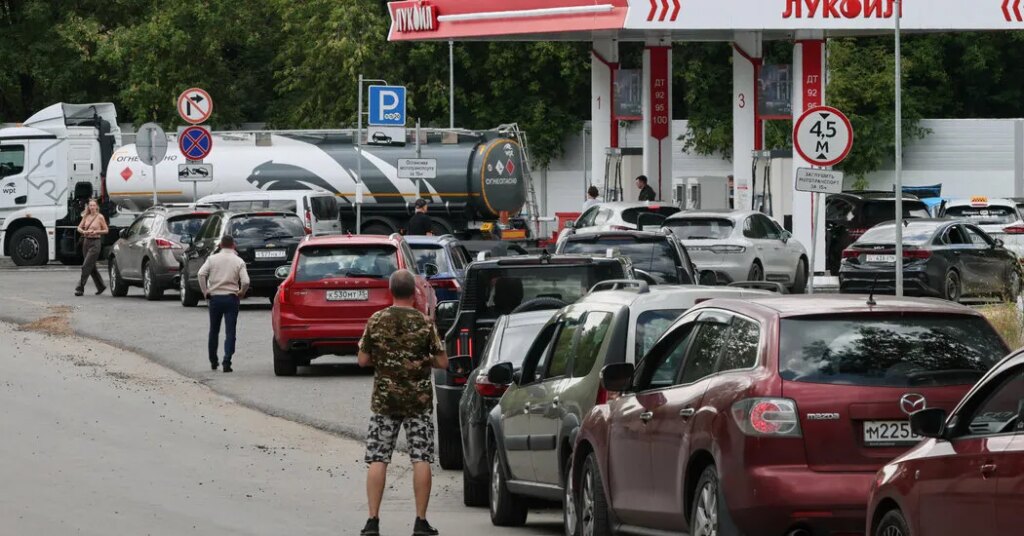
The foreign assets of Lukoil, the Russian energy giant, are being sold off at fire sale prices because U.S. sanctions have made them nearly worthless for investors in Russia. Gas stations in the United States, refineries in Eastern Europe and oil fields around the world are up for grabs.
Now, the process of selling off those assets has become intertwined with White House efforts to negotiate an end to Russia’s war in Ukraine. And some of the key figures poised to benefit from the Lukoil sale have ties to President Trump’s family and his associates — including the administration’s envoys to Russia. The revelation raises new questions about conflicts of interest in an administration that has regularly mixed personal interests with national interests.
Here are five takeaways from The New York Times’s investigation of the proposed transaction.
Completing the deal is a factor in Ukraine peace talks.
The Trump administration has long argued that discussing business deals with President Vladimir V. Putin of Russia could help convince him to mend ties with the West and end his war on Ukraine. The administration signaled recently that some deals could move forward before the war ends. But the specifics have been murky until now.
When Mr. Trump’s envoys, Jared Kushner and Steve Witkoff, met with Mr. Putin at the Kremlin last month, the Russian president asked them to get the Lukoil deal done. The Americans said they would work on it, reasoning that doing so could build good will with the Kremlin while also lowering global energy prices.
The deal’s leader is a big political donor to Mr. Trump.
The leader of the investor group is Todd Boehly, a billionaire asset manager and co-owner of the Los Angeles Dodgers, among other holdings. He is also a major donor to Mr. Trump’s political causes. He contributed $1 million to Mr. Trump’s affiliated MAGA Inc. political committee last December, just as negotiations on the Lukoil deal were heating up.
Family ties to the investors are widespread.
Mr. Trump; his three sons; Mr. Kushner; Ivanka Trump, one of the president’s daughters; and the Witkoff family all have financial ties to partners in the deal, which requires sign off from the Trump administration and the Kremlin. The Trump family and the president’s advisers do not have a direct financial stake in the transaction. But their business partners would benefit financially if the multibillion-dollar deal is completed.
The investors who have teamed up with Mr. Boehly include one of the richest investment funds in the Middle East, International Holding Company, which is overseen by Sheikh Tahnoon bin Zayed Al Nahyan, a member of the Abu Dhabi royal family.
Sheikh Tahnoon separately runs outfits that own nearly half of World Liberty Financial, the cryptocurrency company co-founded by Mr. Witkoff and still run by Zach Witkoff, one of Steve Witkoff’s sons. Donald Trump Jr. and Barron Trump, two of the president’s sons, also are stakeholders and co-founders of the company, and so they too are effectively business partners with Sheikh Tahnoon.
Sheikh Tahnoon, one of the most powerful players in Abu Dhabi and the United Arab Emirates, controls companies that oversee Lunate, an investment fund that took a major stake in the private equity firm Affinity Partners, which was set up by Mr. Kushner after he left the White House at the end of Mr. Trump’s first term.
Another investor in Mr. Boehly’s group is a pair of Syrian-born Qatari billionaires, Moutaz Al-Khayyat and his brother Ramez Al-Khayyat, who have partnered with Mr. Kushner and Ms. Trump to build a multibillion-dollar resort complex planned for the Mediterranean coast of Albania.
Large chunks of the profits would go overseas.
Trump administration officials are celebrating how the Boehly-backed deal would help U.S. energy security, as the package includes everything from oil production sites to refineries and gas stations. The U.S. government would also take a direct stake in the new enterprise via the U.S. International Development Finance Corporation, an agency that helps finance projects overseas. But given the makeup of the investment group, a large share of the resulting company — and the profits it creates — would be foreign owned, according to participants in the negotiations.
Another prominent bidder would lose out.
Approving the Boehly deal now being negotiated with the help of the White House would mean rejecting a competing offer from Carlyle, a Washington-based global investment management firm that already has investments in refineries in Europe. Carlyle’s bid, by comparison, would mean an all-American owner. But Carlyle does not have similar financial ties to Mr. Trump’s family and political advisers.
The post Trump, Putin, Ukraine and an Oil Deal: 5 Takeaways appeared first on New York Times.