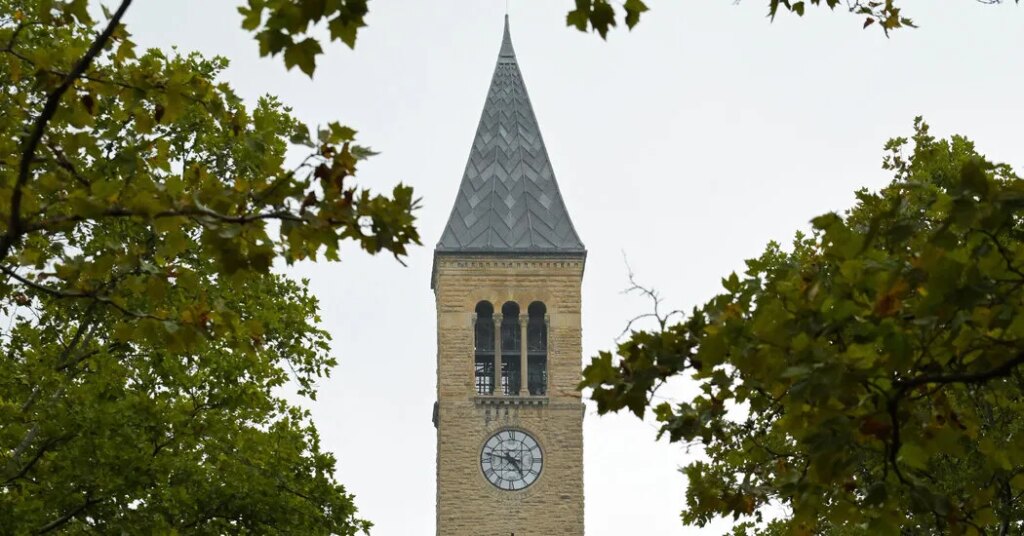
A former sophomore at Cornell University became known to the nation as Jane Doe this week when prosecutors reopened an investigation into claims that she was raped by several men at a Chi Phi fraternity house two years ago.
Last month, Jane Doe filed a lawsuit against the university, the fraternity, her sorority and the seven men who she says assaulted her and plied her with ketamine that night in 2024. Days later, a student newspaper, The Cornell Daily Sun, criticized the university for the way it had handled its internal investigation — and published an editorial identifying the men. (The men have denied wrongdoing.)
The New York Times has obtained hundreds of pages of confidential investigative files that provide more details about that night and the school’s response. In an edited conversation, Nikita Stewart, Metro editor; Sarah Garland, education editor; and Susan Wessling, Standards editor, explained how our coverage unfolded this week.
Student journalists at Cornell have been covering this story aggressively. How has this become a major story for The New York Times? And were we late to the story?
NIKITA STEWART: We reviewed the lawsuit, but we wanted to approach it with an abundance of caution. We wondered how we could find a way in, and when the local district attorney said that he would reopen the case, we seized the opportunity.
Our coverage has taken a restrained approach to identifying the men accused of sexual assault. Can you walk us through the conversations and considerations?
SUSAN WESSLING: There’s certainly a fairness concern — while these men have been accused of something terrible, they haven’t been charged with anything. And whatever we publish has to be accurate, so we’ve been working to gather the facts. A lawsuit offers only one side of a situation. As the men’s names have been relevant to specific parts of our coverage, we have published them, including in a story on Thursday describing the accounts they gave to university officials about what happened that night.
NIKITA: When the lawsuit was filed, we had concerns that the men were not public figures and not charged. There was a lot to untangle. That gave us pause. Once the district attorney said he was reopening the case, we reassessed and decided that we would use the names in context and with specificity.
Some messages exchanged over Snapchat by students — and now shared widely on social media — were obscene. We have not directly quoted a number of those messages or published screenshots. Can you walk us through our thinking, and how we decide what to show to readers?
NIKITA: We consult with Standards editors on those decisions. We have to walk the line of being transparent with our readers while making sure our publishing of the messages is not gratuitous. We are still combing through records and will make decisions on what serves the story and the reader.
SUSAN: We have a high bar for publishing obscene or offensive comments. When the words themselves are critical to understanding the story, we make the decision to tell or show readers precisely what was said. So every day we’re making judgment calls about whether the specifics of those messages are relevant to understanding each story — and in many stories, they won’t be.
The Times seeks precision, facts and details in its reporting and writing. But in some situations, we have paraphrased the students’ language. For example, in one article we reported that fraternity men were inviting members to “join in, using a crude name for female genitalia” instead of directly quoting a particular message. In a story published on Thursday, we used the lewd quote. Why now, and how did we land there?
SUSAN: In a broad overview piece, like the What We Know article that the paraphrase appeared in, we made the call that the exact language wasn’t crucial to the point we were making. In a different story, where we’re recounting the specifics of the Cornell investigation and what the men did and said, the exact language helps a reader understand their state of mind, and the atmosphere of that night.
NIKITA: In the case of our article of the men’s accounts, we felt it was important to show the language and to put the reader on campus at that time.
Are we assuming that readers either already know what we’re talking about or will find the messages themselves elsewhere?
SUSAN: We do know that people might already know what we’re talking about, but we don’t make our decisions based on those assumptions. We make judgments about what we think is right for each story. And we’re aware that not everyone will agree with those judgments, even internally. There has been real debate in the last few days about how far to go, and the risks of amplifying something offensive and off-putting versus the risks of what some see as sanitizing reality. Lots of people weigh in, and we make the best call we can.
We have over 1,000 pages from an internal Cornell report on this matter. What can you say about how you received such a highly sensitive report? Walk us through the process of examining so much material.
NIKITA: I will not discuss how we obtain information like this, but we verified their authenticity and then our Metro investigations editor took the lead in assembling a team of eight reporters to read the files.
SARAH GARLAND: We confront this kind of reporting fairly often. The Epstein files obviously come to mind. A.I. is now really helpful in guiding reporters. We have tools that can help us search for and catalog information. But it’s never a substitute for pulling in as many people as we can to just read. Having people focused on different aspects can also help, so one or two people are following a particular thread through the documents.
There’s often a rush to judgment on social media. What steps do we take to cut through that? Do we ever fall short?
SUSAN: We cut through the online rush to judgment by doing reporting. We’re after the truth, and getting at the truth involves digging below the surface. Our commitment to accuracy and fairness means we have to double-check and reach out to the people involved to try to get their side — before we publish anything. That doesn’t mean we have the full picture on the first day of any news story. But we can say what we do know, and be humble about what we don’t know and are still trying to understand. It’s often also important to say what hasn’t happened — in this case, for example, to point out that the men in the Cornell case haven’t been charged, and that the allegations in Jane Doe’s lawsuit haven’t been tested in court.
SARAH: I can’t count the number of colleagues who have come to me urging caution as we examine these allegations. We’ve had group discussions and one-on-one conversations about how to make sure we are being fair and careful about presenting the facts at every step.
NIKITA: This is one of the reasons it was so important for us to obtain the records that we did. We could examine the investigation and recollections of events, without social media speculation.
This story involves young people — both those directly involved and other Cornell students who have spoken to us about the case. What do we take into account when interviewing and writing about people of this age group?
SARAH: We are extremely careful about how we write about and quote minors, but we have similar discussions about how to write about young people, even if they’re over 18. They’re just getting their adult lives started. And if we’re talking to them for a news article, it’s often at a vulnerable moment, or about a sensitive topic. So we always try to weigh the pros and cons. We want to include their voices, but we want to do so with care.
SUSAN: We definitely weigh the pros and cons, as Sarah said. The college students are adults, but they probably haven’t thought much about dealing with reporters, or what it means to have their thoughts published in The Times.
NIKITA: In this modern age, young adults are accustomed to controlling their narratives through social media. We saw this, for example, during student protests when some said even being photographed on a public street was invasive. We want to tell their stories accurately and fairly, and our reporters have to approach many young people who are reluctant to speak to the media with sensitivity.
This case has ignited debate about sexual violence on college campuses, Greek life, Title IX and accountability at elite universities. What role does The Times play in this conversation?
SARAH: It has. And these are perennial issues. I think our role is to ask the same questions readers are asking: How do colleges respond to reports of sexual assault? Are they doing enough to prevent it? To punish it? How should it be defined? What is the role of government — the police, the federal government?
We are ideally channeling all of that to find out what the experts say, what colleges say, what students on campus say. We also want to learn about context and history — we’ve seen situations like this before and here is what happened back then. Then, my hope, my goal, is that presenting what we find to readers makes these debates more informed. I hope our coverage is helping people — whether it’s colleges, politicians or voters — decide what to do next.
We wrote a story about The Cornell Daily Sun and how the journalists there have been covering this situation since 2024. How closely do Times journalists follow college news organizations, and what do you think of their work?
SARAH: Every morning I wake up and drink my first cup of coffee while scanning through a long list of college newspaper sites. The reporting these student journalists do helps me see trends cutting across campuses and get a sense of what is important for college students right now. And fairly often, college papers are the first ones to break big news stories on their campuses, and we have to chase after them.
The post How We’re Reporting on the Cornell Rape Investigation appeared first on New York Times.