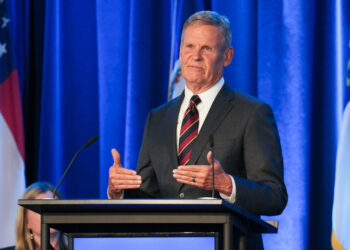
An oil pipeline advanced by Prime Minister Mark Carney of Canada on Thursday could help him weather the economic turmoil caused by President Trump’s trade war and ease a separatist threat to national unity in Alberta.
The pipeline would connect Alberta’s landlocked oil sands to an expanded port on British Columbia’s Pacific Coast, increasing Canada’s ability to sell oil to Asia and other markets beyond the United States. Alberta has long sought it.
The announcement that it is the first major project to be fast-tracked through Mr. Carney’s streamlined regulatory and environmental review process came less than three weeks before Albertans vote on whether to remain a part of Canada or hold a separation referendum.
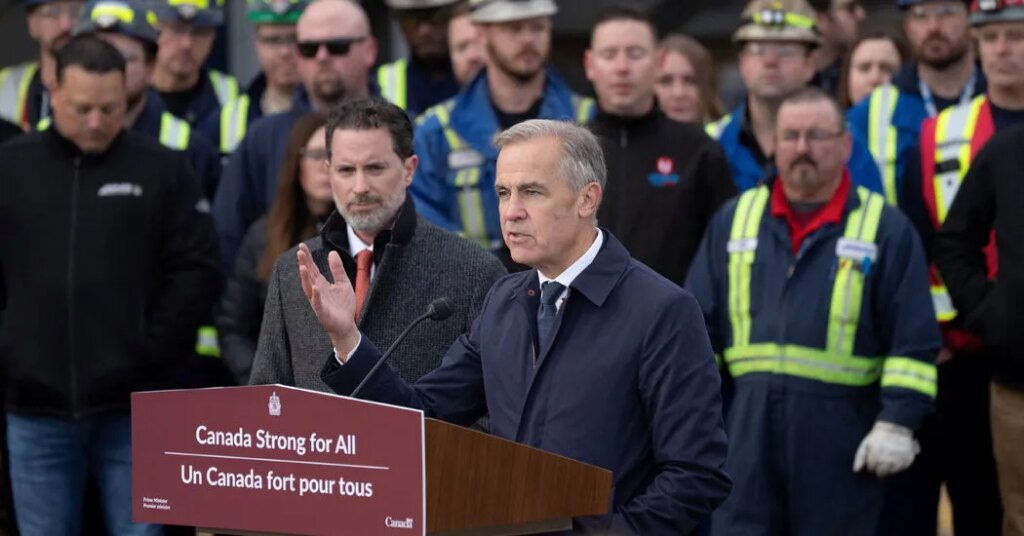
Standing before a building sized oil sands dump truck in Fort McMurray, Alberta, the center of the petroleum reserve, Mr. Carney pitched the pipeline as a symbol of what a united Canada can achieve.
“It is a demonstration of the power of Canada,” he said, standing with Danielle Smith, Alberta’s conservative premier, usually a fierce critic of the federal government. “Canada’s working.”
Ms. Smith, who was on the verge of tears last month as she described Albertans’ grievances with Canada, agreed.
“There’s always going to be issues where we might have some disagreement,” Ms. Smith said. “But the approach that I’ve seen the government of Canada take is one where they genuinely want to identify problems and genuinely solve them — and I think that that’s going to demonstrate that Canada can work.”
In a referendum on Oct. 19, Albertans will be asked whether they want to remain in Canada or hold another vote on leaving the country. Ms. Smith supports staying, but much of her support within the United Conservative Party comes from hard-line separatists.
Many other Canadians, particularly outside Alberta, are less enthusiastic about the oil pipeline. which by current estimates would cost between 35.2 billion and 43.7 billion Canadian dollars. The federal government will spend another 10 billion to upgrade a Vancouver-area port so it can dock tankers able to carry 2 million barrels of oil.
Mr. Carney said the pipeline would be a major step forward toward reducing Canada’s reliance on the U.S. market, which takes about 90 percent of its oil exports. Oil and gas are Canada’s largest exports and account for its merchandise trade surplus with the United States. Mr. Trump has repeatedly cited that surplus to justify his tariffs on Canadian goods and has recently imposed import bans on some Canadian products.
The oil sands are also Canada’s largest source of carbon pollution, and environmentalists say the pipeline will only worsen that. Filling the pipeline would require oil sands companies to increase production by at least 1 million barrels a day. Recovering and separating oil in the sands involves burning large amounts of natural gas.
On Thursday, Mr. Carney said that the project is linked to an agreement with oil companies to build a network in Alberta to capture their carbon emissions and bury them underground. But that agreement is not binding, and it is unclear who will pay for the system or whether it is technically and economically viable.
Environmentalists are also concerned about the risks to marine animals and oil spills from the port expansion and pipeline. On Tuesday, Mr. Carney announced new measures that, he said, would alleviate those worries.
Questions also remain about the pipeline’s economic viability. Although it was pitched at a recent investment summit hosted by Mr. Carney, only one private investor has come forward and will hold a 10 percent stake. The federal government will be the largest shareholder.
The new pipeline is expected to largely follow the route of the Trans Mountain pipeline, which Justin Trudeau’s Liberal government bought and expanded. While that project opened Asian markets to Canadian oil companies, it earned the Trudeau government little to no political credit in Western Canada.
Under the plan announced Thursday, the pipeline will be reviewed as it is planned and designed. A new, single agency will conduct the various reviews under different laws simultaneously and will be responsible for consulting Indigenous communities along the route. The pipeline and its construction will create jobs for Indigenous people, and Indigenous owned businesses will be suppliers during construction, the government has said. All approvals, Mr. Carney said, will be in place by Sept. 1, 2027.
The post Canada’s Proposed Oil Pipeline Offers Carney Relief From Domestic and Global Turmoil appeared first on New York Times.