Marcus W. Brauchli, a former managing editor of the Wall Street Journal and executive editor of The Post, is co-founder and managing partner of North Base Media.
Nineteen years ago, Rupert Murdoch was closing in on his acquisition of Dow Jones & Co., publisher of the Wall Street Journal, to considerable alarm in the high church of American journalism.
The Bancroft family, which had owned Dow Jones since 1928, agonized over whether to sell one of the country’s most trusted news outlets to the owner of a media empire that included Fox News and a global stable of boisterous tabloids and newsstand broadsheets. One salve to the family’s worries was the creation of a “special committee” of journalistic eminences empowered to call out future political or commercial meddling.
The committee even had the right to approve the appointment or removal of the Journal’s top editor — at the time, me. Yet four months after the transaction, I was out.
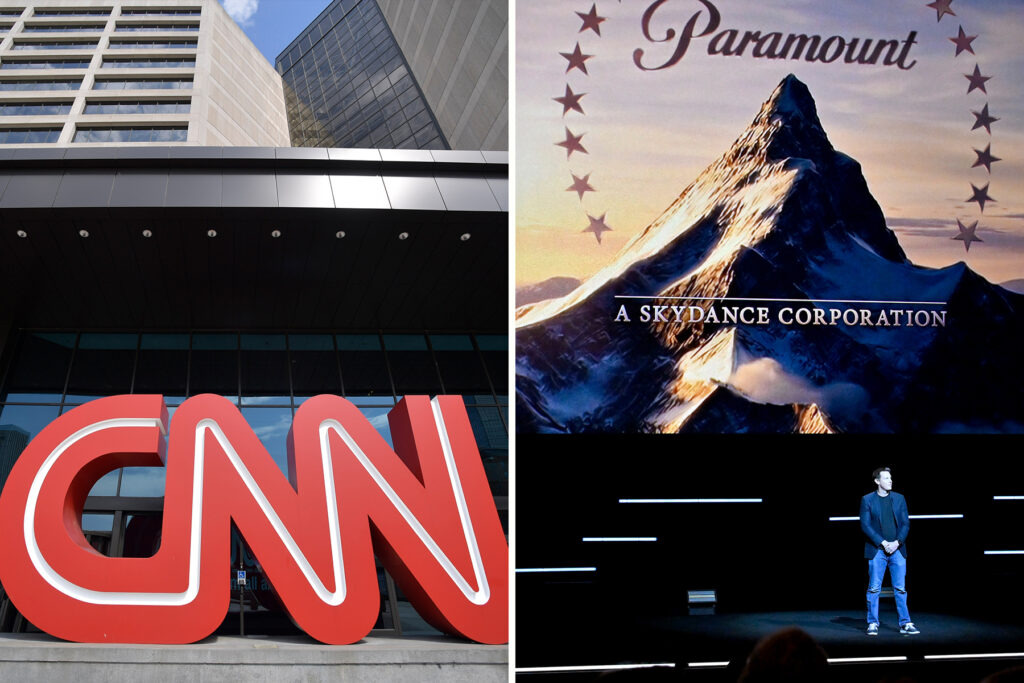
Today, American journalists once again are weighing whether a special committee could provide an effective shield for another storied media property facing a takeover. This time, it’s CNN, a division of Warner Bros. Discovery, which has agreed to be acquired by Paramount in a $110 billion consolidation of television, movie and streaming companies. Behind the proposed agglomeration is David Ellison, a polished Hollywood operator funded by his father, the Trump-friendly tech titan Larry Ellison, a trio of Middle Eastern sovereign-wealth funds and others.
As part of an antitrust settlement last week with 12 state attorneys general, Paramount agreed to establish an independent board of journalists to protect the editorial integrity of CNN, as well as Paramount’s existing news division, CBS News. The move is meant to assuage skeptics who fear David Ellison will try to shape CNN to his purposes, as many assert he already has done at CBS.
Can such a board ever work?
Believers in editorial protection committees — or those who publicly defend them, in any case — will inevitably be disappointed in what such structures can and cannot do. Facebook established an oversight board in 2020 to review and make recommendations on content moderation and speech accountability. Notwithstanding an illustrious membership of jurists, journalists and technologists, the board’s scope is limited to specific pieces of content, and it cannot enforce policy guidance on a company that infamously took pride in its “move fast and break things” ethos.
On the other hand, those who doubt the value of independent oversight committees shouldn’t entirely discount the most effective deterrent they can impose on a meddlesome owner: public opprobrium — shame, in other words. The Dow Jones special committee has the right to talk to editors and determine whether they have been pressured or coerced into publishing or doing something in conflict with their independent judgment. They can make those findings public, including in the Wall Street Journal itself, in theory causing embarrassment.
In today’s world, where avarice often negates shame, there are also commercial incentives to appoint a board. When Murdoch’s News Corp. bought Dow Jones, the Journal’s core value proposition — and its promise to the country’s second-largest newspaper audience — was that the Journal’s facts were accurate and fairly presented; its analyses represented its best judgments, not its preferences; and that there were no hidden agendas. The creation of a special committee wasn’t just an assurance to the Journal’s reporters, it was a pledge to its customers — its loyal readers and the advertisers who pay to reach them — that the Journal’s integrity would be respected.
But there are limits to what a special committee can do. When my colleagues and I helped draft the Dow Jones safeguards in 2007, we understood that a new owner would want to make changes to the Journal. We knew those changes might affect digital content, where we printed our newspapers, areas of coverage, special events and much else.
To assume someone would acquire a company only to surrender authority over the levers that determine its success ignores the reality that in our capitalist system ownership means control. Someone with the means and determination to take over a company will have a view, wrong or right, on how to make the place successful.
The most critical element in an owner’s control may be deciding who should lead a newsroom. A special committee is designed to protect editors and their independence, after all. While Dow Jones requires its committee to be consulted about editors’ removals or appointments, the structure proposed for CNN and CBS News doesn’t appear to provide for a say in the selection of leaders who decide coverage and hire journalists.
That may be a sore point for some at CNN. CBS News already has run into a buzz saw of criticism over Paramount’s appointments, including David Ellison’s handpicked CBS News editor, Bari Weiss, who hasn’t exactly been welcomed by the network’s journalists and viewers of its news programs. Does Weiss really need protection against Ellison? Of course not.
In the end, though, an editorial-integrity structure is more symbolic than truly protective. In April 2008, four months after News Corp. acquired the Journal, the new owners made it clear they wanted to appoint their own editor. Though I’d had challenging conversations with the new bosses, there had been no meaningful interference. It was a business decision. I would receive a severance payment, something critics later suggested was the true reason I left. It wasn’t.
I left because a newsroom ultimately needs alignment with its owner, ideally one who embraces the value of independent journalism. The alternative is dysfunction. And no special committee can paper that over.
The post CNN, CBS News and the limits of outside editorial oversight boards appeared first on Washington Post.