After 20 years, Sofia Coppola’s teenage queen has come home to Versailles.
In 2006, the American director’s whimsical, candy-colored “Marie Antoinette” divided audiences with its Manolo Blahnik shoes and contemporary soundtrack. Yet the film has since become a classic, and Versailles is honoring its 20th anniversary with an exhibition at the Petit Trianon, the small chateau on the royal estate given to the queen for her private use in the 1770s, where part of “Marie Antoinette” was filmed.
Curated by Hélène Delalex and Laurent Salomé and running through Jan. 24, the show brings back Milena Canonero’s Oscar-winning costumes alongside props, sketches and photographs. In Marie Antoinette’s private rooms, mannequins recreate some of the movie’s frames.
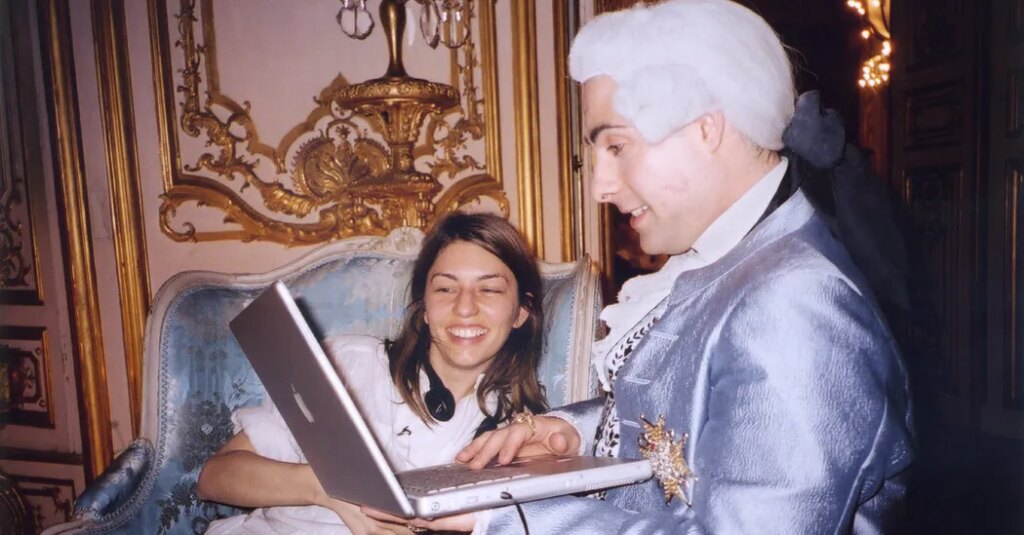
And Coppola is revisiting “Marie Antoinette” onscreen, too. As she made the film 20 years ago, someone was watching closely: her mother, Eleanor, who shot almost 100 hours of behind-the-scenes footage with the goal of making a documentary. Eleanor Coppola died in 2024 without completing the project, but her daughter has completed it for her. The movie “Making Marie Antoinette,” a time capsule of the film and of a young director finding her way, will be released in U.S. theaters on Oct. 23.
In a recent video interview, Coppola, 55, talked about stepping back into Versailles, fighting for the film’s female perspective and watching hip-hop cut-ups of “Marie Antoinette” on TikTok. These are edited excerpts from the conversation.
Were you surprised when Versailles reached out to you about this exhibition?
Yes, I was really surprised — it was like being offered the Petit Trianon to put our posters up. It was surreal to be there again, in the real home of Marie Antoinette, with the costumes from our version.
I thought it was cool that the curators were interested in the preparation materials and research, so I was excited to open up the boxes that I had in my storage at my family home in Napa Valley. Anne Seibel, the art director, also saved a lot of things, and Milena Canonero, our great costume designer, tracked down different pieces and put the accessories together to bring it all back. We even recreated some of the lighting that was used in the film.
What do you remember about how you felt while making it?
It was really stressful and overwhelming, because I’d never taken on anything of that scale. There were just so many people there in order to pull it off, so many extras and crew. I think I had that sort of youthful naïveté — I don’t think I would take on something like that now.
But I had a really clear vision in my head, and I was really trying to do a different kind of period movie. The ones that I had grown up with were very big tableaux, based on paintings. I always felt like you were looking back at history, and I wanted this to feel like you’re jumping back in time and you’re alive with the characters. When I visited the real private rooms of Marie Antoinette, I was struck by the fact that the fabric was this bright turquoise color. At that time, you never saw that in period films: It was always muted, dusty earth tones.
The depiction of ennui and aimlessness connects it to some of your other films. What did you draw on to bring it to life?
I was trying to imagine what Marie Antoinette’s emotional life was like, and I could see parallels in L.A. at the time when I was writing the script in the early 2000s. I saw women shopping when they didn’t have anything else to do, to fill their time. It was my version of what I could imagine that might be like.
Were you taken aback by the controversy over the anachronisms in the movie when it came out?
It was disappointing that some people were really offended by it. To me, it’s hard to imagine that the modern music was so offensive to people, and it’s done a lot now. I knew that it was a little bit obnoxious and rebellious for an American to make that story, but you don’t ever really know how things are going to be received.
You lived in France for a few years after “Marie Antoinette.” What is your relationship nowadays to the country?
My husband [Thomas Mars, of the band Phoenix] is actually from Versailles. Their home was right down the street from the Petit Trianon. They moved away in more recent years, but we had holidays there, which was wild. My daughter Romy was born in Paris, and I feel really grateful that I still get to spend time there. I grew up with French New Wave films, and I’ve always felt supported by French culture.
The film’s reputation seems to have changed considerably since its release. Do you feel that?
Definitely. I feel like it has a whole new audience of young people. My daughters show me these edits to hip-hop songs on TikTok, which I love. It’s been a fun surprise, because usually your movies aren’t talked about afterward. A lot of mothers and daughters say that they watch it together, or men come up to me and say that that was their gay coming-out.
The film has a strong female gaze, and that registers differently today. Did you have to fight for that perspective when you made it?
My mom shot almost 100 hours of documentary footage on set. I helped edit it recently, and there’s a lot of me pushing for the female point of view of the story. That was really important to me, and it was interesting to see that men on the crew did not understand this idea or were resisting it. It just didn’t exist in filmmaking at that time. Nowadays, the guys I work with are much more open.
The documentary you edited based on your mother’s footage, “Making Marie Antoinette,” will be out in the U.S. in October. Why did it take so long to come back to it?
Only a very small amount was used for a DVD bonus at the time, and we went on with our lives — I was having kids and I forgot about it. Then during the pandemic, my family was all together at home in Napa. My mom got the footage out to look at it, and I had never seen it before. It was amazing for me to see like all the details that she caught, all of the craftsmanship: the costumes, the wigs, the flowers.
And she really wanted to do something with it. She passed away two years ago now, but at the end of her life, it was really important to her that we got this film done. I promised her that I would. I’ve worked a lot this last year with an editor and a friend of my mom’s, trying to think of how she would want it made — even though it’s hard for me to have perspective, because I’m in it, and it’s embarrassing to see my young self.
Why?
I am not as assured of asserting myself. I’m kind of finding my way as a young director. And I thought maybe that would be interesting for other young people interested in film, to see that there is a process of how you evolve as a creative person.
It’s also me seeing through my mother’s eyes, her watching her daughter work. It was very emotional to work on, and I felt like it was a gift that she left for me.
The post 20 Years Later, Sofia Coppola’s ‘Marie Antoinette’ Is Back at Versailles appeared first on New York Times.