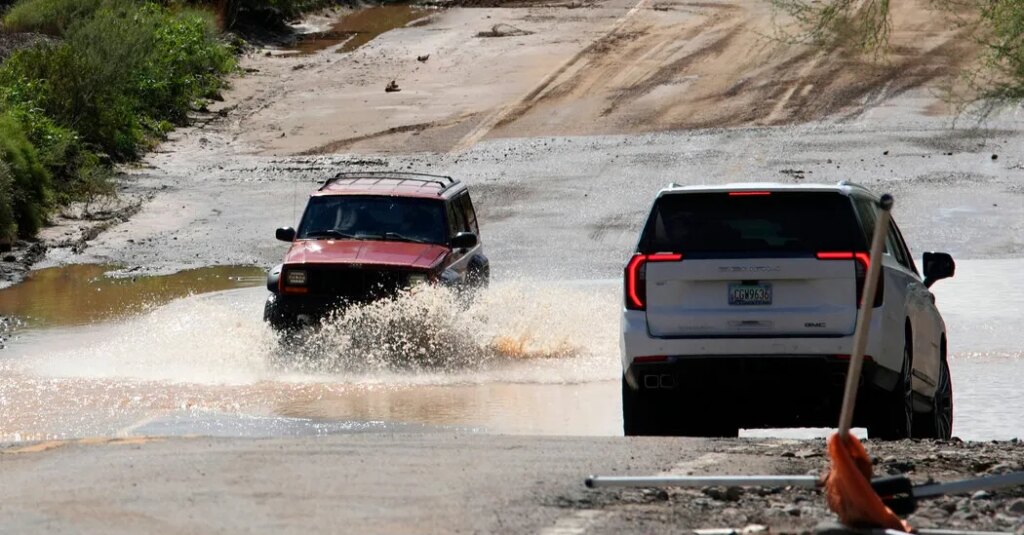
Rain from a hurricane that made landfall in Mexico was threatening on Wednesday to inundate drought-stricken parts of Texas that haven’t seen heavy rain, or any rain, in months. Other pockets of the Central United States, including parts of Colorado, Kansas and Iowa, also faced the threat of heavy rain, which could lead to flash flooding.
At a news conference this week, Gov. Greg Abbott of Texas said officials had positioned crews and equipment across the state ahead of moisture sent into the region from Hurricane Polo, which made landfall twice this week on Mexico’s western coast — about 500 miles from the parts of Texas expected to be hit by storms. Governor Abbott cautioned that heavy rain could lead to flooding and rising rivers.
“We’ll do everything possible so that we can make it through this very heavy rain event with no loss of life,” he said.
At Dallas Fort Worth International Airport, where official weather records are taken, no rain fell from July 16 to Sept. 20, a 67-day stretch that tied for the second-longest period without measurable precipitation, according to the National Weather Service.
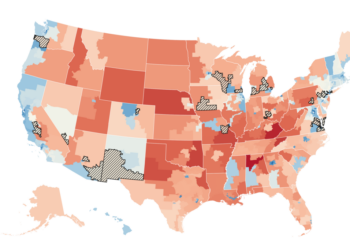
More than 43 percent of Dallas County is experiencing an exceptional drought, the highest category of drought conditions, according to the U.S. Drought Monitor.
The weather on Wednesday is the result of air masses colliding across the Central Plains, which are expected to set off storms and outbursts of rain. Those outbursts could also bring tornadoes, hail and damaging winds, a pattern that also occurs in late spring.
What makes this system more potent is an influx of moisture from the remnants of Polo, which will drift into Texas on Wednesday.
Over the next two days, the heaviest rainfall is expected in a band stretching across Central Texas from the Mexican border and into Oklahoma. The storms will begin in the west and slowly shift east.
Downpours could drop up to five inches of rain in a short period, creating a severe risk of flash flooding. When water hits the dry soil, it will run off as if the ground were concrete rather than soaking in, heightening the threat of floods.
Emergency managers were also concerned about the lingering rainfall over southeastern Colorado, where the ground was saturated from days of rain and could fuel more flooding.
The storm system is large enough that it is also spreading moisture into the Northern Plains, where a flood threat was also possible in the Corn Belt, which includes parts of Iowa, Nebraska and Kansas.
Before the latest rain, a flurry of flash flood and tornado warnings hit New Mexico and Texas on Tuesday as the weather system moved through the Southwest. There were no reports of widespread damage, but some of the warnings included pleas by the National Weather Service for people to pay attention to emergency officials’ messages as more than three inches of rain fell in some areas.
In New Mexico, the problem was not significant rainfall on drought-stricken land, but rather on areas that were already saturated from storms last week. Albuquerque International Sunport, the state’s biggest airport, has had 4.49 inches of rain this month so far, making it the wettest September since recordings started in 1891.
Tuesday’s storms caused concerns that three dams could fail in southern New Mexico, officials said, leading to evacuation orders for some residents.
The southern part of the state typically gets about eight inches of rain a year, said Tim Brice, a senior meteorologist with the National Weather Service office in El Paso.
But on Tuesday, an area near Las Cruces, N.M., received about one to three inches of rain, he said, prompting officials to worry that a dam could overrun and cause flooding across nearby small cities and agricultural land.
“This is not normal,” said Joah Franzoy, the chief financial officer for Elephant Butte Irrigation District, which manages surface water deliveries to lower Rio Grande farmland.
Also in New Mexico, Doña Ana County issued evacuation orders for the cities of Rincon, Hatch, Salem and Garfield, each populated by fewer than 2,000 people, because of the weather.
The post Another Day of Pounding Rain Raises Flooding Fears Across the Southwest appeared first on New York Times.