Consider the plaintive guitar whine in Jimi Hendrix’s “Voodoo Child (Slight Return),” the siren-like wail in Eric Clapton’s solos on Cream’s “White Room” or the wakachuka wakachuka call of the streets from Isaac Hayes’s theme for the movie “Shaft.”
In an era when the electric guitar attained the status of holy talisman, these and countless other anthems launched into a new sonic dimension because of the storied wah-wah pedal, which “changed electric guitar,” according to Guitar World magazine, and was “one of the most expressive effects ever conceived.”
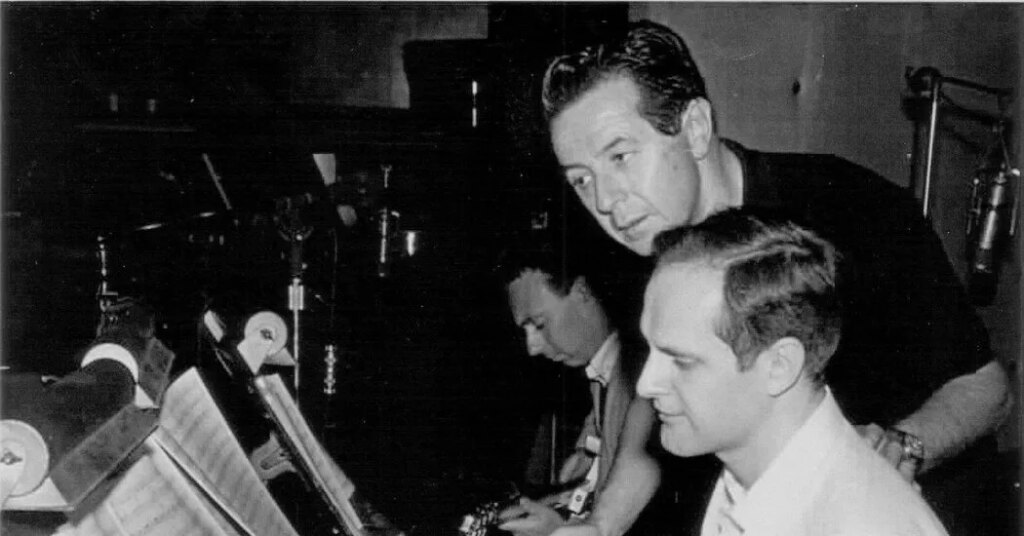
And for that the music world can thank Del Casher, a go-to Los Angeles session guitarist for artists as diverse as Lawrence Welk and Frank Zappa, who helped shape the sound of the 1960s and as a driving force behind this cornerstone pedal.
Mr. Casher died Oct. 1 after battling cancer over the past year, according to a GoFundMe page to raise money for his widow, Eiko. He was 88. The page did not say where he died.
Wah-wah, like boogie-woogie or bebop, is one of music’s great onomatopoeias. A wah-wah pedal, operated by foot, allows guitarists, primarily, along with other instrumentalists, to sweep across a frequency spectrum to create a sound like the name itself — suggesting crying, or a vowel-heavy version of human speech or, to those of a certain vintage, grown-ups talking in old Charlie Brown specials.
Since the 1960s, guitar giants have found the sonic palette of the pedal almost limitless. “The wah-wah pedal is great because it doesn’t have any notes,” Mr. Hendrix once told Rolling Stone, noting that it can evoke a sound not like “depression, but that loneliness and that frustration and the yearning for something. Like something is reaching out.”
A generation later, Kirk Hammett, the lead guitarist of Metallica, told Guitar World magazine, in 2023, that the “wah enables me to mirror the inner voice in my head and in my heart.”
The story of the pedal started in the mid-1960s, after the Thomas Organ Company of California, known for its home organs, acquired the rights to distribute Britain’s Vox amplifiers, famous for powering the Beatles and the Rolling Stones, in North America.
The organ company began developing solid-state, or transistorized, versions of the British vacuum tube originals, which owed their oomph to the pioneering Vox amp designer Dick Denney.
The British versions included a midrange boost function, operated by a switch that gave certain frequencies an added punch. Thomas Organ management found the cost of adapting those prohibitive, so the company’s chief engineer, Stan Cutler, assigned a young colleague, Brad Plunkett, to come up with a cheaper knob version, operated like a volume control.
Dialing the knob from left to right, the effect mimicked the “wah-wah” sound similar to the type that had come into vogue in the 1920s, when jazz horn players summoned a bluesy wail by manipulating airflow out of the bells of their instruments, using mutes or rubber toilet plunger heads.
This technique was famously showcased in George Gershwin’s 1924 epic “Rhapsody in Blue” (and years later, by the trombone players rendering the incomprehensible warble of Charlie Brown’s teachers).
Mr. Casher had long wanted to create a similar effect for guitar. When he was invited to join the Vox Ampliphonic Orchestra to promote the amps, he began toying with the knob. “I said, ‘Hold on,’” he recalled in a 2011 interview in The New York Times. “‘This is what I’ve been looking for!’”
Since guitar players cannot take their hands off their instruments mid-solo to turn a knob, Mr. Casher said that he had the idea to install the midrange boost circuit in a volume pedal used for a Vox Continental organ (although as The Times noted, Mr. Plunkett has also claimed credit for the idea).
While often called the “inventor” of the wah-wah pedal, Mr. Casher emphasized the shared contributions of himself, Mr. Denney, Mr. Plunkett and others, including Lester Kushner, a senior engineer at Thomas Organ. “But,” he told The Times, “I’m the one who said, ‘This is a guitar thing!’”
Delton Edward Kacher was born on Dec. 28, 1937, in Hammond, Ind., about 25 miles southeast of downtown Chicago. His father was a music teacher who taught Del guitar from a young age, and his mother came from a family of pianists.
After graduating from the University of Pittsburgh with a bachelor’s degree in communications, he moved to Los Angeles to find a foothold in the entertainment world.
Mr. Casher eventually became a featured guitarist on television programs like “The Lawrence Welk Show” and films like the 1964 Elvis Presley carnival movie “Roustabout,” in which he appeared in Elvis’s backing band.
At first, few were interested in the wah-wah pedal. The Thomas Organ chief Joe Benaron, a big band fan, insisted it was most useful for horn players, so at Mr. Casher’s playful suggestion, early units were named after the trumpeter Clyde McCoy, known for his use of the wah-wah effect on songs like “Sugar Blues” in the 1930s.
Mr. Casher finally got the pedal into the hands of Mr. Zappa, having sat in with his band the Mothers of Invention; the avant-garde rocker used various versions over the years, including the Cry Baby, later marketed by Dunlop, along with models by Mu-Tron that achieved a similar effect.
Mr. Clapton brought the effect to the forefront in his work with the supergroup Cream on songs like “Tales of Brave Ulysses” (1967) and “White Room” (1968). He also used it as a sideman on George Harrison’s 1970 triple album, “All Things Must Pass,” including a song called — what else — “Wah-Wah.”
The wah-wah sound will forever be identified with Mr. Hendrix’s psychedelic forays, including “Crosstown Traffic,” “Burning of the Midnight Lamp” and his epic cover of Bob Dylan’s “All Along the Watchtower,” all from his 1968 album “Electric Ladyland.”
The list goes on: “25 or 6 to 4” (1970) by Chicago; “Papa Was a Rollin’ Stone” (1972) by the Temptations, and later, “Sweet Child O’ Mine” (1987) by Guns N’ Roses; “Enter Sandman” (1991) by Metallica.
Complete information about survivors was not immediately available.
In his interview with The Times, Mr. Casher recalled hearing Mr. Hayes’s hyper-funky theme song to the groundbreaking 1971 Black detective film “Shaft,” starring Richard Roundtree, with its innovative pedal work by the guitarist Charles Pitts, known as Skip.
“They’d come up with this wacka-wacka-wacka sound by making the wah-wah move up and down like a cymbal,” Mr. Casher said. “You think you have it all figured out, and then someone comes up with more.”
The post Del Casher Has Died. He Made Jimi Hendrix’s Guitar Cry. appeared first on New York Times.