Katie Roiphe is the director of the Cultural Reporting and Criticism Program at New York University and the author, most recently, of “The Power Notebooks.”
I often see stylish, interesting-looking people sitting outside at the cafe on my corner scribbling into a notebook next to an oat-milk latte. They are appealingly analog, obviously caught up in romantic notions about themselves. These days, the act of writing anything by hand is so rare that it in itself seems admirably retro. But is keeping a journal as healthy and desirable and therapeutic as people think it is?
Like meditation, cold plunges and sleep tracking, journaling has become a staple of wellness culture. Keeping a journal, according to popular wellness brands, can reduce stress, heal trauma, “rewire your brain for happiness” and help you “connect to your highest, most authentic self.” A few years ago, a survey found that, at least occasionally, almost half of Americans record their feelings in a journal.
I started writing in a journal when I was a very sick 12-year-old in the hospital. Afterward, I kept journals for decades: composition books, pebbled fake-leather notebooks, sleek cardboard notebooks from Japan, black sketchbooks. I have scribbled in them in a park in India with peacocks walking by and in bed under my covers and on long train rides and in boring faculty meetings.
One of the most glaring problems with journals, which upbeat self-care advocates rarely address, is that someone always reads them. I remember, as a child, being horrified at the brutal denouement of “Harriet the Spy,” when all of Harriet’s friends read her journal and she becomes a pariah in her sixth-grade class. I was shocked by the message: While you may feel like you have an inviolable sanctuary for your innermost thoughts, you do not.
To say that my first marriage ended over journals would be an exaggeration, but not that much of one. When I was lying in a hospital bed with complications from the delivery of my first baby, who was premature and weighed 4½ pounds, my husband dug out all my journals from under our bed and read them. We had been fighting the day of my emergency Caesarean section, and I guess he decided this was an opportune time to launch an investigation of my character.
After that he was completely cold toward me. It was like there was a spigot for affection, and it had been turned off. When I told him something the doctor had said about my health, it felt like I was confiding intimate medical details to a random stranger on the subway.
It may seem that he had stumbled on a dark secret or truth or affair, but it was more that he just didn’t really like my inner life. The very worst thing he could point to in my journals was what I had written about some small thing he had done: “It’s not his fault, really. He is basically Mowgli the Jungle Boy raised by the wolves.” In my mind, this was part of my romantic mythology of him: that he was entirely self-made, that he had overcome a childhood with extremely difficult parents. But that was not how he read it.
This was the end, though it took him another 2½ years to move out. Afterward, I packed up years’ worth of journals, put them in a leather duffel bag and stored them with my oldest, most trustworthy friend.
I couldn’t really fault him for the violation of privacy. Most people can’t resist peeking at journals or notebooks.
When 24-year-old Susan Sontag was in Paris, she secretly read the journal of her paramour and made the upsetting discovery that her lover did not like her very much. She wrote in her own notebooks, “Do I feel guilty about reading what was not intended for my eyes? No. One of the main (social) functions of a journal is precisely to be read furtively by other people (like parents + lovers) about whom one has been cruelly honest only in the journal.”
So the sacrosanct privacy of a journal is a kind of impossible fantasy. The idea that you are writing just for yourself — that you can express your darkest, wildest, saddest, most self-indulgent ramblings with absolutely no repercussions — is a complete illusion.
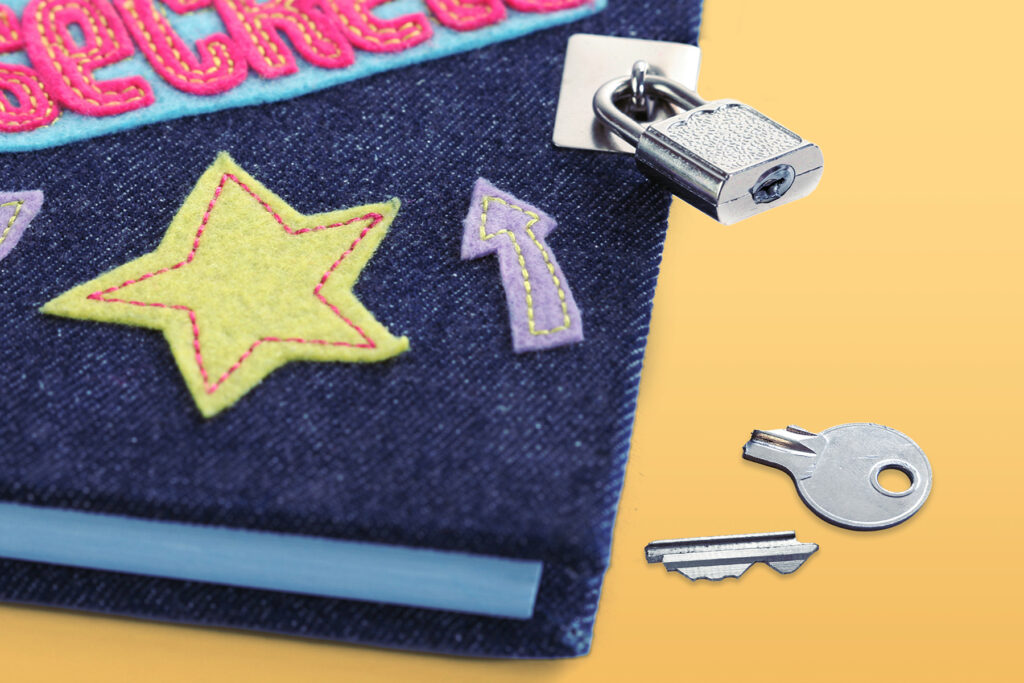
And if someone does read your journal, they can never really grasp the spirit in which you wrote something, the precise tone of it. People often write in a journal when they are angry or lonely or sad, and the entry can give that fleeting state too much authority. The depressive riff you half-sarcastically dashed off will seem like your real thoughts when, in fact, it was just something you felt for 20 furious minutes on a distant Sunday night. There is a reason everyone’s first journal, given to them at 11 or 12, came with a lock on it.
Then there is the question of whether you actually want to read your own journals. Is it psychologically beneficial to peruse them?
I always had a fantasy of digging up my journals on a rainy day and conjuring old love affairs and enchanted nights and sleep-deprived riffs on having a newborn and the time my best friend threw a brick through the dining-hall window at college when he was mad at me. Could it be good for me to see patterns or recurring issues? But I have found, in reality, that I don’t generally want to unearth the past, or don’t want such an unvarnished confrontation with it.
In an essay on notebooks, Joan Didion once wrote, “We are well advised to keep on nodding terms with the people we used to be.” I have always subscribed to that notion, almost religiously, almost without thinking, as all journal-keepers do.
But now I wonder, do I really want to know those past selves in quite that much contemporaneous detail? I once reread one of my journals from high school and wondered if I really needed to resurrect the intricate power struggles between me and my two best friends in such baroque detail. I skipped over four pages about my drummer boyfriend’s annoying behavior at a party because they were boring me to extinction. Would the hazy memories of drinking pink champagne on the steps of the Met and reading “Brideshead Revisited” and riding the subway with my friends at three in the morning be more picturesque?
My memory has pruned that time for what is useful to me now. I have created a story of the past that selects what is important and glosses over many of the petty concerns and controversies I was mired in.
Memory edits the messiness of reality into something less cranky and self-involved and trivial. Memory selects and organizes. You take what you need and what you can handle, and maybe the rest should be lost to history.
I also wondered about what Christopher Lasch famously called the “culture of narcissism.” Did it help 15-year-old me to revel so much in her small preoccupations and petty grievances? Dwelling on them may have magnified the silly detritus that absorbs and inflames everyone at that age. A blank journal page almost asks for big emotions, for melodrama, for self-dramatization. Would it have been better for her just to read a book or go for a walk?
I had always assumed you could get a richer sense of a period of your life by reading a journal from those years, but it can sometimes feel quite distorted. When I looked back at the journals from when my children were young, and I was a single mother, I felt like I was getting the wrong story. The quiet, ordinary afternoons where I came home from teaching and gave my kids dinner and a bath and curled up with a novel get way less time than stormy, dramatic moments like breakups, work struggles, betrayals.
A journal is less the whole truth than a series of performative moments. These passing moods are given weight by the fact that you are writing them down; they are carried forward in time, defining and expressing something we may mistake for a “self.”
It had never occurred to me that a certain amount of forgetting could be useful — that more granular information does not get you closer to the past. A journal may, in fact, be worse at capturing the true texture of life than memory is. It may leave you further from any insight about yourself than if you had never scrawled anything down on a beguiling blank page.
There is no doubt that it can make you feel better in the moment to scribble something on paper, to release the words, to get everything out. But do you actually want to save these jottings in bound notebooks? Do you want to risk other people reading them or even stumbling across them yourself at some future date?
When I finally married a man who would never read my journals, my old friend drove to my house and handed the locked suitcase back to me. I realized as I took the heavy bag from her that I didn’t want them back. If I were more industrious or enterprising, I might have burned or buried them. But as it was, I stashed them somewhere in a closet and never again felt the impulse to write in a journal.
The post Is journaling bad for you? appeared first on Washington Post.