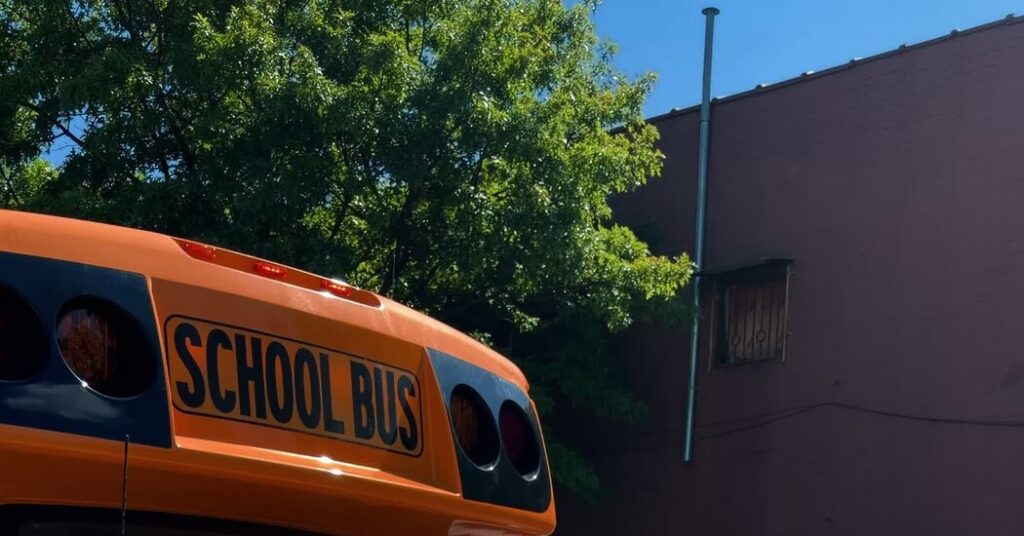
Gouverneur, N.Y., a rural town with brutal winters near the Canadian border, waited three years to receive its first pair of electric school buses. It took no time for problems to start.
After just one day of shuttling students, the buses’ high-voltage chargers began malfunctioning, sidelining the vehicles for weeks. When the buses were back on the road in November, their heating systems failed, forcing both out of service again, including one for four months.
Across the United States, school districts in large cities and small towns have started converting their bus fleets to electric from diesel, swapping the rumbling workhorse for the quiet whir of a battery-powered motor.
The transition has accelerated in recent years, fueled by more than $2.4 billion in federal grants under the Biden administration and spurred by mandates in California, New York and other states to phase out fossil fuel models. Of the roughly 500,000 school buses nationwide, about 5,000 run on batteries.
But the rollout has been rocky, rife with technical challenges and logistical headaches — and resistance from voters.
Their range on a single charge is a small fraction of that of traditional buses and drops in colder months, school officials say. Maintenance issues can idle them for weeks. And they are expensive: Some cost nearly $500,000, two to three times the price of a diesel version.
“It’s scary when the potential benefit doesn’t feel much better than a potential negative,” said Dale Munn, the business manager at the Gouverneur Central School District, which spent about $1 million to electrify two of its 28 buses, with New York State covering most of the cost.
Now, some U.S. school leaders are abandoning electric buses or scaling back plans to buy more. A few have auctioned off their fleets, hoping to recoup several thousand dollars on vehicles plagued by mechanical problems. And the districts that have stuck with the technology often relegate the buses to the shortest routes.
The Trump administration has halted the federal grant program that was started under President Joseph R. Biden Jr. to help schools pay for the vehicles, raising more uncertainty. The Environmental Protection Agency, which has promoted fossil fuels under President Trump, said that it would revise the federal grant, the Clean School Bus Program, to offer “increased choice and affordable options for school buses.”
The goal, the EPA said, is “to ensure hard-earned American tax dollars are being put to the best use possible and not frivolously wasted as was often the case under the previous administration.”
As electric passenger cars gained popularity during the past decade, the technology made its way to the school bus. Proponents promised lower operating costs, fewer maintenance issues, smoother rides and a safer environment for students who would be spared soot and other harmful pollutants. Supporters say that the technology in buses, just like in passenger cars, will continue to improve.
In 2021, Montgomery County Public Schools in Maryland became one of the largest districts in the United States to commit to an all-electric fleet, setting a goal to do so by 2035. Today, it has 285 battery-powered vehicles, a small fraction of the more than 1,450 buses in its fleet.
But when Montgomery County needed 150 new buses this year, school leaders chose diesel. The electric buses are simply not capable of operating on all the district’s routes, said Liliana Lopez, a district spokeswoman.
On a full tank, a diesel bus can cover about 500 miles, enough to haul students on long field trips and to out-of-town sporting events. But the district’s electric vehicles can travel just 80 to 90 miles on a single charge and less during the winter, Ms. Lopez said. It can take about seven hours to fully charge a bus.
Smaller school districts have also embraced the technology. Outside Albany, Bethlehem Central School District was among the first districts in New York to buy electric buses.
Mechanical issues and recalls have sidelined the vehicles for weeks at a time. Last school year, Bethlehem’s 10 buses were each out of service for an average of 66 days. In May, the district announced its next order of nine buses — all diesel.
“It’s not ready for prime time,” said Patrick Elwell, the transportation director at Naples Central School District in the Finger Lakes region, which has two electric buses.
In New York, lawmakers approved legislation in 2022 that ordered school districts to stop buying electric buses by next year and that said by 2035, every school bus in the state would have to be electric.
Today, just 354 of the state’s 50,000 school buses — less than 1 percent — run on batteries. A vast majority of the state’s roughly 700 school districts have none.
And voters have proved less than enthusiastic. In at least two dozen districts, they have voted down purchases of electric buses or infrastructure investments for them — despite the mandate and even when federal grants or state assistance would have covered most of the costs.
Some districts have backed out after realizing the buses could not meet their needs. The Onteora Central School District, which covers about 280 square miles in the Catskill Mountains, turned down an $8.3 million federal grant to buy 21 electric buses.
Victoria McLaren, Onteora’s superintendent, said the buses could not have handled most of the district’s routes — the longest is 178 miles a day — and neither could the local electric grid. She worried that if students were dismissed early in the school day, the buses would have not been fully charged.
“We have looked at it as something that we support philosophically,” Ms. McLaren said. “But it does not appear to be something that is viable.”
Because of the slow adoption of electric buses and pushback from school leaders, New York lawmakers delayed the deadlines for the transition. Now, the cutoff for buying diesels is 2032. Every bus must be electric by 2040.
The transition will require major infrastructure upgrades by utility companies. One provider, Central Hudson Gas & Electric in the Hudson Valley, estimated that if every school district in its region acquired electric buses and charged them simultaneously, peak electrical demand would jump about 13 percent.
But just two of the roughly 68 school districts it serves have reached out about electrifying their fleets, so the company has held off on making upgrades.
“What we don’t want to do is overbuild our system early and cause our customers to have higher rates before there would be the benefit to our customers of having this E.V. fleet in service,” said Joseph Hally, the utility’s senior vice president of corporate affairs.
New York City, which is served by several transportation providers, accounts for about a third of the state’s electric buses. One company, NYC School Bus Umbrella Services, has 28 electric buses and plans to buy hundreds more.
Matt Berlin, the company’s chief executive, said that the vehicles handle shorter routes of about 40 to 70 miles a day, and have been reliable. He likened today’s electric buses to the first-generation iPhone: The features, reliability and performance will improve.
“We are convinced that this is a transition that will happen, and we should get ready for it,” Mr. Berlin said.
Mr. Elwell, of the Naples Central School District, also believes in the future of battery-powered vehicles. Both he and his wife drive electric cars. He has been tracking the daily performance of the district’s two electric buses.
The estimated range on their dashboards is not accurate, he discovered. Recently, one bus had been losing 40 percent of its charge soon after leaving the depot.
Until the recent spike in diesel prices because of the war with Iran, the operation of the electric buses had cost more than double that of the diesel buses, Mr. Elwell said. Now, diesel buses cost several cents more per mile, he said.
The heat pumps were too weak to warm up the interior when the temperature was below 15 degrees. Stronger heat pumps have been installed, but they drain the batteries by about 25 percent before the buses can heat up, even when they are connected to chargers.
Despite the challenges, warranties cover problems. While mechanics can fix most issues, those involving the high-voltage battery system are handled by a specialized mechanic at the dealership, which takes buses out of service for more than a week.
Naples will eventually have to acquire 23 electric buses. Mr. Elwell cannot buy them just yet.
“Our provider told us that we can get you enough power to charge your fleet, but nobody else in the village would have power when we’re charging,” he said.
Gouverneur will need similar upgrades. The district’s infrastructure can handle two additional buses, but adding more would require a transformer, a backup generator and new wiring. The upgrades would cost $5 million, about 10 percent of its annual budget.
Bus routes will have to be redrawn. The electric buses are taller than their diesel counterparts — too tall to drive under a major railroad overpass.
So far, the school system has proceeded carefully, trying to comply with the mandate and absorb significant costs even as it and others in upstate New York lose students and face cuts.
“You can’t continue to be employed as an administrator if you’re going to cut teachers and buy electric buses,” said Mr. Munn, Gouverneur’s business manager. “Not in this town, not in this area.”
The post Why Some Schools Are Hitting the Brakes on Electric Buses appeared first on New York Times.