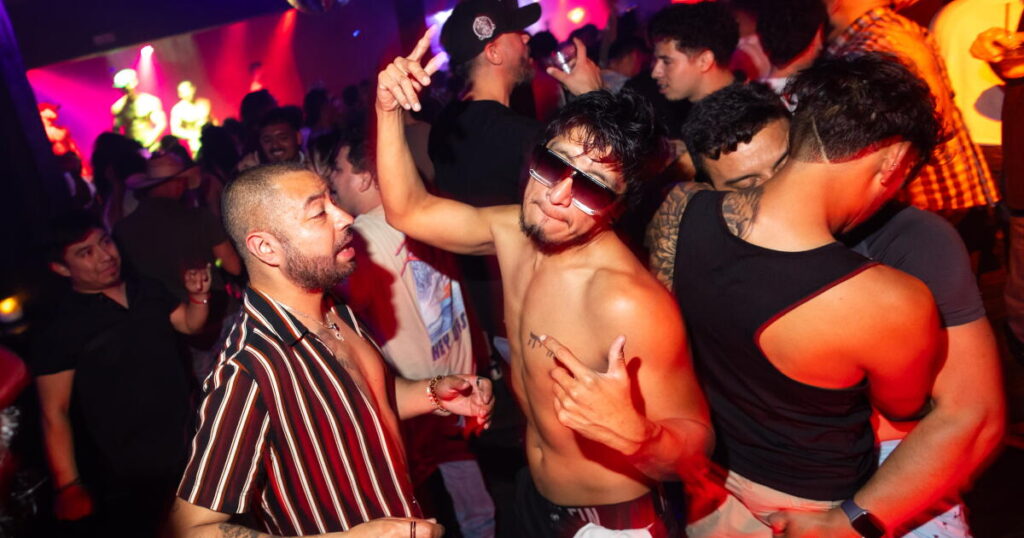
Marty Sokol woke up on New Year’s Day this year exhausted from celebrating. Club Cobra, his bar in North Hollywood, is a fixture on the queer Latin nightlife scene in Los Angeles. When he logged into his clubs’ social media accounts to post about the night’s revelry, he noticed something weird. Club Cobra’s Instagram page had been taken down. He couldn’t figure out why.
“I figured we could go through the proper channels to get it back,” Sokol said. He’d never posted anything racier than PG-level party fliers.
After months of contacting Meta, Instagram’s parent company, he said he got no meaningful response. Pages for his other venue, Club Chico in Montebello, went down in May as well.
It got stranger. A.I.-driven search engines listed his clubs as permanently closed. Longtime regulars texted him condolences. By June 1, he said, every single one of his club’s Instagram pages had been suspended, along with around a dozen pages from his staff and affiliated club promoters.
“Your audience goes to look for you, and you are gone,” Sokol said. “For 15 years we developed hundreds of thousands of followers who we were able to build community with. Then without warning or cause, they ripped away our ability to communicate with our community.”
Several prominent nightclubs in California, many catering to queer clubgoers of color, saw their Facebook and Instagram pages mysterious suspended in recent months, leaving these independent venues unable to reach their fans. Owners say attendance dropped off significantly, leaving precarious venues now fearful of digital invisibility. State political leaders worry it could be devastating for queer nightlife.
“Margins in nightlife and any small business are very thin,” Sokol said. “The world is run by social media, and if you are not on Instagram, if your business is missing and the address has been deleted, you don’t exist.”
Representatives for Meta, reached for comment, did not offer a statement or elaborate on the reasons for the suspensions.
Sokol is a chatty silver fox in a champagne-hued suit, a veteran problem solver in his specific niche of queer nightlife in L.A. He’s guided his clubs through the pandemic, film industry strikes, ICE raids and more. Yet this latest obstacle has truly unnerved him.
“We are gay, we are Latino, and we are a very specific group. West Hollywood appears to be unaffected by this problem,” Sokol said. “But it’s a problem that may have nothing to do with gay nightlife. It’s bigger. It’s a California business problem. Without a seat at Meta’s table, we will all be closed.”
Instagram’s terms of service prohibit intellectual property violations, spam, illegal content, hate speech, bullying and abuse, self-injury, graphic violence and inappropriate imagery that may include nudity or sexual content. Meta recently agreed to an $18 billion settlement with U.S. states to resolve claims that Facebook and Instagram harmed children. The company has increasingly turned its content moderation over to A.I., beginning with a March rollout of new content-flagging software amid thousands of layoffs, including human employees who worked in that field.
Daniel Roberts, a Meta spokesman, recently told the New York Times that “We’re committed to making fewer enforcement mistakes and helping individuals protect their accounts — and A.I. is delivering on both,” he said.
That didn’t convince Sokol. “There could be a community standards issue, but it could also just be a scan of the crowd dancing and having fun. Or spam because the bots don’t like your text…. Nothing is specific and they don’t tell you what the problem is, and you can’t respond.”
He’s said that Cobra and Chico’s business “suffered an immediate loss,” a maddening new blow after the pandemic. Meta’s A.I.-driven appeal system — which he said required uploading a passport, driver’s license and facial recognition scans — left him unnerved.
While he doesn’t believe that Meta specifically targets queer nightlife pages, he’s cynical about tech’s rightward drift.
“For years, if somebody said something homophobic, something racist, we always felt we had [social media platforms] in our corner. A Nazi says horrible things, they would shut them down in two seconds,” he said. “Well, now it’s a funhouse mirror, and we are on the other side of it.”
Other venues have similar complaints.
Catch One, the Mid-City music venue, is another prominent nightclub that had its pages suspended. Catch One is a generalist music venue, but was founded as Los Angeles’ first nightclub for Black lesbians.
Mitch Edelson, the club’s current owner, said he’s proud of that legacy and champions it today — but fears that it may have tripped some kind of content trigger at Meta. The club’s Facebook page — and access to Facebook and Instagram’s ad platform — disappeared without warning in May.
“We got this email saying ‘Your page is suspended,’ which was a nice way of saying banned. We were not able to run ads, which is a key way that we’re able to reach our audience,” Edelson said.
He used his personal Facebook page to pay for a verified badge, hoping it would speed a response (it did not). “It was like you’re talking to a robot or someone who has no idea like what our club means to people, or the fact that we’re obviously a legitimate business,” he said.
He tried switching to TikTok ads and beefing up the club’s email list. Yet he estimates that without Instagram and Facebook posts and ads, ticket sales were down as much as 80%. After years of body blows from COVID, fires and more, this obstacle was especially frustrating.
“The economy is so bad in L.A. We needed to pick up the mantle if we want to keep our staff employed and keep our doors open. The way that we have success selling tickets is by advertising on Meta,” he said. “Now that’s impossible.”
Venue owners and fans wonder how far the suspensions have spread. The official Facebook page for Club Tempo, the longtime East Hollywood vaquero-themed gay dance club, has been taken down, though it still has an Instagram account. (Club Tempo did not respond to messages seeking comment.)
In San Francisco, the Stud — widely believed to be the city’s oldest gay bar — had its Instagram suspended after users falsely flagged the page for human-trafficking content, just before the popular Dore Alley street fair in July. The bar’s popularity among queer San Francisco tech executives and politicians helped it convince Meta to restore its pages.
“Meta shut down the Stud’s Instagram account — on Dore Alley weekend no less — because of targeted harassment complaints by right wing extremists,” state Sen. Scott Wiener (D-San Francisco) said in a recent post on X. “Meta should reverse this ban immediately.”
Meta restored the Stud’s account, but did not explain why the page was suspended in the first place.
“Obviously the most beloved gay bar in San Francisco isn’t engaging in human trafficking. So that algorithm needs a little tweak,” co-owner and general manager Rachel Ryan told the outlet Mission Local in July. “We relied on the page, because it combined marketing, ticketing, and communications with clients and performers. To have that taken away with just a moment’s notice … I can’t even describe it.”
The social media culling also snared vulnerable employees and promoters who host nights in these clubs.
Audry Cobra, the L.A. promoter and host of the transgender-focused club night Transfix, said her two professional Meta pages were suspended a year ago. “It feels very targeted,” she said. She described her night at Club Cobra as “Not over-sexualized. It’s for people that are interested in trans people, and for girls to have a place to be themselves. We’ve been there for decades and employ many trans girls who don’t have means.”
“For us trans people, social media has been a community of creators, part of our livelihoods, and a blessing,” she continued. “To have a place made so inviting, then to not be wanted, it’s so sudden and infuriating.”
She fretted that she’d be unable to rebuild her audience and livelihood. “I don’t know if Meta’s A.I. decided to wake up and be like, ‘We don’t like you,’ but anything trans-related feels targeted today,” she said. “Once they decide you’re not welcome, they recognize your face, your name, where you live, who you follow. They can just get rid of you.”
The suspensions worried state Assemblymember Mark González (D-Los Angeles), who said in a statement to The Times that ”Our LGBTQ+ family, especially the black and brown LGBTQ+ community, depends on consistent access to online spaces to share resources, culture, and promote safe, inclusive spaces. We have seen several LGBTQ+ staple venues have their Meta accounts restricted, blocked, and taken down — with no clear reason why.”
He said he was in contact with Meta to get the affected clubs’ pages restored. “My office has a longstanding relationship with Meta, and we are currently trying to connect with their support staff to ensure we restore these pages as soon as possible,” he said. “In a world where being queer is still ‘othered,’ we need to do everything we can to protect the spaces we have.”
Political and media attention may have made a difference. After González, an LGBTQ caucus member in the Assembly, reached out to Meta on Catch One’s behalf, its Facebook page was restored on Sept. 10. “After reviewing your appeal, your Page Catch One has been restored,” the service’s email read. “This means it can now be viewed publicly.”
After The Times contacted Meta for information about the suspensions, Club Cobra, Chico, Audry Cobra and the venues’ staff all saw their Instagram pages restored last weekend.
Edelson is glad to have his club’s page back, but he’s eager to no longer depend on it.
“Maybe someday kids don’t develop social media addiction, and in five, six years, when they’re going to my club, they’ll be more receptive to a more analog lifestyle,” Edelson said. “If we can rely on word of mouth, that’s great.”
The post Why are queer L.A. nightclubs disappearing from Facebook and Instagram? appeared first on Los Angeles Times.