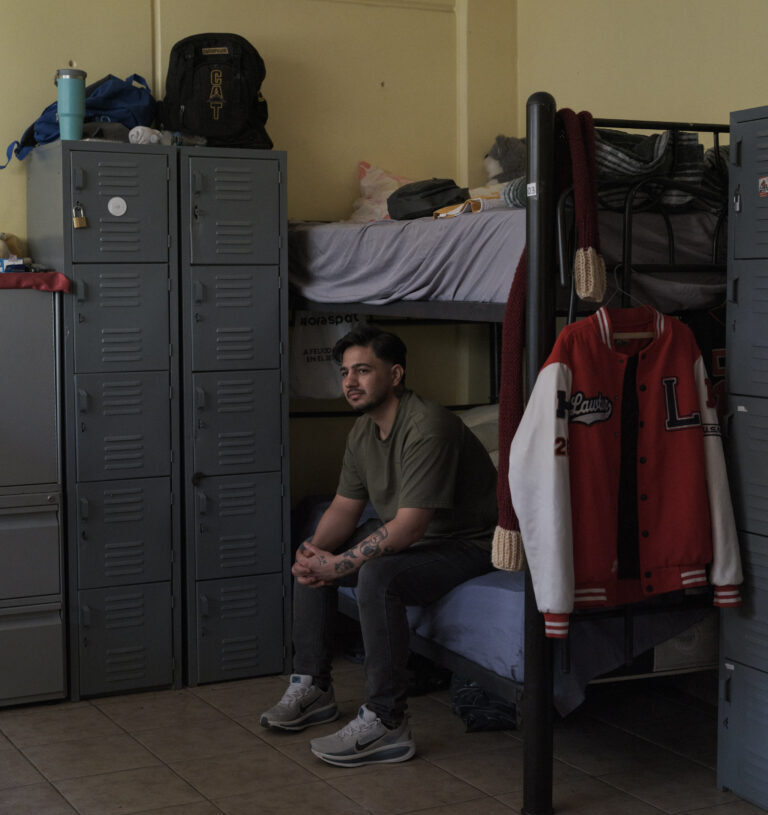
PANAMA CITY — Two years ago, Arsalan Saleh Fard had never heard of this Latin American metropolis. He would have been lost if asked to identify it on a map. But it is here, at times sleeping on a mattress on the floor, where the Iranian-born Saleh Fard was living a life in limbo.
With no legal right to work and no permanent place to stay, the 25-year-old picked up under-the-table shifts at a barbershop to pay for his insulin injections and rent. He arrived knowing no Spanish and had picked up only a few phrases by earlier this year. Virtually all his in-person conversations, he said, came translated through a translation app on his phone.
“I don’t know what to do,” he said in a June interview in Farsi, his native tongue, speaking to The Washington Post via an interpreter. “I am really lost here.”
A bearded young man with an arm covered in tattoos, Saleh Fard is among the 299 migrants whom the United States deported to Panama just weeks after President Donald Trump was inaugurated in January 2025. Like Saleh Fard, none of them had any prior connection to this small country at the southern end of Central America.
Instead, they became subjects of a new strategy for Trump’s second-term immigration policy: As part of deals brokered by the State Department using financial incentives and political pressure, more than 25,000 people have been removed from the U.S. and shipped not back to their home nations, but to “third countries.”
Most of those people have been bussed across the border to Mexico, with their fate effectively handed over to that country’s government. Other cases, which U.S. officials say are meant to deter would-be migrants, have created a geographically chaotic trail of displacement: A Cuban man sent to Liberia. A Cameroonian shipped to Costa Rica. An Afghan jailed in the Central African Republic.
Saleh Fard, who was among the very first migrants deported to a nation he didn’t know, has spent longer in a third country than virtually anyone else.
After he was sent to Panama by the U.S., the Panamanian government gave him a temporary humanitarian permit with no path to stay permanently and no option to work legally. He says he couldn’t go back to Iran, which he fled after facing persecution and an arrest warrant for his role in political protests — the only charge on his record. His conversion from Islam to Christianity could land him a death sentence in Iran, and he had no savings to move elsewhere.
Bella Mosselmans, a human rights lawyer who directs the Global Strategic Litigation Council, a group that has taken legal action on behalf of the people deported to Panama, said Saleh Fard’s situation is an unavoidable result of deportations to countries where migrants might face a language barrier and have little access to legal counsel.
“If you remove 300 people to a country with a nonfunctioning asylum system, many of them aren’t going to be able to access the support services they need,” she said. “It’s kind of inevitable that they’re going to end up in these situations of limbo when they should have had access to protection in the U.S.”
This story is part of The Deportation Project, a joint investigation into third-country removals by 24 media outlets in 15 different countries, organized by Forbidden Stories, a nonprofit news organization based in Paris. As part of that series, The Washington Post investigated how the office at the State Department that once assisted refugees resettling in the U.S. has since been reorganized into the Office of Remigration, cutting deals with foreign governments to accept such third-country deportees.
Saleh Fard was deported under an existing $14 million agreement in which the U.S. paid Panama to prevent migrants who had reached the Central American nation from moving further north. That deal, broadened to deport migrants from the U.S. to Panama and later formalized by the Office of Remigration, has become a sort of playbook for third-country deportations around the globe.
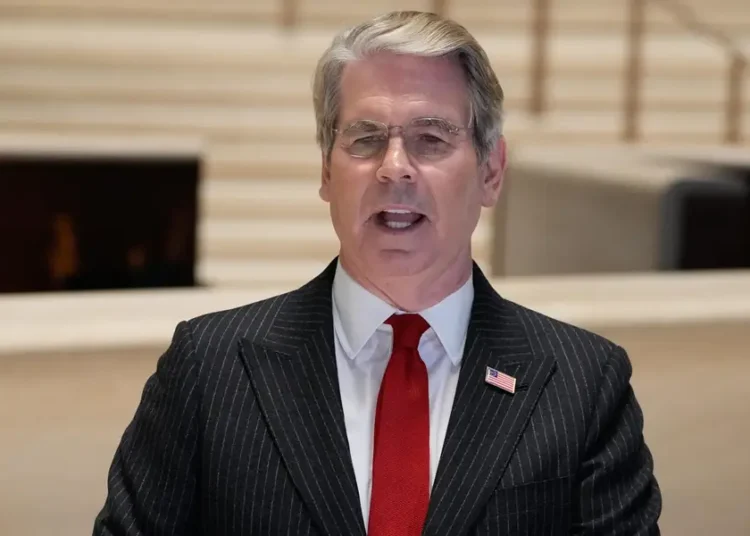
In an interview with The Post last year in Panama City, U.S. Ambassador Kevin Marino Cabrera declined to answer questions about whether Panama was equipped to receive U.S. deportees but said that decisions about deportations were “done within the law.” Trump’s policies, he added, had helped to effectively eliminate illegal migration to the U.S.
“Without borders, you don’t have a country,” Cabrera said. “And we’re going to enforce our borders. We’re going to enforce our national security interest, to make sure that we have the safest country that we’ve ever had before.”
On the other side of Panama City, Saleh Fard and Alberto Agrazal Reyes, a worker from the shelter where he was staying, walked around the concrete-and-palm landscape, running through a mishmash of errands.
Fard remained mostly silent as they went from one stop to the next: a visit to the university where he might be able to take Spanish class, a coffee meeting where Reyes introduced him to a friend, a local church whose leaders wanted to hear his migration story.
Fard signaled for them to stop at a smoke shop, holding out his vape pen. He walked in and went up to the shopkeeper, pointing to an apple-flavored cartridge behind the counter.
“Manzana? Doble manzana?” Saleh Fard asked, attempting a few words in Spanish as Agrazal Reyes hung back.
The shopkeeper told him the price, adding, “Si la compras, la puedes abrir.” If you buy it, you can open it up.
He didn’t understand, staring back blankly.
A cry for ‘help’
Saleh Fard, who grew up in a small city in Iran’s northwestern Qazvin province, said he realized a few years ago that he had to leave.
When protests broke out in Iran in 2022 in response to the death of a young woman in police custody, he wrote slogans and shared stories of resistance on social media. All the while, he started attending services at an underground, Christian “home church.”
He said he had come to associate Islam with Iran’s repressive regime, but Christianity — banned in Iran for all but a few ethnic minorities, and punishable by death — led him to “light, love and goodness,” he said.
Iranian officials seemed to be keeping tabs on him, Saleh Fard said: He received calls from blocked or unknown numbers. After he faced legal trouble, a judge issued a warrant for his arrest.
So he flew to Venezuela, one of the few countries where he could enter as an Iranian without advance permission, and embarked on a weeks-long trek northward to the U.S. Near San Diego, he crossed the border illegally and presented himself to ask for asylum on Feb. 2, 2025, he said.
Saleh Fard never walked freely again inside the borders of the United States, but its government would soon dictate where in the world he could live. He arrived the same day that the Trump administration signed a deal with Panama to “repatriate foreigners that enter [U.S.] territory without authorization” in exchange for “financial assistance.”
Later that month, Saleh Fard said, he was moved from a detention center and put on one of three deportation flights to Panama. Lawyers and many of the 299 migrants deported there, including Saleh Fard, say the U.S. did not give them an opportunity to make a claim for asylum or other forms of protection before putting them on the planes.
When they reached Panamanian soil, however, their fate effectively became Panama’s concern.
The agreement, building on a previous deal, was not meant to leave anyone in Panama permanently, according to internal State Department documents viewed by The Washington Post. Panama was supposed to act as a “bridge” country where migrants would stop before being sent home, with a stay paid for by U.S. officials.
“Under the previous administration, millions of illegal aliens crossed the border, while millions more abused ‘legal’ pathways as the previous administration turned a blind eye to the crisis,” Tommy Pigott, a State Department spokesperson, told The Post in responding to inquiries for The Deportation Project. “The result was crime, destabilization of communities, and the rise of transnational criminal organizations terrorizing Americans across the country. We will never apologize for enforcing the law, bringing this crisis to an end, and protecting the American people.”
Carlos Ruiz Hernández, then Panama’s vice minister for foreign affairs, said in a television interview with “PBS News Hour” in February 2025 that the Panamanian government was “processing, helping them go into this transition to head back home.”
“We are absolutely giving them absolutely everything they need,” he said.
None of the deportees had criminal records, according to Panamanian officials, but they were blocked from moving freely and cut off from the outside world. Shuttled from hotels in Panama City to a jungle camp in the Darién Gap and back again, they said they were denied access to doctors or lawyers, their phones confiscated by authorities.
Nearly two-thirds of them agreed early on to be sent back to their home countries by the United Nations migration agency, a process the organization assisted with at the request of Panamanian authorities. The remaining 112 were barred under international law from being sent back because they told the agency they feared persecution, torture or death.
The group included Afghans who had fled the Taliban, political dissidents who had escaped Russia and an Ethiopian running from a violent militia. Another Iranian Christian convert, like Fard, became the face of the migrants when she wrote “HELP US” in lipstick on the window of a hotel where they were kept by Panamanian authorities.
A month later they were allowed to leave, then dropped next to a bus stop in the middle of the night — with nowhere to go.
Little money, no job, no housing
Migrants rarely seek asylum in Panama, a country of 5 million that more often serves as a pass-through for those on their way north.
The country’s legal system makes it possible on paper to apply for asylum within the first six months of arriving, but only in Spanish. No one proactively told the deportees that they had the option to file for asylum or instructed them how to do so, said Ian Kysel, a Cornell law professor who worked with the deportees. Those staying at the hotel who did fill out the requisite paperwork, Kysel added, had their applications denied in a matter of days.
Organizations such as Fe y Alegría, a Jesuit nonprofit, stepped in to receive the migrants at the bus stop and house most of them in a gymnasium in a working-class neighborhood near the airport. Other humanitarian groups that might have helped were unable to do so because of the Trump administration’s funding cuts to the U.S. Agency for International Development, advocates said.
In March 2025, the Panamanian government issued a little-known and little-used temporary humanitarian permit to the deportees who remained. It offered no ability to work and no path to stay permanently, and it lasted a few months at a time. Twice, just before it expired, officials granted extensions.
Panamanian officials had openly expressed concern about non-Spanish-speaking migrants who may have more trouble returning to their home countries, but Ruiz-Hernández, the vice foreign minister, insisted that they would receive help — even without “the one thing that we cannot give them, which is a green card.”
What that help actually might look like, though, was unclear.
The succession of temporary permits “always seemed like it was intended to be a Damocletian sword,” said Kysel, who led a petition brought on the deportees’ behalf before the Inter-American Commission on Human Rights. “‘We’ll tolerate your presence, but we won’t give you anything. No social benefits, no ability to enter the labor market, no housing.’”
Saleh Fard, like the others, had little money, no job and no ability to work. He spent his days bouncing between the Fe y Alegría shelter gymnasium, where he slept on mattresses on the floor, and the confusing chaos of a city where he did not understand the language.
In the morning, he would exchange messages with family on his cellphone and video-call the wife he had left behind in Iran. In the afternoon, he translated Spanish phrases on Google Translate and reached out to human rights organizations online seeking any kind of help.
“It sort of feels like all we do is kind of like what an animal might. We get up, we eat, we sleep, we eat,” Saleh Fard said. “I don’t know why anyone doesn’t want to help us.”
A choice
Some families and women got special outreach from the few U.N. officials and humanitarian nonprofits present in Panama, and in some cases the groups helped them seek asylum elsewhere. Others, facing the uncertainty of short-term deferrals, got fed up and left Panama on their own. Lawyers and organizations helping them lost track of their whereabouts.
By the summer of 2025, just two dozen people remained at the shelter. Shelter workers split them up into apartments and paid their rent through the end of the year. Days before their humanitarian permits were set to expire last August, they were again extended.
Months went by with Saleh Fard trapped waiting for something to change: He started taking Spanish classes but quit a few months in. The instructor spoke only Spanish, Fard said, and he couldn’t keep up.
Eventually, Fe y Alegria couldn’t keep paying, and Saleh Fard moved in with a Panamanian friend who offered to pay rent if he covered groceries.
He spent most of his time working the job he picked up at a barbershop, where he earned about $200 a month, enough for food and other basic expenses. A handful of times, he had to suddenly pretend to be a customer in the shop when government inspectors entered, so he wouldn’t get in trouble.
In March, as the U.S. war in Iran cut off communication with the outside world, Saleh Fard swallowed an entire bottle of painkillers, intending to kill himself, the roommate said. A friend in Turkey alerted the roommate, who found Fard and took him to a hospital.
He reached a second breaking point, Saleh Fard said, in May, when he headed back to the bureaucratic office he had sought out so many times, looking for answers about the permit that might give him the right to stay longer.
He asked if there was a way to renew it, like he had before, but the woman sitting across the counter shook her head. All of the deportees who needed to rely on these permits, she told him, had already left.
Except he was still here.
As the time ran out on his permit, Saleh Fard faced a choice: If he stayed, he would soon be entirely undocumented and could end up with even less freedom of movement. If he could muster the money and leave, he would have to start over somewhere totally new.
But Panama had taken its toll psychologically, and he dreamed of going somewhere else — maybe attempting to enter the U.S. again, or perhaps making his way to Europe.
He started saving more and more of his paycheck from the barbershop. His family in Iran discovered some savings hidden in a crypto account. His roommate gave him thousands of dollars.
And in late June, more than a year and a half after he first journeyed through Central America — a 17-day ordeal seared into his memory — he did so again, now heading to Mexico.
Yeganeh Torbati and David Nakamura in Washington and Hanieh Yekta contributed to this report.
If you or someone you know needs help, visit 988lifeline.org or call or text the Suicide & Crisis Lifeline at 988.
The post The U.S. sent an Iranian Christian to Panama. It had no plan for what came next. appeared first on Washington Post.