Last week, the Senate Special Committee on Aging made history with the first congressional hearing on menopause. It was long overdue — and marked the latest development in a growing menopause movement reshaping access to treatment for women across the country.
This moment is ripe with potential — and in many ways, California is at the forefront of that progress. But even now, the public and policymakers are not talking about menopause for all women. One major group has been left out of the conversation entirely. That group is women aging in prison.
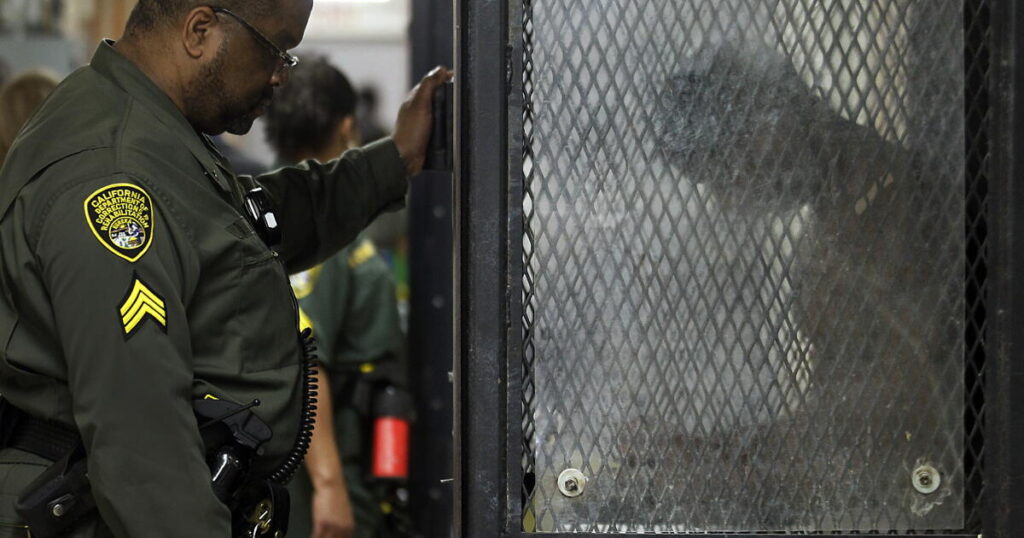
Amid debates about expanded access, new funding and ever-increasing awareness, incarcerated women have remained invisible. The recent hearing — and almost all menopause media coverage — has excluded incarcerated women, though roughly 40% of the 200,000 incarcerated women in this country are within the age range for perimenopause and menopause, a percentage that is growing rapidly each year.
Across the country, these women are aging into menopause with little to no consistent care, in a system that is fundamentally unequipped to recognize or respond to their medical needs. This is a glaring gap in menopause care.
Incarcerated women already face a long list of environmental hazards — extreme heat, unhealthy food and limited opportunities to exercise, to name a few — that significantly complicate and exacerbate menopause and its associated symptoms. Many incarcerated women, like most Americans, have little or no understanding of perimenopause and menopause, including how symptoms may affect them and what treatments may be available. Too many people do not know that the symptoms, if left untreated, may lead to increased risk of osteoporosis, cardiovascular disease and other chronic illnesses. Those incarcerated women who do pursue medical care often encounter staff who do not believe them and are ill-equipped to support them, setting the stage for significant and costly long-term health effects.
Social progress is often too slow, or at worst, nonexistent, for people at the margins. Menopause is the latest in a long list of previously ignored “women’s issues” that have seen movement only after sustained pressure. But even as menopause picks up mainstream cultural traction, the menopausal experiences of incarcerated women remain excluded from the public conversation.
Last year, our organization, Impact Justice, started the Menopause Project — the first-ever national initiative to improve the quality of menopause healthcare in prisons — with support from the California Legislature and the California Department of Corrections, and oversight from an advisory board composed of medical professionals and women who have experienced menopause in prison themselves. The project is coordinating board-certified doctors and menopause specialists to train prison medical staff, including developing resources to help incarcerated women advocate for themselves and training peer support specialists.
We’re already seeing positive results: Incarcerated women have highlighted the immense relief that comes with having their experiences validated and supported. As one woman recently noted, menopause had previously “felt like a personal issue. Now it feels like it’s a normal thing to be treated.” And since our early success in California, we’ve heard from multiple other states, both red and blue, all looking for the funding and resources to provide incarcerated women with better care.
Until we support women at the furthest reaches of care, we will consistently fail to realize a shared vision of health equity. As we usher in a new era of menopause care and improve access to and quality of care outside of prisons, we must leverage our attention and our resources to ensure incarcerated women also receive more and better care. Menopause isn’t just the next frontier in women’s health: It’s our chance to finally build a healthcare movement that reaches everyone.
Alex Busansky is the founder and president of Impact Justice, where Aishatu Yusuf serves as vice president of innovation programs.
The post California leads the way in bringing menopause care to prisons appeared first on Los Angeles Times.