Lizzi Lee is a fellow at the Asia Society Policy Institute’s Center for China Analysis. Jennifer Kwan is a physician-scientist at the Yale School of Medicine.
When President Donald Trump meets Chinese President Xi Jinping in Washington on Thursday, trade, artificial intelligence and national security will be on the agenda. Their governments are separately conducting bilateral talks on AI safety, an acknowledgment that geopolitical rivals sometimes find problems worth managing together.
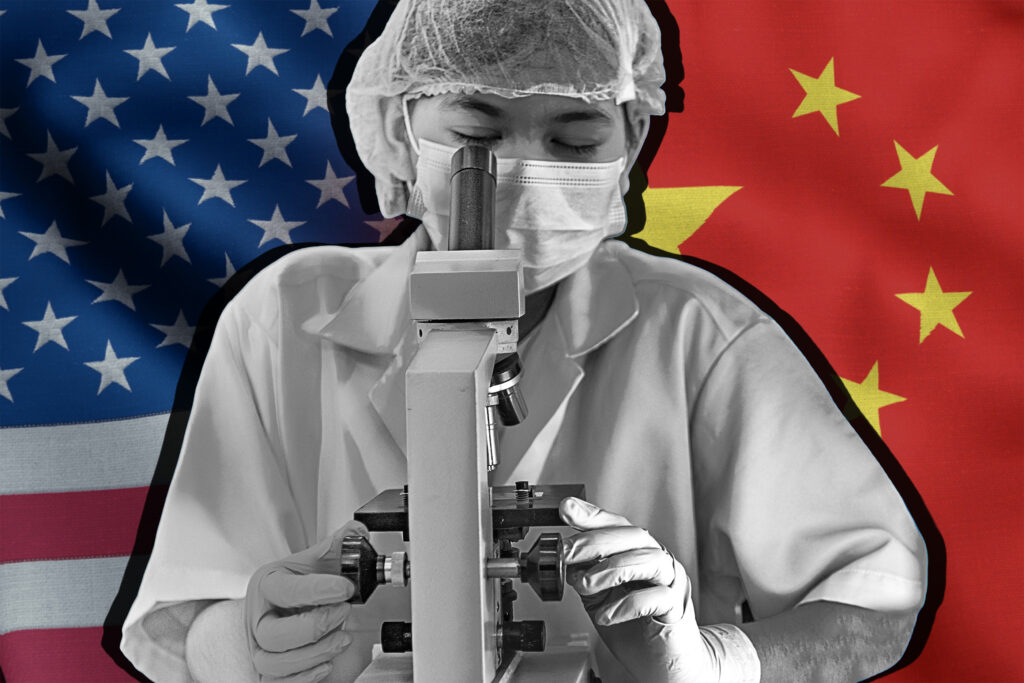
Cancer research should also be on the table. A World Health Organization analysis of 89,069 interventional cancer trials between 1999 and 2022 found that China accounted for 21 percent of actively recruiting oncology studies, compared with 16 percent for the United States. Yet only 18 percent of recruiting cancer trials involved more than one country. Two of the world’s largest cancer-research ecosystems are producing enormous amounts of evidence with little overlap. That separation is costly, especially in precision oncology, in which doctors pursue treatment plans based on the unique DNA patterns in a patient’s tumor.
Patient populations in precision oncology are often scattered across several countries. The benefits of breaking these research silos could be transformative for doctors and cancer patients.
Consider Sid Sijbrandij, co-founder of GitLab, who developed high-grade osteosarcoma of the thoracic spine. After his cancer recurred and options ran out, he assembled an “n-of-1″ strategy — an individualized treatment built around a single patient’s tumor biology. In August 2025, he traveled to Beijing Cancer Hospital for an experimental scan he could not obtain elsewhere at the time. Other parts of his treatment came from the U.S. and Germany. He is now more than a year into remission.
His experience points toward a problem that will become more common as oncology’s precision increases. The smaller the molecular subtype, the less likely that national-level research will be able to treat the cancer. If each case is isolated, doctors will need to start from scratch with each patient. Multinational research networks operating under common protocols and data protection rules, on the other hand, would allow evidence from one patient to inform the next.
A 2025 study of patients treated with anthracycline — a class of antibiotics used to combat many different cancers — found increased risk of heart damage among Asian patients. But Asians made up only 3 percent of the cohort, too few to establish a statistically significant conclusion. As a result, researchers still lack representative evidence about which groups are most likely to develop some treatment toxicities.
People of East Asian ancestry represent nearly one-quarter of the world’s population but accounted for only 3.95 percent of participants in previous genome-wide association studies, according to a 2025 Nature analysis. As genomics shapes treatment selection and medical AI tools, those gaps make precision medicine less precise. China could generate valuable evidence at scale, including findings relevant to millions of Asian Americans. This also extends beyond ancestry. As cancers are divided into ever smaller molecular subtypes, patients with the same targetable mutation will be dispersed geographically. Shared protocols would give researchers larger pools of comparable cases, making it easier to decide if a treatment works and identify side effects.
Genomic information is uniquely sensitive, and the Justice Department’s Data Security Program rightly restricts certain transactions that could give countries of concern access to Americans’ bulk genomic and health information. Protection also has to extend to patients: federal law bars genetic discrimination in employment and health insurance, but gaps in areas such as life, disability and long-term care insurance remain. Though patient-level records could and should stay within the home country, researchers can collaborate on scientific questions and analytic methods. Aggregate findings could travel across borders and scientific exchange would center on replication rather than access.
Cancer clinical trials are a practical place to begin. The U.S. Food and Drug Administration already has mechanisms for accepting qualifying foreign studies that meet requirements for good clinical practice, ethical review, informed consent, data integrity and inspectability. American and Chinese investigators could use this guidance to design studies so that evidence can be evaluated across populations. For rare cancers, this cooperation could be the difference between a study that stalls because it lacks enough enrollment and one that pools together enough data to produce an answer. These efforts also depend on the U.S. continuing to train and retain top scientific talent, including researchers from abroad.
The pharmaceutical industry is already moving in this direction. IQVIA reports that 40 percent of drug candidates licensed by major pharmaceutical companies from external partners in 2025 originated in China. In the first half of 2026, the potential value of China-origin therapeutic licensing transactions reached $92 billion. Pfizer’s collaboration with Chinese biopharmaceutical company Innovent covers 12 oncology programs, pairing Innovent’s discovery and early-development capabilities with Pfizer’s global development and regulatory infrastructure.
Companies are making these deals because they believe the science is valuable, but the U.S. and China should go beyond commercial partnership. Genomic databases need strong protections, as do technologies with clear military or surveillance applications. And U.S. policymakers should be concerned about supply-chain dependencies. But cancer research, particularly under a model where data stays home and research methods travel across borders, can help fine-tune that boundary. The key is to allow independently validated evidence and medicines to move across borders while underlying sensitive assets stay protected.
Sijbrandij had the resources to cross oceans for the technology that could cure his cancer. Most patients do not. There is a way to build a framework in which a rare-cancer patient can benefit from discoveries made abroad. The U.S. does not need to hand the Chinese government its genomic database. American regulators do not need to lower their standards. The two countries can make significant strides on cancer research, even amid deep strategic mistrust. Both governments already have an interest in jointly exploring ways to help suffering patients. They just need to put cancer higher on their agendas.
The post Cancer patients shouldn’t have to cross oceans in search of a cure appeared first on Washington Post.