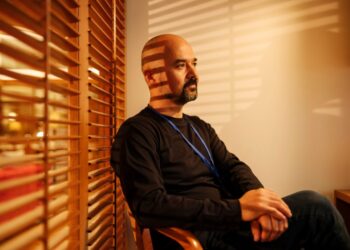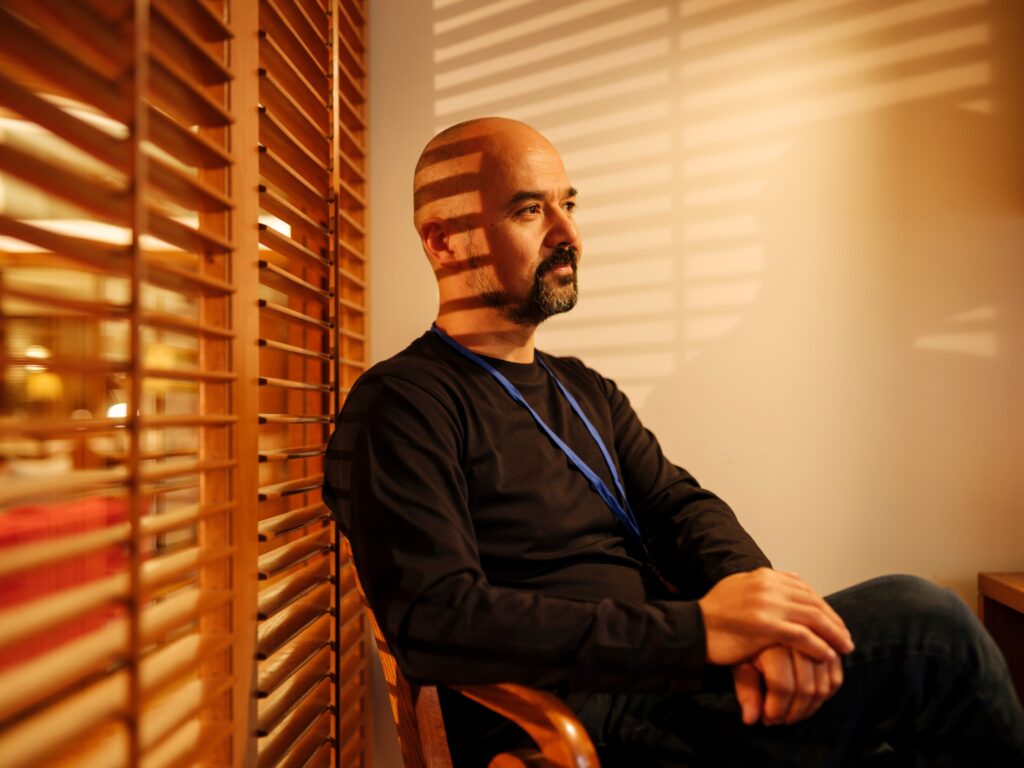
Kasim Kashgar is a prominent Uyghur dissident, an international journalist, a soon-to-be memoirist. But this summer, sitting in a classroom at American University in Washington, D.C., he could have been easily mistaken for an everyday business student.
Kashgar was by all measures a success in China: As a university student he ranked highly in national English speaking competitions and went on to start a language training school in the city of Ürümqi in northwest China. But he fled amid the country’s deadly mass detentions of the Uyghurs — a Muslim ethnic minority — which many observers have called a genocide.
He told his wife on a May 2017 flight out of the country with their toddler that they wouldn’t be returning home.
Once in the United States, he applied for political asylum — a lengthy process — and after receiving his work permit, delivered pizzas for Domino’s in Northern Virginia and drove for Lyft.
In late 2018, Kashgar was hired by Voice of America as its first and only Uyghur reporter, starting later in May 2019. He wrote under a pen name, Asim Kashgarian, for fear of China’s retribution against him and his family. He received political asylum in late 2022 and decided early the next year to begin publishing under his real name.
At VOA, he reported on China’s ethnic minorities — mostly the plight of the Uyghurs, but also Mongolians and Tibetans — and published in English, Mandarin Chinese and the Uyghur language. He knew that by publishing at VOA, the Chinese authorities would “pay attention.”
But that same government that granted him asylum later fired him. In March 2025, Kashgar and more than 1,000 colleagues — including fellow asylum holders — were fired or prevented from working by the Trump administration. While many of VOA’s employees are still on payroll while litigation plays out in federal court, Kashgar and hundreds of others had been classified as contractors and thus afforded fewer employment protections. He was out of a job, a paycheck and a clear route forward with a wife and four children to support.
Kashgar is one of roughly 35 journalists in the first cohort of the Freedom Media Innovation Lab, a program launched this year by American University’s Kogod School of Business to help former VOA staffers build sustainable media ventures of their own.
“It’s hard to overstate the impact on individuals,” said VOA director Michael Abramowitz, who helped set up the program. “These are people who worked for the government for years and they were dumped out into a job market that frankly is just terrible.” Abramowitz, a former Washington Post journalist, has been suing the government while himself on paid administrative leave.
After the Trump administration fired him, Kashgar, who for years posted free English lessons on YouTube, built an English-learning app that did live virtual lessons for the Uyghur diaspora. That brought in what he called “survival income” to keep himself afloat. All the while, he was dreaming up what would become a news business of his own called the Uyghur Monitor and plans to publish under the trade name Kozet, which means “to observe.”
Kashgar was already raising grant money for the project — he’d spent 10 months building it, registering it as a nonprofit, recruiting three board members and landing $200,000 from the National Endowment for Democracy, plus smaller grants from Reporters Without Borders and another group — when he learned about American’s program.
During the summer, American brought in instructors and guest lecturers for an entrepreneurship boot camp — focusing on topics like financial management, corporate storytelling and artificial intelligence. That was followed by an August pitch competition for their would-be businesses. A select few would win up to $50,000 to help kick-start their ventures.
Kashgar asked for an additional $45,256 — a sum he arrived at through a granular, line-by-line budget, he said. “Each dollar has its own place, and I did my homework,” he said.
Rendy Wicaksana never imagined himself as an entrepreneur. “I’ve always told myself that I don’t think I have what it takes,” he said. “I think I underestimated myself.”
Wicaksana joined VOA in 2018 through a fellowship in its Washington bureau, then became the Jakarta correspondent for VOA Indonesia before transferring to the network’s New York bureau in 2022 — where he remained, as a contractor, until he was let go in March 2025. “Totally cut off,” he said of the firing, “with no crumbs left.”
He heard about the Freedom Media Innovation Lab the way many former VOA staffers did: through a group chat still used by VOA’s Indonesian service employees to trade updates on litigation and job prospects.
By then, a venture already existed for him to join. A former VOA colleague, Vina Mubtadi, had started Suara Amerika — literally, “Voice of America” in Indonesian — as a social-media-based project after VOA Indonesia went dark. Wicaksana joined her as co-founder and worked together on a pitch for the AU program.
The venture produces short-form videos for Indonesian audiences on social media, with a current focus on U.S. immigration policy — a subject, Wicaksana said, of intense interest among Indonesians hoping to study, work or otherwise build a life in America. It has drawn some 60,000 followers across platforms, according to its founders.
Mubtadi said this isn’t a news platform she’s building but rather a “community platform at the intersection of journalism and education.” They cover Indonesian diaspora stories and immigration news rather than breaking news, politics or the “everyday American life” coverage VOA Indonesia once provided, she said.
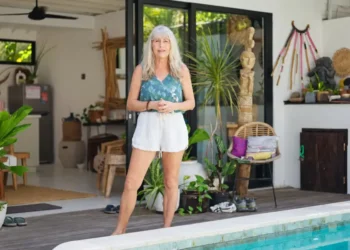
Salem Solomon was raised largely in Eritrea, one of the most censored countries on Earth that ranked below North Korea by press freedom advocacy groups until last year.
“I learned firsthand what happens to people who are cut off from reliable information,” she said. “When there is no reliable information, people lose the power to shape their own future.”
Solomon worked as a nightly news anchor in Eritrea before coming to the United States around 2015 on a scholarship to pursue a master’s degree. She interned at VOA that same year.
Solomon was a full-time VOA employee, not a contractor — a distinction that has meant she remains on paid administrative leave. While on leave, Solomon has spent her time reviving a long-dormant project: Africa Talks, a media venture she first launched as a volunteer at a local TV and radio station in Columbia, Missouri, in 2018.
Her pitch to the program’s judges — a mix of business, journalism and investment professionals — centered on a complaint she has carried through her own reporting career: that American coverage of Africa is largely episodic, parachuted in when crises erupt, rather than sustained and in-depth.
She said that she would use funding to pay stringers across the African continent for on-the-ground reporting and video alongside training for local journalists.
American has raised nearly $1.5 million of its $2 million target for the program, from private individuals and foundations including the Rockefeller and MacArthur foundations. Of that, the university has committed an initial $500,000 to fund 10 to 12 ventures from this first cohort — with plans to run additional cohorts, and additional pitch competitions, in the coming months.
“By combining capital, American University’s expertise in supporting entrepreneurs, and these journalists’ expertise, we have a real chance of creating sustainable businesses and making a difference in societies which lack a free press,” said David Marchick, American University’s interim president and the former dean of its business school.
Susan Apgood, the program’s lead, agreed. “Journalism doesn’t stop being essential just because the funding around it dries up,” she said. “We’re giving experienced, mission-driven journalists the capital and business training to build outlets that can sustain independent reporting for the long-term in regions of the world where a free press matters most.”
The participants of American’s first pitch competition found out the results on Sept. 16. The teams from Africa Talks and Suara Amerika weren’t selected, but they’re going to keep working and trudge ahead.
“We’ll keep refining our revenue model and content strategy, and exploring other funding opportunities,” Mubtadi said. “One step back, two steps forward.”
Solomon said she’s grateful for the training, which she said has helped her “sharpen what’s needed to build this venture” and for a community that’s going to keep supporting her.
Apgood said she is working on a way for non-recipients to reapply for any remaining funding after the second and third cohorts are complete, though that plan is not finalized.
Kashgar was more fortunate. He was among the nine winners of the pitch competition and received the exact amount of money that he so carefully budgeted and requested: $45,256.
“I was hoping to get that news, so our organization would be able to put it on the record and move forward with what we’ve prepared,” he said. “Hopefully, we’ll be able to finally be able to publish our first series of reports in the coming days and weeks. That’s a great feeling.”
The post After losing their Voice of America jobs, journalists pitch their second acts appeared first on Washington Post.