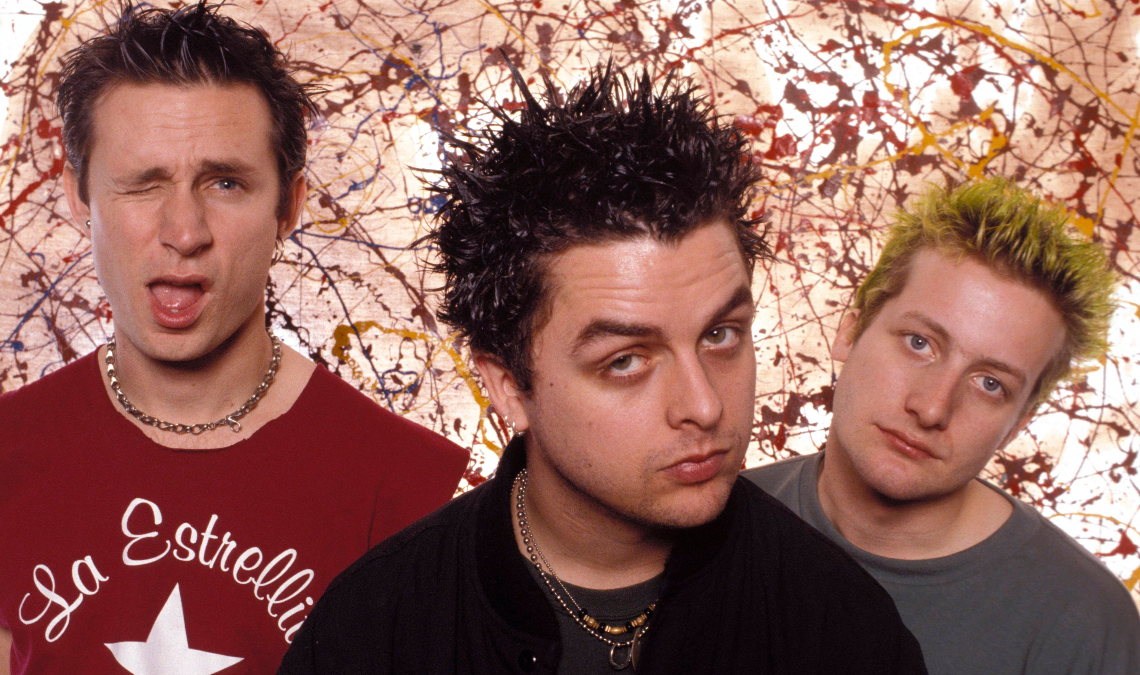
Around the age of 14, Billie Joe Armstrong began writing his own music. As a child, he recorded a local track called “Look For Love” at the age of 5. At 11, he got his first electric guitar, a light-blue Fernandes Stratocaster called “Blue” that Armstrong still owns. When Armstrong was 14, he wrote his first full song titled “Why Do You Want Him?”, about his mother and stepfather. One year later, Armstrong started a band with his schoolmate and best friend Mike Dirnt. He met Dirnt in the school cafeteria at age 10 and instantly became friends, bonding over music. Dirnt initially wanted to become a stand-up comedian long before becoming a legendary bass player.
Originally named Sweet Children, the band recruited John Kiffmeyer to play drums. At age 17, the group renamed themselves Green Day and released their debut EP, 1,000 Hours. At the time, the band frequently performed at the local punk club 924 Gilman Street in Berkeley, California. In 1990, they recorded their debut album, 39/Smooth. Following the debut release, they were met with critical acclaim. They followed up with two more EPs that year, Slappy and Sweet Children. Songs from all of these releases were turned into a compilation album released in 1991 titled 1,039/Smothered Out Slappy Hours.
In 1990, drummer John Kiffmeyer left the group to attend college. He was soon replaced by Tré Cool, and the band recorded its second album, Kerplunk. Released on December 17, 1991, Kerplunk followed the success of Nirvana’s Nevermind. They were then considered to be “the next Nirvana”. In 1993, Rob Cavallo signed the band to Reprise Records and began recording the band’s third album, Dookie.
Green Day Breaks Into The Mainstream
Up until this point, Green Day had still frequently performed at their local Berkeley punk club, 924 Gilman Street. When they signed with Reprise Records, they violated the club’s strict DIY rules. Six months before their major debut release, the band played a “farewell” show at Gilman Street on September 3, 1993. Local punk fans accused the group of “selling out”, and the band was blackballed from their own local scene.
Released on February 1, 1994, Green Day’s Dookie is one of the most defining punk rock albums of the 1990s. Additionally, it’s one of the most influential pop-punk albums of all time. Their major-label debut peaked at No. 2 on the Billboard 200, with all four singles dominating the Alternative Airplay and Mainstream Rock Charts.
This ban didn’t last forever, though. On September 16, 2001, the band made a surprise appearance at the club. They hopped onto the stage, borrowing another band’s gear to perform a short set. On May 17, 2015, the band performed at a highly publicized surprise benefit concert at the venue to raise funds for local Oakland publishing and recording space which were affected by a massive warehouse fire.
Even though the punk rock community turned its back on Green Day, the band didn’t hesitate to return to their early stomping grounds to help out in a time of need.
Photo by Robert Knight Archive/Redferns
The post The Green Day Album That Got Them Banned From the Punk Club That Made Them Famous appeared first on VICE.