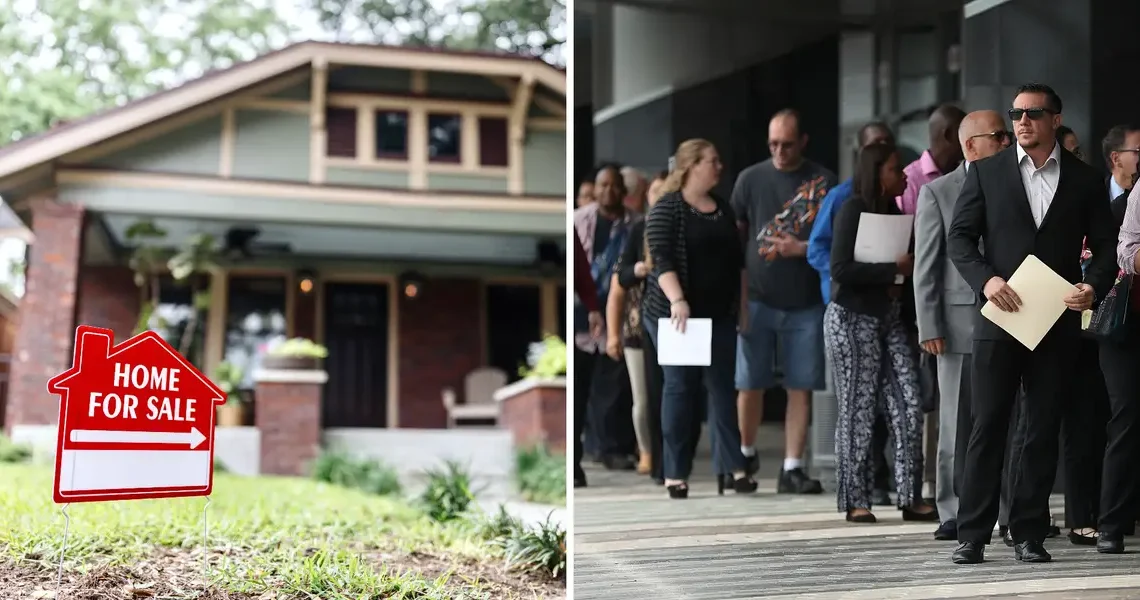

If you’ve been waiting for a better time to find a job or buy a home, brace yourself: Things might not get much better anytime soon.
Two years ago, I wrote about an economy divided between Americans who’d locked in jobs and homes when conditions were favorable versus those who didn’t. The hiring boom had become a hiring slump, while mortgage rates and home prices had both risen considerably.
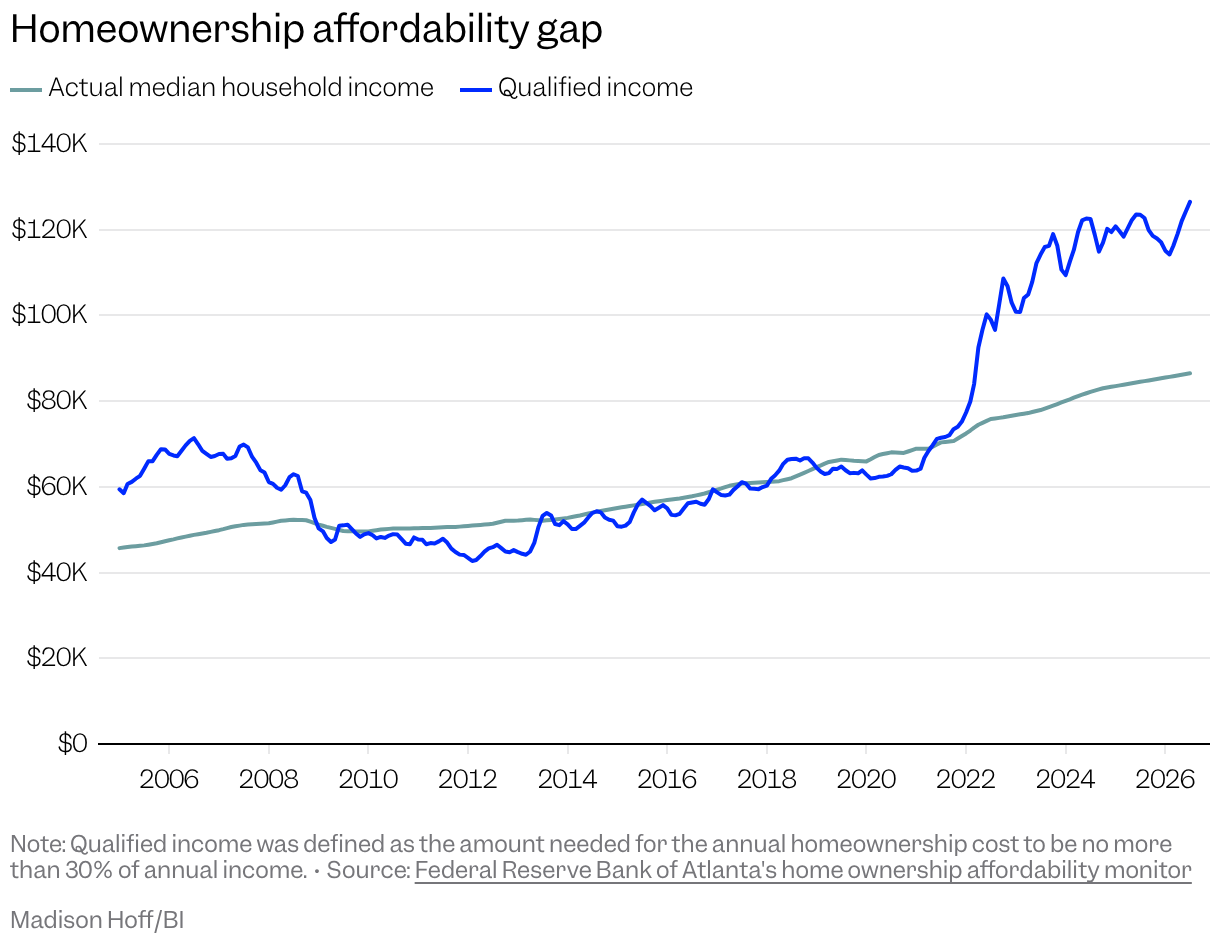
Two years later, finding a job or buying a home hasn’t gotten much easier, outside of a few pockets of opportunity. US businesses are hiring at roughly the same rate as they were two years ago — near the lowest level since the Great Recession. Home affordability remains about as bad as it’s been in decades.
For job seekers and prospective homebuyers, this raises an uncomfortable question: What if this isn’t just a rough patch? What if it’s the new normal?
The low-hire, low-fire job market is looking less temporary
Gautam Dev has been looking for a full-time job since his software engineering role ended in October 2024. Before then, gaps in his more than two-decade IT career had typically lasted only a few months.
“I never thought it’d be so severe because I have always been able to find a job,” said Dev, who’s in his 60s and lives in Dallas.

For the last few years, economists have been wondering when America’s low-hire, low-fire job market might finally change. Would employers regain the confidence to start hiring more aggressively, or would a weakening economy lead to a broader surge in layoffs? So far, neither has happened.
“The labor market remains low-hire and low-fire, and at this point, it’s starting to look less like a phase and more like the new normal,” Sneha Puri, an economist at Indeed Hiring Lab, wrote in a blog post earlier this month.
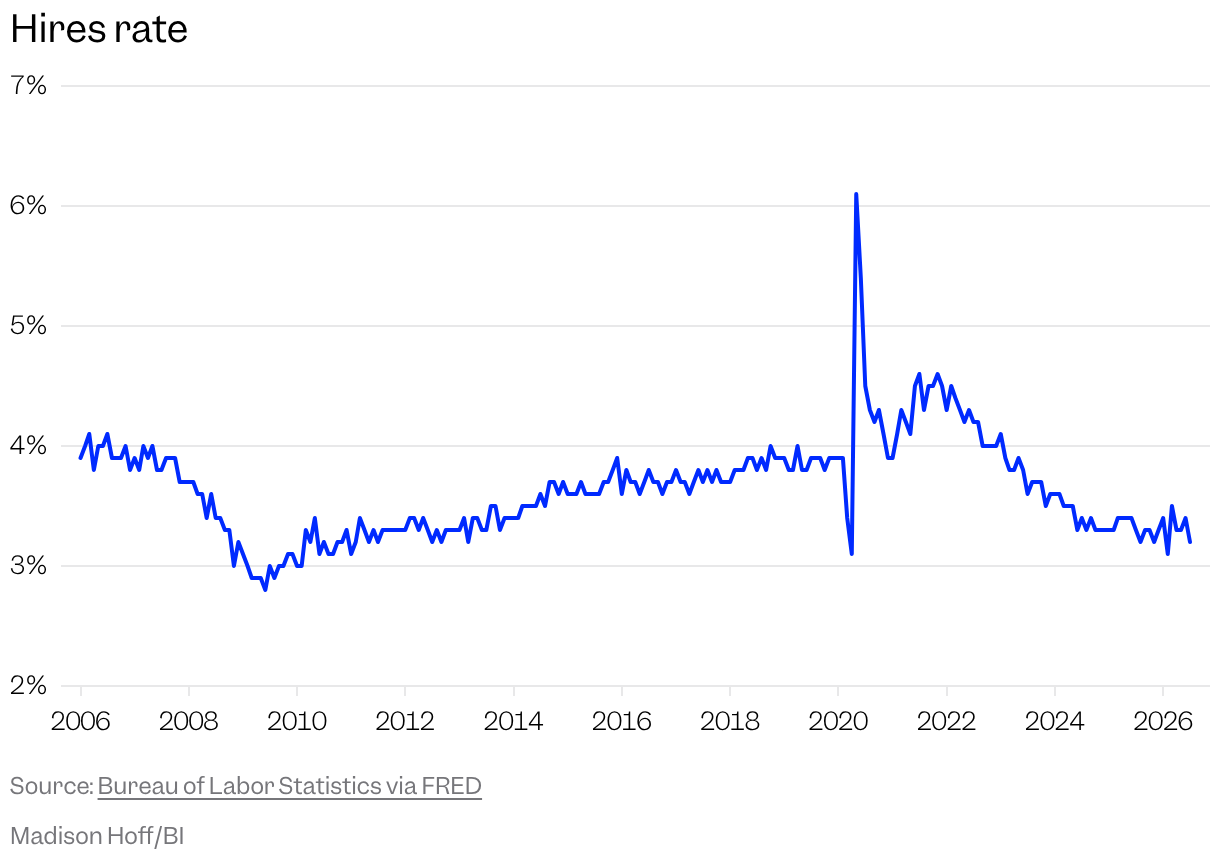
A mix of forces could explain slower hiring, including economic uncertainty tied to tariffs and the Iran war, pandemic-era overhiring, and the early effects of AI adoption. Workers are quitting their jobs less often, leaving fewer openings for employers to backfill and perpetuating a cycle: Weak hiring gives workers fewer jobs worth quitting for, while fewer quits give employers fewer new positions to fill.
An aging workforce could be contributing to the trend, since older workers tend to switch jobs less often. Retirements and slowing immigration have also contributed to a shrinking labor force over the past year, which could make it harder for some companies to find qualified workers to hire.
Puri said one thing that could help break the stalemate is companies investing in entry-level workers again, rather than viewing them as a cost to cut. Doing so could boost hiring today while expanding the pool of experienced workers available to employers in the future.
AI remains perhaps the biggest wild card for the future of hiring. Some studies have found employment declines in the most AI-exposed jobs, while others have found that heavy AI investment can go hand in hand with more hiring.
Still, economists aren’t expecting a broader hiring boom anytime soon. In an August Indeed survey of more than 100 US economists, respondents on average expected hiring demand to decline modestly over the next year.
If they’re correct, job seekers might have to get used to more of the same.
Homebuyers shouldn’t expect a big break anytime soon
Prospective homebuyers have spent the past few years waiting for relief. If home prices weren’t going to fall meaningfully, they hoped lower mortgage rates would make payments easier to stomach.
That relief has largely failed to arrive.
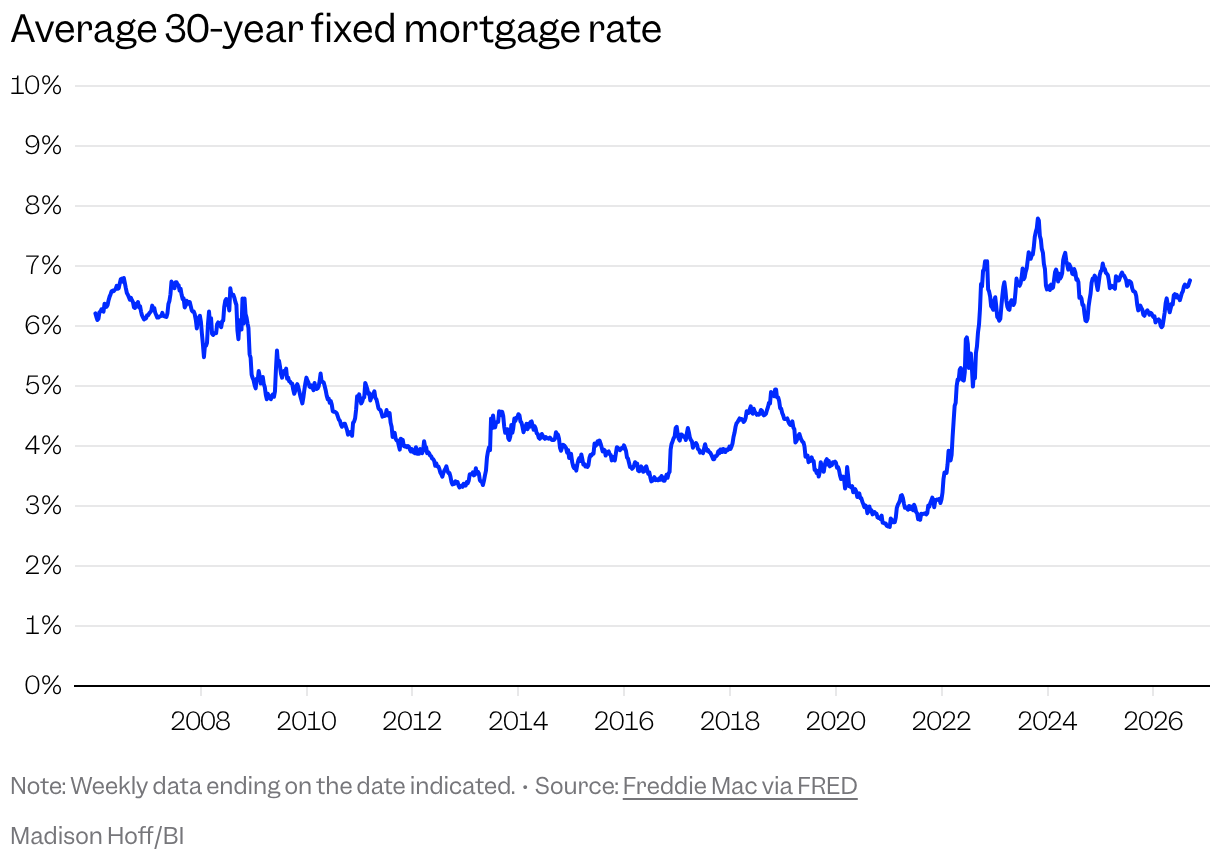
The Federal Reserve has lowered interest rates from highs reached in 2024, but mortgage rates remain elevated. That’s partly because persistent inflation and relatively low unemployment limited how aggressively the Fed could lower rates. On Wednesday, the Fed reversed course, raising rates for the first time since 2023 as it continued to grapple with elevated inflation.
But Fed policy is only part of the equation. The Fed doesn’t directly set mortgage rates, which are tied more closely to longer-term borrowing costs that have remained elevated amid concerns about inflation and the national debt.
There are other ways affordability could improve. Wages could rise faster than home prices, or an increase in housing supply could put downward pressure on prices. But there’s no guarantee either will provide meaningful relief anytime soon.
In the coming years, many housing experts expect home prices nationally to stay relatively flat. But there’s not much relief expected from mortgage rates, which are widely expected to remain above 6% for the foreseeable future.
If they’re right, many would-be buyers could be waiting a while longer for their shot at the American dream.
What if waiting isn’t an option?
If this really is a years-long “new normal” for the job and housing markets, Americans may have to adapt to the economy they have rather than wait for the one they want. It could mean switching careers, embracing life as a renter, or moving somewhere more affordable.
Dev, the job-hunting software engineer, has already had to adapt. He’s turned to gig work through DoorDash and Walmart Spark to help pay his bills but said his Dallas apartment has become harder to afford.
He would like to move to a cheaper apartment, but he’s worried that without steady employment, he wouldn’t meet another landlord’s income requirements. And even if he was approved, Dev said the process of moving would take valuable time away from his gig work.
“Right now I’m stuck here,” he said.
Do you have a story to share? Reach out to the reporter via email at [email protected], or via Signal at jzinkula.29.
Read the original article on Business Insider
The post America’s job and housing markets are stuck. What if that’s the new normal? appeared first on Business Insider.