When 16-year-old Lesley Hornby, the British model known for her skinny frame, freckles, blond pixie cut and blue eyes fringed with heavy false lashes, was discovered in 1966 by a fashion editor, her look hit like a lightning bolt.
Twiggy, as she was instantly renamed, was nothing like the models popular at that time — sultry, mature, upper class-coded women like Jean Shrimpton. She was from a working-class family — her father was a carpenter. At 5-foot-6 she was petite and almost childlike.
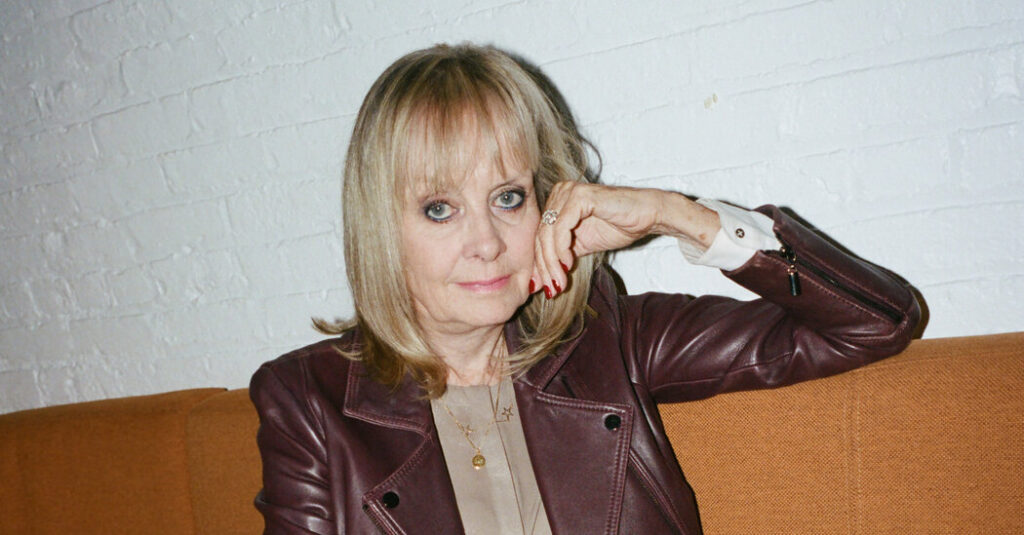
“I didn’t look like the models of that day,” Twiggy, now nearly 77, said over coffee last week at Bottino restaurant in Manhattan. “Girls from working-class families didn’t become models.”
But a new era was dawning in the 1960s; music and fashion were all about youth, openness and social mobility. Twiggy seemed to embody London’s youthquake, and its mod scene, telegraphing fresh energy and new possibilities.
Twiggy’s famous face launched a thousand commodities, a marketing tool for cosmetics, clothes and lunch boxes. But her real-life story, which unfolds in the director Sadie Frost’s thoughtful 2025 documentary, “Twiggy: The Woman Behind the Icon,” which arrives in America this month, continued long after the youthquake subsided.
An Unusual Celebrity Story
It’s easy to see traces of the young Twiggy in her still youthful face. Her hair remains blond; bangs still frame her blue eyes. And she still goes by the moniker Twiggy.
Aging doesn’t bother her. “I don’t spend a lot of time thinking about what I look like,” she said. “If you start getting into that, about, ‘Oh my God, I’ve got this wrinkle and that wrinkle…’” She trailed off, but her point was clear: She is comfortable in her skin.
Rather than flatten herself to fit her cartoonlike status, Twiggy used fame to explore myriad art forms over a 60-year career, including film, theater, fashion design, dance and singing, proving gifted at all of them.
After four years as a model, working with photographers including Barry Lategan (whose early photos first got Twiggy noticed), Cecil Beaton, Bert Stern, Richard Avedon and Helmut Newton, she moved on to cinema. The director Ken Russell was so impressed with her that, although she had no acting, singing or dancing experience, he cast her as the lead in his 1971 film musical, “The Boy Friend,” opposite co-stars Christopher Gable, who’d danced with the Royal Ballet, and Tommy Tune, already a Broadway star. Russell sent her to singing and dance classes, which she plunged into with enthusiasm.
She learned to tap in a year. “It was harder for Chris Gable to learn tap than for me, because ballet dancers do everything turned out,” she said, remembering with a laugh that she’d had an advantage in this over her professional ballet star colleague.
That film role earned Twiggy two Golden Globes. She went on to star on the London stage and appeared in dozens of films and television shows. She recorded albums and designed fashion lines. In 1983, she co-starred with her old friend Tommy Tune in a Broadway revival of the Gershwin musical, “My One and Only,” which earned her a Tony nomination.
“He’s another one who changed my life,” she said of Tune. “He always takes my breath away. He’s elegance personified.”
Frost’s documentary shows Twiggy coping with crowds lunging toward her, talk show hosts leeringly asking about her body, and even an interview, while still a teen, with Woody Allen, who badgers her with condescending questions, including “Who’s your favorite philosopher?” Twiggy met every situation with polite but firm answers. “Who’s your favorite philosopher?” she asks Allen, stunning him into silence.
Poised and Protected
What explains such poise? Twiggy’s eyes filled as she gestured heavenward and replied, “One hundred percent Norman,” referring to the father she adored. “Dad became my rock when Mum would go into hospital,” she explained. Nell Hornby struggled with mental illness throughout Twiggy’s childhood, disappearing periodically into psychiatric wards, leaving Norman to care for their three daughters. (Twiggy was the youngest.) “He kept me kind of away from it,” she said. “Protected.”
Perhaps even more important was the steadfast love Norman showed his ill wife. Twiggy recalls that, when asked why he “put up with Nell,” Norman would simply say, “Because I love her.”
In addition to her father, she found a protector during her early modeling years in her then-boyfriend and manager, Justin de Villeneuve, who despite his evident peccadilloes, kept her safe. “He looked after me,” she said. “I was a kid, but nobody touched me.”
Twiggy weathered other storms over the years, especially the sudden death of her first husband, the actor Michael Witney, when their daughter Carly was just turning five. Happily remarried for nearly four decades to the actor, writer and director Leigh Lawson, she’s a doting grandmother to Carly’s two children and surrounded by adoring friends, many of whom figure in Frost’s film, including Dustin Hoffman, Fran Drescher (whose show, “The Nanny” was inspired by her friendship with Twiggy), the actress Joanna Lumley, Paul McCartney and Stella McCartney (who designed the cream tuxedo Twiggy wore in 2019 to receive her damehood at Buckingham Palace).
The day we met she wore a cream blouse, maroon and cream patterned pants by Zara, white trainers and a maroon leather jacket from her erstwhile midpriced Twiggy line at Marks & Spencer. “I’m not a big high-end fashion buyer,” she said, adding: “I can’t wear high heels. I hate them.”
Her obvious ease with herself accounts for her ongoing appeal, to women in her own age bracket and even to very young people. The majority of Twiggy’s fan mail, which she answers herself, comes, she said, from 14- to 25-year-olds. This is likely due in part to the perennial interest in ’60s fashion, but it speaks also to the timeless quality of that “Twiggy” icon, or as she describes her image, “this little person who kinds of sits on my shoulder and never goes away.”
The post Forever Twiggy appeared first on New York Times.