How did you first learn of the attacks on Sept. 11, 2001? Was it your mother’s panicked phone call? Your roommate shaking you awake with the news? The anxious chatter on your commuter train? No matter how you answer, our research suggests you may have around 40% of the details wrong.
The questions are not about the facts of the event itself, but rather the circumstance of learning about the event – what psychologists call flashbulb memories. People don’t remember such personal details for most news events, but for a select few, they do. For instance, Americans of a certain age also have flashbulb memories of hearing about President John F. Kennedy’s assassination.
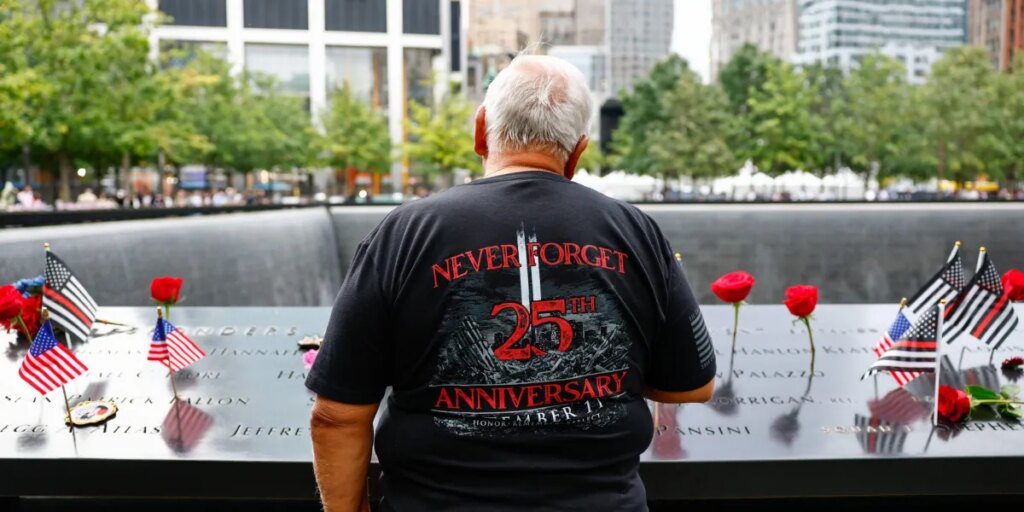
Flashbulb memories can last a lifetime. Twenty-five years after the 9/11 attacks, people can still describe in detail how they learned of the attacks. But there is an important caveat: These long-lasting memories may not be as accurate as you might like to believe.
Comparing memories over time
In research that we launched in the days after the attacks, we asked a few thousand people across the United States to tell us their memories. We asked them to tell us how they learned about the attacks, who they were with, where they were, what they were doing beforehand and how they felt. We also asked how confident they were that their memory was accurate.
We followed up with the same people one year, three years and 10 years later. We are now collecting their memories after a quarter century.
After only a year, about 40% of these details did not match what our volunteers had reported a few days after the attacks. Despite this high level of inconsistency, people were extremely confident their memories were correct.
For example, after a year, one person reported he was on the train when he heard of the attacks; initially he said he was at work. Another person initially described being with her husband; a year later she remembered being with her son.
Interestingly, these erroneous memories became stable over time. What most people reported after one year – even if the memory was in error – remained their memory when we assessed it later.
As you might imagine, when we talk about these findings, we are usually met with protest. People often tell us that this may be true of others, but they are certain their own memory is correct. We, too, believe our recollections of learning about 9/11 are accurate. But because we are memory researchers, we know there is a good chance that about 40% of the details we remember are wrong.
Memories aren’t photographs
Psychologists have long known that memories are dynamic, not fixed.
Neuroscientists have uncovered windows of time when memories are vulnerable to change. That memories of 9/11 change over time is not surprising. Memory is a reconstruction of past events, not a stable archive. Errors are common. What is surprising is that people have a hard time believing their memories changed.
This incredulity is likely because people expect confidence in a memory’s accuracy to reflect its objective accuracy. Research shows that this assumption is generally true, but there are exceptions. Emotional events lead to both better memory for a few important details and greater confidence in that memory, despite worse recall for many other details.
And memories for emotional or important events are often discussed with others. Researchers have found that the social acknowledgment that accompanies sharing a memory can boost confidence in its accuracy. We believe that the inflated confidence we see for flashbulb memories of 9/11 emerges because the event was both highly emotional and people shared their experiences widely with others.
Being confident a memory is correct allows you to treat it as accurate, even if some details are not.

Building identity from memories
Memories you believe are accurate are more likely to shape your identity and guide your future actions. For significant personal events, people’s memories often shift to reflect themselves in the best possible light. People create a story of their life that enhances their well-being.
Being confident a memory is correct enables you to make it an important part of who you are. Flashbulb memories are specific to a community and help bind you to that community. For flashbulb memories of 9/11, this includes the social identity of being American.
A survey from the 1970s found 75% of Black Americans had flashbulb memories of learning of the assassination of Martin Luther King Jr., whereas only 32% of white Americans did. Most Britons have a flashbulb memory of learning of the death of Princess Diana. Most Italians do not.
Several studies underscore how flashbulb memories bind people together socially. One found that people perceived Americans who have a flashbulb memory of 9/11 to have a stronger American identity than those without a flashbulb memory. Another demonstrated that people think a person’s identity as an American would suffer if they lost their memory of 9/11. This loss of identity was perceived as greater if the person forgot their flashbulb memory than if they forgot the attack itself.
So, if you told your story of how you learned about 9/11 on the recent anniversary, and if you tell it again in the future, you likely recounted a story you believe to be true, even if it is not completely accurate.
But getting a few details wrong may not be all that important. By telling your story, you are not just sharing an interesting tale with your companions. You are providing a narrative that binds you with other Americans, tacitly both asserting and affirming your shared membership in a community devastated by the terrorist attack that unfolded on Sept. 11, 2001.
Elizabeth A. Phelps, Professor of Psychology, Harvard University and William Hirst, Professor of Psychology, The New School
This article is republished from The Conversation under a Creative Commons license. Read the original article.
The post We followed people’s memories of 9/11 over the past 25 years — they started hallucinating things by 2002 and never stopped appeared first on Fortune.