Seven years ago, Siân Heder learned on the fly with her crew how to design a house that a deaf family would live in for her Oscar-winning film “CODA.” But her latest movie, “Being Heumann,” had a much steeper learning curve as the filmmaker was tasked with creating a production environment for dozens of actors with various disabilities.
“How do we accommodate for a deaf cast and a blind cast and all these different wheelchair users and everyone’s body has a different need and sometimes those needs are at cross purposes with each other?” Heder told TheWrap at the Toronto International Film Festival. “Disability and movie making are also kind of at cross purposes in the sense that movies are on an intense schedule. Time means money. You’re losing the light, or you have to move out of a location.”
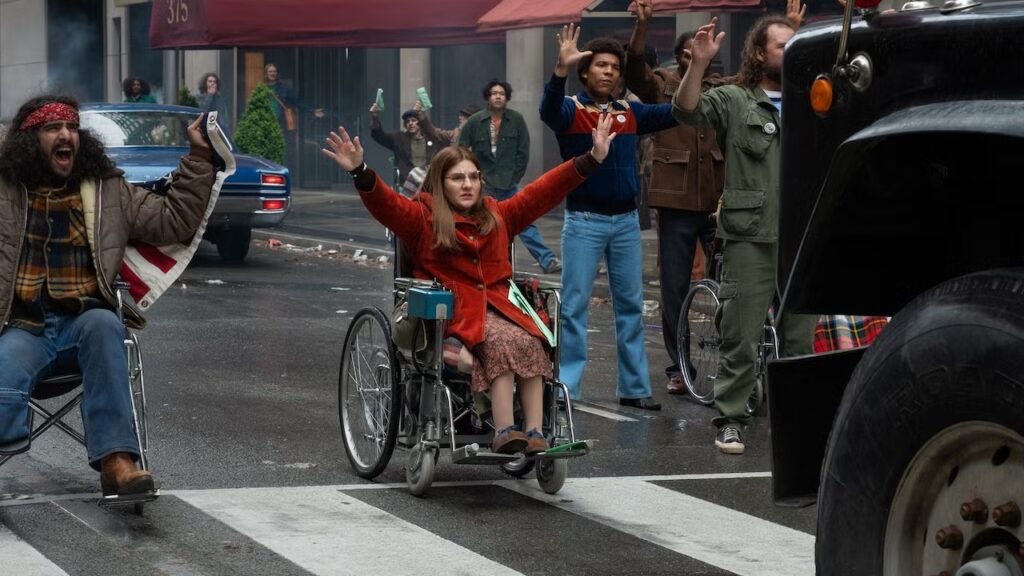
“Being Heumann” stars Ruth Madeley as famed disabled rights activist Judith Heumann and recounts the famed 504 sit-in protests in which dozens of disabled people took over the San Francisco offices of the U.S. Health Department and remained inside for four weeks, receiving help from the Black Panther Party and the Salvation Army among other organizations. The protests were aimed at U.S. Health Secretary Joseph Califano, played by Mark Ruffalo, to pressure him to sign regulations to Section 504 of the Rehabilitation Act of 1973 that were a major stepping stone to the passage of the Americans with Disabilities Act more than a decade later.
Madeley and all the other actors who played the protestors are actual disabled performers, and those who required wheelchairs had to perform in wheelchairs that were period accurate to the 1970s. It turned out that this was no easy feat.
“A lot of our cast were learning about their own bodies and going, ‘Oh wait, I thought I could be in a vintage wheelchair, but I wasn’t feeling what that would be like after 10 hours,’” Heder said.
Madeley took it upon herself to be a “mother hen” for all the background actors, making sure that Heder and the producers were aware of their needs. That desire to take charge came from learning over the course of her career that it is OK as a disabled actor to ask for things that able-bodied actors wouldn’t require.
“At the start of my career, if somebody said to me, ‘Oh, we don’t have an accessible bathroom,’ I would have been like, ‘Don’t worry, I just won’t drink.’ So, to be able to see a little bit of myself in some of the other cast members who are coming at this for the first time, and be able to share a bit of that support and lend an ear if it was needed, just to say that it’s OK if they need to get out of their chair,” Madeley said.
Heder estimated that her crew had to build a dozen accessible trailers with lifts for their background actors and had to come up with other solutions for unique challenges, such as getting blind actors to do ADR when they could not see the footage and match their dialogue over their lip movements. In doing so, she hopes that she can show other filmmakers that there are ways to include more disabled actors in their productions with some ingenuity, flexibility and compassion.
“Just as after ‘CODA,’ I had so many directors calling me up who were like, ‘Hey, I want to cast a deaf actor. How does it work? Where do I put the interpreters? What do I need on set?’ So it’s great that now there’s this map,” she said.
“Being Heumann” will be released by Apple on Nov. 6.
The post How the ‘Being Heumann’ Crew Built a Set for Its Disabled Cast on the Fly appeared first on TheWrap.