MUSCAT, Oman — The threat felt like it came out of nowhere. “If Oman gets in the way,” President Donald Trump told Fox News, referring to his efforts to reopen the Strait of Hormuz, “we’ll bomb the s— out of them.”
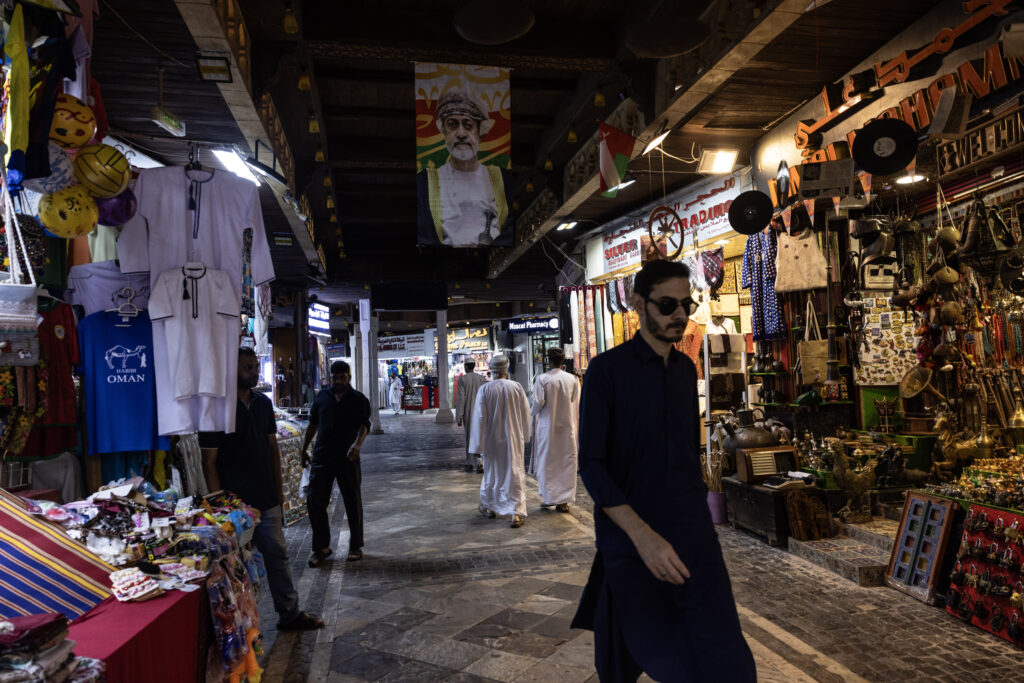
Omanis were baffled. Bragging, as a rule, is strongly frowned upon in the culture here. But people have long been quietly proud of their small country, at the southeastern tip of the Arabian Peninsula.
The blue waters teeming with sea turtles and freshwater oases tucked into jagged mountains. The down-to-earth warmth of its people, in a region better known for its flashy wealth. A reputation, despite the complexities of the Middle East, for neutrality.
In February, Omani Foreign Minister Badr Albusaidi mediated three rounds of negotiations between the United States and Iran. After a meeting in Geneva on Feb. 26, Albusaidi reported “significant progress.” On Feb. 27, on “Face the Nation,” he said: “A peace deal is within our reach.”
The next day, the U.S. and Israel began bombing Iran, starting a war that has yet to end more than six months later.
Trump’s threat against Oman on Aug. 17 was all the more stunning because a tentative peace framework that he signed with Tehran in June had designated Oman to “conduct dialogue” with Iran over the future of the Strait of Hormuz.
“It was outrageous,” Omani scholar Abdullah Baabood, chair of the State of Qatar for Islamic Area Studies at Waseda University in Tokyo, said of Trump’s threat, summing up a view expressed repeatedly by Omanis in recent days.
“We didn’t do anything wrong; we were just trying to help the U.S.,” Baabood said, referring to the effort to broker a deal to fully reopen the strait, the narrow waterway that runs between Iran and Oman and is vital to global oil supplies “That is our nature,” he added.
On Monday, Oman is set to host a meeting of foreign ministers from Persian Gulf nations, including Iran, to discuss reopening the strait, according to the Iranian Foreign Ministry. The gathering, which Oman has not publicly confirmed, has the potential to again put the country on Trump’s radar, or in his crosshairs.
Since Trump’s threat, there has been a reckoning underway for many people here over their country’s long, and at times complex, relationship with the United States — and over how Oman, known for quiet discretion, tells its own story.
Many Omanis said they did not take Trump’s threat too seriously but did worry about what exactly he had heard about their country that set him off — and also about what other nations might think. Some said it might be time for Oman to be a little less quiet.
“We don’t beat a loud drum because that isn’t the Omani way,” Baabood said, sitting in a coffee shop in Muscat, the capital. “But we know that leads people to misunderstand us.”
Bridging a gulf
As the sun rose on a recent Saturday over the port in Muscat, war seemed far away. Fishermen hauled tuna and kingfish from their boats onto the pier, then cheerfully compared the size of their catches.
Oman, whose economy relies on fishing, sits where the Persian Gulf meets the Arabian Sea, bordering the southern part of the Strait of Hormuz. The country once had an empire that stretched down the coast of East Africa, to modern day Mozambique, and since 1744, it has been led by the Al Bu Said family.
Oman’s current ruler, Sultan Haitham bin Tariq, assumed power in 2020, after the death of his cousin, Sultan Qaboos bin Said, who over his 50 years in charge built Oman’s reputation as something of a Switzerland of the Middle East.
It was Qaboos that established Omani foreign policy as being a “friend to all, enemy to no one,” and under whose reign Oman served as a mediator in the Iran-Iraq war in the 1980s, in the blockade of Qatar by other Gulf nations and in Yemen’s civil war, among other crises.
But those efforts have not been without controversy.
Other Arab nations criticized its decision not to break ties with Egypt in 1979, when Cairo normalized relations with Israel in the Camp David Accords. Some Gulf nations — especially Saudi Arabia — were upset by Oman’s back-channel negotiations on the 2015 nuclear deal that Oman helped broker between Iran and the U.S.
Even now, officials in other Gulf nations privately criticize Oman for not clearly condemning its neighbor as Iran has targeted regional powers with barrages of missiles and drones in retaliation for the U.S.-Israeli strikes.
As Trump came to own the war, Oman has continued to take part in discussions, often alongside parallel talks led by Qatar and Pakistan, and mostly shrouded in secrecy.
Wondering about a trigger
In recent weeks, Omanis have been left wondering what exactly led Trump to lash out against their country, which he first threatened to “blow up” in May if it did not “behave.”
“He must have heard something, but we don’t know what,” said Abdul Wahab Al Balushi, a businessman and one of many Omanis who have studied at American universities on government scholarships. “It was different under Carter, under Reagan, under Bush … under everyone,” said Al Balushi, who now sits on the board of Muscat University.
Tyler Parker, an assistant professor of political science at Mercer University in Georgia who studies Oman, said Trump first grew frustrated with the country because of his perception that the 2015 Iran nuclear deal — which Obama administration officials asked Oman to help mediate — was biased against the United States.
Trump has grown upset with Oman again in recent months, Parker said, “because of a perception that Oman is closer with Iran.”
Iranian officials have said that Oman is open to creating a system of fees for traversing the Strait of Hormuz, which Oman recently denied.
“Oman has long been a very discreet facilitator,” Parker said. “And the Trump administration struggles to understand that type of foreign policy.”
A former U.S. diplomat, who spoke on the condition of anonymity because of the sensitivity of the situation, said that part of the blame rests with the Omanis, for allowing the Iranian regime to shape the narrative — including waiting too long to dispel the idea that Oman was supportive of the proposed toll system in the strait.
“The Omanis haven’t said much of anything,” the former diplomat said. “Which makes it hard to tell what is going on … and possible for Trump to hear something and lash out.”
Last week, Albusaidi said that “a solution has not yet been reached” in Omani efforts to secure free passage of vessels. He also blamed “some world leaders” for sidelining the professional diplomats and trying to broker a deal themselves.
“But we are not walking away,” he wrote in the Financial Times.
Youssof Al-Balushi, a fisherman and retired engineer who was at the pier early on Saturday to fix his boat, said Omanis laugh when they hear Trump musing about renaming the strait after himself or declaring it a U.S. territory, as he did last month. Trump, he said, seems not to understand basic geography and history.
“The entrance is with us,” Al-Balushi said. “It always has been. We are the ones who have the door.”
He frowned when asked about Trump’s threats. “He doesn’t think — he just talks,” he said. “He should think before he talks.”
A long relationship
Oman’s history with the United States dates to the late 1700s, when an American ship, the Boston Rambler, arrived in the port of Muscat. In 1840, an Omani became the first Arab diplomat to visit the United States, bringing Persian carpets, dates and camel hides.
In more recent years, the two nations have exchanged about $4 billion in annual trade, and Oman is one of about 20 countries with a comprehensive free-trade agreement with the U.S., according to the American Chamber of Commerce in Oman.
Among the commercial ties is one to the president personally — a $500 million Trump-branded golf course in the picturesque hills above the Gulf of Oman, set to open in 2028.
“The underlying relationship is deep and long and strong,” said Ali Daud, chairman of the chamber in Oman. “We have always been a good ally to the U.S.”
But there have been challenges. After the Oct. 7, 2023, Hamas attack, as Israel besieged Gaza, Omanis boycotted U.S. businesses in the country so intensely that some closed. Still today in Oman, Coca-Cola is hard to find in many restaurants because it is perceived as backing Israel.
Daud said that many Omanis were also upset by the start of the war in February, even as Oman was still mediating. Many were also “offended by Trump’s comments, as anyone would be,” he said, even though no one “really believed it.” Plus, he added: “Our relationship is stronger than any one president.”
Telling its story
In between backflips off rocks above the freshwater oasis of Wadi Hoqain, north of Muscat, a group of Omani teenagers said they didn’t give Trump’s threats much thought.
Mostly, what they wanted people to know is that their country, despite the nearby war, is peaceful.
“Oman is beautiful,” said Zohar Al Mamari, 19. “We are friends with everyone.”
Like other Gulf countries, Oman has seen a decline in tourism because of the war. But because it is outside the Strait of Hormuz, the war has also brought some economic benefits.
The country, generally viewed as less wealthy than its oil-rich neighbors, has experienced a boom in oil and gas sales, and also expanded its role as a logistical center for the region, with goods now arriving at Oman’s ports and being trucked to their final destinations.
Because of Oman’s neutrality, Iranians fleeing the regime arrive there “every day” and inquire about starting businesses, Daud said.
And when Dubai was pummeled with drones and missiles during the first weeks of the war, many residents fled to Oman, which was largely spared.
“We want things to go back to the way they were, and we know that our neighbors are suffering,” he said, noting that Kuwait, Qatar and Bahrain have also seen exports shrink dramatically. “But we also see that our geography and neutrality are paying off.”
“We are peaceful and conservative people,” Daud said, adding that bragging is considered vulgar in Omani culture.
“But I wonder,” he added, “if we need to start telling our own story a bit more loudly now.”
The post Trump threatened to bomb Oman. Oman has questions. appeared first on Washington Post.