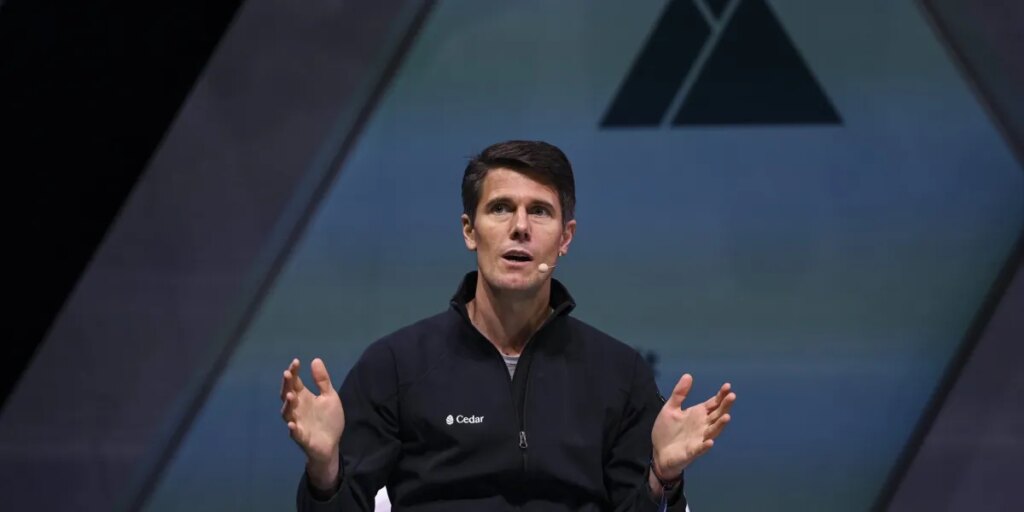
I did not grow up in a country that leaves much to chance. Germany, where I was born and raised, is a place that prizes precision, process, and getting things right the first time. It builds extraordinary engineering, and its industries are proof that rigor produces real innovation. However, building a new company from scratch is a different kind of bet than perfecting an existing one, and that’s where the instincts diverge.
When I first shared the idea that would become Cedar, an idea for fixing how patients experience medical billing, the reaction in the U.S. was telling. People acknowledged the problem was real and told me I could probably build something better. Knowing the instincts of the system I grew up in, I suspect a German audience would have reacted differently because the risk calculus for a founder is different: more scrutiny on why an existing system, developed over decades, might already have good reasons behind it, and more caution before betting on something unproven. That difference—encouragement over caution, opportunity over risk — is not a minor cultural quirk. It is the actual engine of American economic dominance, and sustaining that engine depends on three things working together: the people willing to take the bet, the policy that lets them stay long enough to see it through, and a regulatory environment clear enough that betting on hard, regulated industries still makes sense.
Start with the people. Immigrants aren’t marginal contributions to a system built by others; they are the system. Immigrants have founded or co-founded 59%of America’s privately held billion-dollar startups this year, up from 55% just a few years earlier. Nearly 80% of America’s unicorn companies have an immigrant founder or an immigrant in a key leadership role. This isn’t confined to young companies, either. In fact, 46.2% of 2025 Fortune 500 companies, 231 of them, were founded by immigrants or their children, generating $8.6 trillion in revenue and employing more than 15 million people worldwide, the highest share the Council has recorded since it began tracking this in 2011.
I think about why that is often, because I live it. When you grow up inside one healthcare system, one regulatory culture, one assumption about how things are supposed to work, you don’t question it, because you don’t know there’s another way. I grew up watching German healthcare function with a kind of institutional seamlessness that most Americans would find unfamiliar. Coming to the U.S. and encountering a system where billing is confusing and the whole patient experience feels disconnected and scattered wasn’t just a business opportunity. It was a genuine shock, the kind that only registers if you’ve seen a real alternative. That shock, more than any market analysis, became Cedar’s founding thesis. Immigrant founders don’t have a monopoly on good ideas, but we tend to arrive with a wider aperture for what’s broken, precisely because we’ve seen more than one version of normal.
There’s a second, less discussed advantage: the absence of a safety net changes how you take risks. Founders who grew up with strong professional or family networks in the U.S. often have farther to fall by failing publicly, and more paths back if they do. Immigrant founders frequently don’t have either. That sounds like a disadvantage, and in some ways it is, but it also means the fear of failure carries less social weight. If you have already left behind one country, one language, one set of assumptions about your own life, building a company that might not work is a smaller leap than it looks from the outside. When Cedar started, there were already incumbents working on patient billing. The instinct many advisors would have pushed toward was partnership or incremental improvement. We chose to build something structurally different instead, in part because starting over didn’t feel as threatening to us as it might have to a founder with more to protect.
However, the people alone aren’t enough without the policy to keep them here. The U.S. has no dedicated startup visa, a persistent policy gap that researchers and economists have pointed to for years, and a founder with a promising idea and no employer sponsor has strikingly few reliable paths to stay and build here. It is a strange asymmetry – the country whose entire national identity is built on risk-taking makes it disproportionately hard for the risk-takers themselves to actually stay. The same gap now threatens the next wave of transformative technology. U.S. institutions employ 59% of the world’s elite AI researchers, a lead almost built entirely on foreign-born talent. If the U.S. wants to keep winning that race, immigration policy has to become more plannable, not less: early-stage founders and researchers need real certainty that a path to stay exists before they commit years of their life to building here. Right now, that certainty largely doesn’t exist, and uncertainty doesn’t just deter individuals, it redirects entire cohorts of talent toward countries that offer clearer answers.
The third piece is how the U.S. treats regulation itself, a lesson here that many immigrant founders learn out of necessity, and one worth passing on to founders building in regulated industries generally, immigrant or not. Regulation is not, by itself, the enemy of innovation. Founders who enter industries like healthcare, finance, or defense often underestimate how complex compliance becomes as a company scales, especially in the U.S., where state and federal rules can layer on top of each other unevenly, but regulation that is clear, even when it’s demanding, is navigable. What kills innovation is not rules; it’s ambiguity. In the U.S., unlike in some other regulated markets, playing by the rules is generally a viable path to building something durable, not a competitive disadvantage. That is worth protecting and worth being honest about, especially as more first-generation founders enter industries that don’t reward shortcuts.
I did not come to the U.S. because it was easy. I came because it was a place where a flawed idea, mine included, gets a chance to be tested until it’s successful, rather than dismissed. I am deeply grateful for that opportunity, and for how warmly I was accepted here. I never felt like an outsider; people embraced the diverse perspective I brought, rather than treating it as something to overcome. That is the actual competitive advantage this country holds over nearly everyone else, and it isn’t self-sustaining on any one of these fronts alone. It depends on the people willing to take the bet, the policy that lets them stay long enough to see it through, and a regulatory posture clear enough to make the bet worth taking. It depends on making that path clear enough that the next founder with a hard problem and an outsider’s perspective decides it’s worth the leap.
The opinions expressed in Fortune.com commentary pieces are solely the views of their authors and do not necessarily reflect the opinions and beliefs of Fortune.
The post A German founder’s case for why America still needs immigrants appeared first on Fortune.