In the anxious days following President Trump’s 2020 election loss—before his supporters stormed the Capitol, before his vengeful return to the White House, before the mass pardons for cop beaters—some Republican figures sought to cast his attempt to overturn the results as nothing more than a coping mechanism.
Trump was merely blowing off steam, people close to the president told me and other reporters. “What is the downside for humoring him for this little bit of time?” one asked, suggesting that in the end, his antics would amount to no more than a footnote in the annals of presidential history.
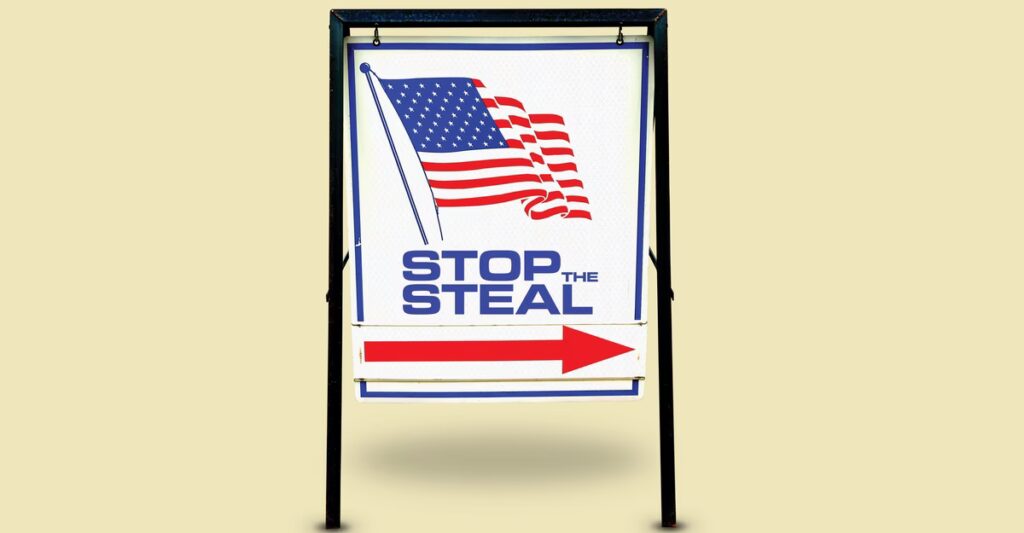
The January 6 insurrection a few weeks later would, of course, turn those predictions into punch lines. Nearly six years on, they look worse still: The election denialism that inspired Trump’s MAGA loyalists to attack the Capitol has metastasized into an animating feature of Republican Party politics.
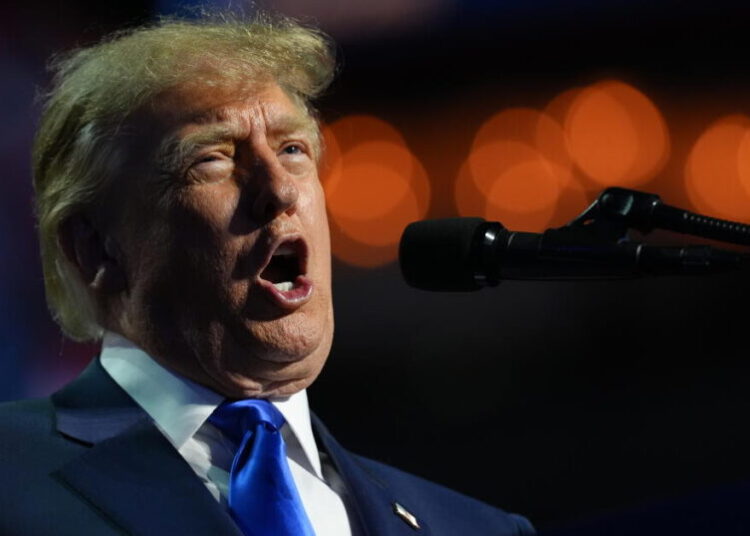
Trump himself remains at the forefront of this movement. Since returning to office, he has insisted that American elections are “rigged” against the GOP, fired Democratic election officials, threatened to “take over” voting across the country, and issued executive orders that would tightly restrict the vote. The president’s most far-reaching efforts have largely been blocked by the courts or Congress, at least so far. As in 2020, Trump in fact has little legal authority to interfere with elections, and this has given comfort to many Americans.
But as November approaches, the most serious threats posed to free and fair elections no longer come from the White House itself. Instead, they are local, where much of the power over elections actually resides, and they stem from the continuing absorption of Trump’s Big Lie into our political culture. In statehouses and county offices, a cohort of election deniers has taken control of significant parts of the nation’s electoral infrastructure. Some of its members have replaced the officials and legislators who rejected Trump’s push to corrupt the 2020 race. A grassroots movement of Big Lie believers has meanwhile been organized and trained as poll workers or informal observers to sound alarms over local elections they deem suspect in any way.
The November elections represent something new in American politics: For the first time, a coalition of partners at the local, state, and federal levels is ready to pull off the kind of election heist that eluded the president back in 2020. At the very least, the midterms could serve as a trial run for this coalition ahead of the 2028 presidential race, when much of Trump’s legacy will be at stake.
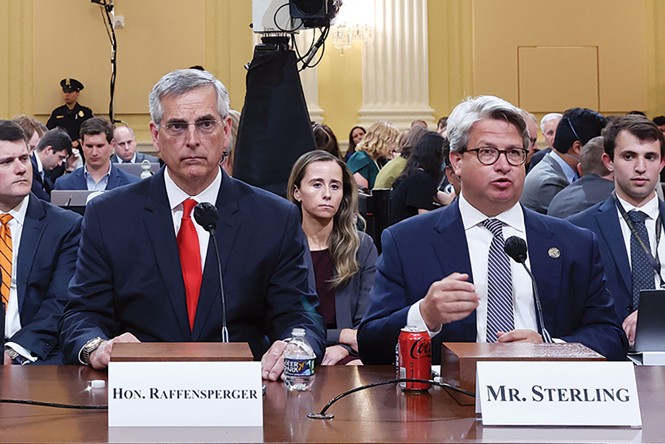
Nowhere is the threat of election subversion more evident than in Georgia, the state Trump lost by the slimmest margin in 2020 and the site of his most brazen efforts to overturn the results. Trump’s hourlong phone call on January 2, 2021, urging Georgia Secretary of State Brad Raffensperger to “find 11,780 votes” to reverse his loss is the most famous example, but hardly the only one. By the time of that call, the president and his allies had spent weeks pressing local lawmakers and election officials to throw out votes, delay the certification of Joe Biden’s victory, and lay the groundwork for an administrative coup. On Thanksgiving Day, Trump had called Raffensperger an “enemy of the people” and falsely accused him of engaging in illegal election practices. The secretary of state’s security had to be beefed up—as did that of his colleague Gabriel Sterling, then–Lieutenant Governor Geoff Duncan, and others—following death threats. The Fulton County poll workers Ruby Freeman and Wandrea “Shaye” Moss were publicly accused by Trump-campaign allies of pulling fake ballots from suitcases to help Biden, a false allegation that elicited more death threats.
In the end, the system warped but did not break under the weight of the president’s pressure. Georgia’s election officials did their job, affirmed the integrity of the vote, and followed the law.
But the ranks of Republican officials in Georgia who resisted Trump’s election-fraud lies have thinned significantly since 2020. Sterling and Duncan are gone. Raffensperger is a lame duck whose power over the state’s electoral apparatus is fading. In 2024, he was ousted from the state election board he had once chaired. In May, he lost a long-shot bid for governor, garnering just 15 percent of the vote in the GOP primary.
The state election board, which sets voting policy for all of Georgia, is now dominated by Trump acolytes. Salleigh Grubbs is one example. Prior to 2020, she had no role in government and had shown little interest in politics, but then, that year, she became animated by rumors that Democrats were plotting to steal the state from Trump. Upon hearing from a friend that a large truck from a paper-shredding company was parked outside a Cobb County events center a day after a statewide recount had occurred there, she sped over in her Toyota Venza. She took videos of the truck and pursued it when it left, later likening the action to a scene in Thelma and Louise. The truck had merely been hauling away empty ballot envelopes and other trash, but Grubbs remained convinced that election fraud had happened in broad daylight. She decided to get more involved, and won a campaign to become chair of the Republican Party in Cobb County in 2021, then worked her way up to an appointment to the board in January.
Across the state, other Republicans with a new view of elections were making similar journeys. Ben Johnson, a tech entrepreneur who became the chair of Spalding County’s election board in 2021, has spread QAnon conspiracy theories, reportedly called Biden a pedophile, and asserted numerous times that fraud played a role in the 2020 election. Danny Bartlett, the chair of the Ware County election board since 2023, recently posted an image of Joseph Stalin on Substack, along with his apocryphal quote “It’s not who votes that counts, it’s who counts the votes.”
On the five-person state election board, Grubbs joined Janice Johnston, a retired doctor who had become obsessed with election policy after the 2020 race, and Janelle King, a Republican media personality who had been appointed to the board in 2024. That year, King and Johnston had pushed for rule changes that would have given Trump more opportunities to challenge the results if he lost the state to Kamala Harris. During an August 2024 campaign rally in Atlanta, Trump singled out the right-wing members of the board, heralding them as “pitbulls fighting for honesty, transparency, and victory.” Johnston later resigned but was replaced by another MAGA Republican, ensuring that three of the five seats on the board would still be held by Trump allies.
Since 2021, the board has been granted (or, in some cases, seized) broad powers over Georgia’s voting process, including the authority to assume control of elections in counties it deems to be administering the vote poorly. King has not ruled out the idea of the board taking over election administration in Fulton County, home to Atlanta and the epicenter of the state’s Democratic base. The question in Georgia today is less whether its current officials could resist Trump’s pressure again, and more what some of them might do on their own, without any presidential pressure at all.
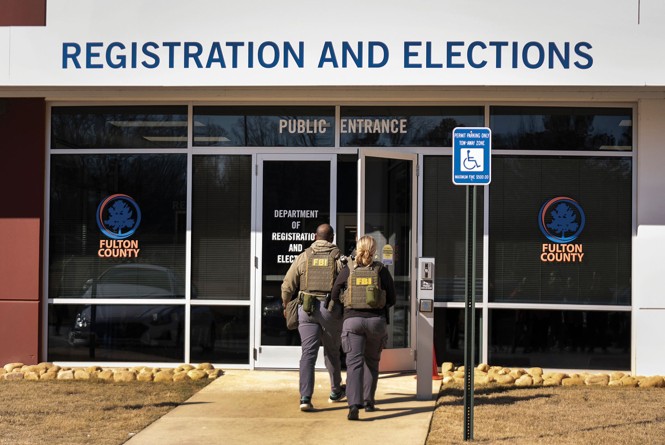
When the FBI raided a Fulton County election warehouse in January, seeking evidence of fraud in the 2020 vote, it cited the work of the state election board in its search-warrant affidavit. Johnston, King, and Grubbs filed an amicus brief in support of the operation.
John Fervier, the board’s chair and a lifelong Republican, has sometimes found himself siding with the board’s lone Democrat to try to rein in the right-wing contingent, though many of his efforts have been futile. “Our board has at times gotten political when it shouldn’t be political,” he told me, carefully, in May. He said he was exasperated by what appeared to be an endless crusade by politicians to validate the president’s claims about his loss to Biden. “These people want to keep pointing back to 2020, and my thing is, to what end? ”
We met inside the same Fulton County election warehouse that FBI agents had entered months earlier, wearing tactical vests and carting away more than 650 boxes of ballots and other materials. While they blocked off the entrance with crime-scene tape and trawled the cavernous 600,000-square-foot building for evidence, Grubbs was outside on a video call with Steve Bannon for an episode of his War Room podcast. She referred to the moment as “surreal” and “wonderful,” as election-denying activists posed for photos nearby. Indoors, Tulsi Gabbard, then the director of national intelligence, watched over the scene. Trump later spoke by phone with the agents who had conducted the raid, congratulating them on a job well done.
The ultimate goal of the operation, and of all the theatricality surrounding it, seems fairly clear. The seizure itself likely caused more Americans to mistrust the 2020 result. It may have salved Trump’s ego. Any scrap of evidence that can be marshaled to suggest wrongdoing or fraud, however weak, will presumably be made public and spun. And that, in turn, may soften more Americans to the idea that election fraud is a real and widespread problem—ironically making the subversion of the vote easier to achieve.
Even in Fulton County, election deniers have a significant ally. For the past two and a half years, Julie Adams has been a Republican appointee on the county’s election board. In the first months of her tenure, she declined to vote to certify any of the results of the state’s 2024 primary contests. There was no actual evidence of irregularities (and Trump had won the GOP presidential primary), but Adams wanted to further investigate. She was outvoted by the rest of the board, which by law has little discretion in validating the results. Still, Adams (who did not respond to my requests for an interview) has used her post as a public official to challenge the validity of Fulton’s voting process and has encouraged allies on other boards to do the same.
Adams also serves as a regional coordinator for the Election Integrity Network, a nationwide organization of election-denying activists that appears ready to play a significant role in the midterms and the 2028 presidential election. In at least one private call with members of EIN, she has discussed changing state laws to give local officials more leeway to delay or reject certification of races. The certification of election results by local officials has traditionally happened without controversy, but Trump’s 2020 push to overturn his loss transformed this normally routine process into a new political battleground. Certification is a key means by which vote totals are finalized, and increasing the discretion of everyone involved would multiply the opportunities to raise fraud claims. The Election Integrity Network has been a major proponent of greater discretion—and in recent races, several like-minded election officials in various states have voted to withhold or delay the certification of results.
Cleta Mitchell, a lawyer who aided Trump’s bid to challenge the 2020 results, founded EIN in 2021. It now has affiliates in at least 30 states, including every presidential battleground, and its volunteers are regularly in touch with Republican officials. The organization, which recently registered as a tax-exempt nonprofit, has raised funds while doing little to hide its political motivations. In an April 2022 interview with the conservative radio host John Fredericks, Mitchell (who did not respond to my own request for an interview) adopted Trump’s language as she lambasted Democrats: “The only way they win is to cheat.”
EIN’s affiliates regularly attend state- and county-level election-board meetings, turning once-boring hearings about election administration—including issues such as ballot-drop-box locations and voter-roll maintenance—into contentious, standing-room-only affairs. EIN officials have also trained activists to serve as poll observers, encouraged volunteers to challenge voters’ eligibility, and advised members to lobby friendly politicians and go after lawmakers who oppose their efforts. This is a new phenomenon in the United States. In a system that relies on broad confidence in the sanctity of elections, the emergence of an organized infrastructure of activists focused on sowing doubt is creating fresh opportunities for malfeasance.
Armchair sleuths and election enthusiasts have had dramatic success ushering conspiracy theories from the internet onto the agendas of county boards and state legislatures. In Michigan, Macomb County Clerk Anthony Forlini has pursued an audit of the 2020 election and suggested in January that a significant number of noncitizens might be on the state’s voter rolls, a charge amplified by an official at the Justice Department despite flimsy evidence. Forlini, who came under scrutiny for hiring a January 6 protester to train poll workers, is now the Republican candidate for secretary of state, a role that could prove pivotal in the 2028 presidential election.
A 2024 investigation by the Center for Media and Democracy found more than 100 election deniers serving in election positions in eight swing states. There are likely more today. America’s highly decentralized elections have often been touted as a strength, making subversion by foreign adversaries or domestic cabals difficult. But many of the local-level positions that help administer our elections have low barriers to entry—the people who fill them are often appointed by local party bosses, county commissioners, or state election officials, with little public scrutiny. These roles are vulnerable to takeover by mass movements, especially those allied with bad actors or extreme partisans looking to upend the system from the inside.
The hyperpartisan politics of the past several years have only increased this vulnerability. In December 2024, for instance, just weeks before the Democrat Josh Stein was set to be sworn in as governor of North Carolina, Republican legislators transferred the authority to appoint the chair of each of the 100 county election boards and fill a majority of the state election board’s seats from the governor to the incoming Republican state auditor. Every one of these boards is now dominated by Republicans, several election deniers among them, and the state has recently moved to oust nonpartisan election supervisors, challenge the eligibility of thousands of voters, and make it easier to throw out mail-in votes. These moves have come as Democrats vie to flip a Senate seat in what could be a close race.
Many states, including Florida, Ohio, Kansas, and Utah, have passed laws that mirror those pushed by EIN—expanding voter-identification requirements, restricting mail-in voting, making it easier to remove people from voter rolls. Some of the provisions also resemble those in the federal SAVE America Act, championed by Trump, which if passed could disenfranchise, or at least confuse, millions of voters. The advocates who support these changes typically describe them as commonsense measures designed to enhance election security and root out fraud (even though evidence of actual voter fraud in modern U.S. elections is minuscule). Trump often dispenses with the pretense. Last year, he asserted that Republicans would “pick up 100 more seats” if his proposed bans on electronic voting machines and mail-in ballots were enacted.
Even if he takes no additional action before November, the president has already done a lot to interfere with the upcoming election. He has punished officials who validated the accuracy of the 2020 election, encouraged criminal investigations into Democratic lawmakers who are up for reelection, and sought to steer taxpayer dollars to compensate January 6 rioters and other supporters convicted of crimes linked to his Big Lie—actions that all seem more likely to foster election tampering than deter it. The Justice Department began demanding in May 2025 that states hand over their voter rolls (many have refused), and the White House has neutered federal offices responsible for preventing actual voter fraud.
And, of course, the president has used the bully pulpit like no other previous American leader to undermine confidence in the country’s elections. More than 100 times in the past year alone, Trump has claimed that the 2020 election was stolen, often likening American voting to that of a “Third World country.” (He does this apparently without considering what it implies about the integrity of his own two presidential victories.) His allies’ proposals to station immigration enforcers or military troops outside polling sites, which Trump has publicly declined to rule out, could have an impact even if the president does not make good on them. If voters fear chaos or intimidation, some will stay away from the polls.
Abigail Jackson, a White House spokesperson, defended the president’s efforts. Trump, she told me in a statement, “is committed to ensuring that Americans have full confidence in the administration of elections, and that includes totally accurate and up-to-date voter rolls free of errors and unlawfully registered non-citizen voters.” She added that Trump was simply making good on a “campaign pledge” to millions of his supporters who agree with his views on elections.
Trump’s efforts to rile his base will no doubt intensify between now and Election Day. A substantial majority of Republicans already believe that the 2020 election was stolen, that large numbers of illegitimate ballots are cast by noncitizens, and that mail-in ballots are rife with fraud. Networks of local activists will be on the lookout for any developments—rumors, photos, stray comments by election officials—that might seem to undermine the integrity of the vote. As Election Day unfolds, some MAGA electoral officials are likely to join in, significantly raising the temperature.
It is possible that Trump might use the resulting clamor as a pretext to seize voting machines in key counties, breaking the chain of custody for lawful ballots and bringing the count—at least as a practical matter—under the control of his administration. In January, Trump told The New York Times that he regretted not doing so back in 2020. It is likewise possible that local or state officials could agree to “find” votes, or to discard them, though it would be difficult for any single official to change a ballot count without leaving an obvious trail. The system is too well built for that.
But decisively changing the vote count would not be the only—or even the most likely—path to an illegitimate result for a key Senate seat or a handful of seats in the House. Instead, the president’s allies might hope to prevail by fomenting enough distrust in the results to change the terrain on which the election is decided. Well-connected activists are prepared this year to push for extending certification deadlines and ordering independent vote audits. Trump and his allies have openly entertained proposals to use security concerns as a pretext for nationalizing elections. Once vote tallies are rendered as tainted or unknowable, partisan actors in state capitols and Congress could play an outsize role in determining the result.
How would all of this ultimately get resolved? The historians, election lawyers, and constitutional scholars I spoke with struggled to come up with straightforward predictions, in part because the country has never had such a confluence of election-denying officials in power at so many levels of government. Close or contested races for just a few House and Senate seats could leave control of Congress in doubt long after Election Day. Amid loud and continuing uncertainties, the Republican-led Congress could opt to exercise rarely used constitutional powers to override the voters’ will and choose the winners of contested races. The courts would likely have a say, but in an environment so thick with mistrust and confusion on fundamentally political matters, they might be more likely to defer to politicians. And the law is fairly clear that the House and Senate have the final authority in determining whom to seat in their chambers.
If this playbook sounds familiar, it is because Trump and his allies pursued the same tactics in 2020, ultimately failing to persuade Congress and the courts to supplant the vote. Today, their chances of succeeding would be far higher.
Many election officials hope for decisive results in November that leave little doubt about the will of the voters; landslides are hard to challenge, and even in swing states and districts, there may be a lot of them this year. Beyond that, key guardrails are still standing. Courts have largely frowned on Trump’s efforts to change voting rules. So far, Senate Republicans have opted against ripping up the filibuster to pass the SAVE America Act.
In Georgia, Raffensperger will still be in office on Election Day. And across the country, elements of civil society are more prepared for disorder than they were six years ago. The American Civil Liberties Union, for example, has been holding regular training sessions so its members and volunteers can respond to attempts to tamper with the voting process, covering dozens of scenarios. David Becker, the executive director of the Center for Election Innovation & Research, told me that an army of lawyers is standing ready to help local election administrators beat back pressure campaigns. “We’ve recruited over 10,000 attorneys all over the country who are willing to serve pro bono,” he said.
Still, it’s not hard to see which way the tide is flowing. “Under the best of situations and circumstances, preparing for an election is a very exacting process,” Mark Earley, the election supervisor in Leon County, Florida, told me, noting that administrative staff have to plan for weather disruptions, power outages, and any number of other possible events so that they can conduct a seamless and fully accountable process for voters. But now there’s more to prepare for: online mobs, and real ones, incited by rumors; potentially unreliable voices from the inside.
There’s more pressure on election workers too. Recently, the Trump administration sent a letter to each state, threatening to prosecute election officials who fail to remove noncitizens from registration lists or allow them to cast ballots. And Trump himself signed an executive order in March calling on the attorney general to prosecute election workers and officials who give ballots to such voters. (The courts have since invalidated much of the order.)
Some states and counties have gamed out how people would need to step up, on the spot, if various election officials were arrested while trying to prevent federal agents from seizing ballots or otherwise interfering with their operations. Many election workers have quit because the job is now so fraught with anxiety, Earley said. Several election officials told me they have exhausted the limits of their imagination in attempting to prepare for what may come.
In Georgia, it was apparent even in May how activism on the right might lead to disorder in November. Conspiracy theories about voting machines were threatening to paralyze the state’s general elections. After years of activists spreading baseless claims that machines designed by Dominion Voting Systems were vulnerable to foreign manipulation, legislators had passed a law in 2024 requiring the state to overhaul its ballot-counting system. A leading proponent of the change was an eccentric 76-year-old man named Garland Favorito, who has spent decades challenging the integrity of the state’s electronic voting system, and who has collaborated with EIN. Favorito has also claimed that Israel may have been behind the September 11 terrorist attacks and that George H. W. Bush may have been involved in the assassination of John F. Kennedy.
Favorito spent years pursuing a lawsuit, which was dismissed in February, to access ballots from the 2020 election in Georgia, arguing that he will be able to prove that the presidential result was rigged. He told me he fears that future elections are vulnerable to similar rigging and that we have a “national-security crisis” based on “forensics showing that our voting systems have been remotely accessed by foreign programmers and modified without detection.”
Tax records show that his group, VoterGA, has received at least $385,000 from an entity called the America Project, which was co-founded by Patrick Byrne, the Overstock.com founder and a prominent election skeptic who urged Trump to seize voting machines after the 2020 race. At a gathering of election deniers in Washington, D.C., earlier this year, Byrne boasted of spending more than $100 million on election-related activities since 2020, much of it to support groups seeking to upend local election-administration policies.
The problem in May was that the law banning Georgia’s current voting machines was set to take effect in just a few weeks, but amid continued controversies over paper ballots and other options, legislators had not yet established an alternative. Election workers were running a primary while also looking ahead to November with the possibility of a rapid and destabilizing changeover weighing on them. The deadline for a switch has now been postponed until after the midterms, but a new system still has not been finalized.
To try to get some sense of what the elections in November and in 2028 might be like, I watched Georgia’s primaries, on May 19, from the Fulton County election hub. At the time, Favorito’s focus had shifted, at least temporarily, to a new potential source of fraud. Raffensperger, as secretary of state, had decided to deny election-board members access to the operations center where he would be receiving and reporting the voting results on Election Night. Because Raffensperger was also a candidate in the governor’s race, Favorito and other right-wing election skeptics began to publicly suggest that the secretary of state was attempting to count—and perhaps manipulate—the votes from the confines of a “secret bunker.” Grubbs, the state-election-board member who’d once chased a paper-shredding truck, joined Bannon’s War Room podcast on the day of the primary to complain about being excluded from said bunker. Speaking in front of a large Trump-Vance campaign sign, she agreed with Bannon when he likened the situation to a banana republic.
Raffensperger rejected those allegations. On the morning of the primary, he told reporters that officials should stop making “wild claims and accusations” about the operations center. He suggested that those concerned about the vote-counting process should spend the evening at one of the county election centers where the ballot tabulation was in fact taking place.
Jason Frazier, an election skeptic who has spent the past few years challenging the eligibility of thousands of Georgia voters, appeared to be following that advice when I ran into him at the Fulton County election hub on the night of the primary. He told me he had come to observe the tabulation process, but still felt that there was something nefarious about the operations center. “If the doors are closed and you’re trying to hide things, that creates a conspiracy, whether there’s something there or not,” he said.
Just days earlier, Frazier had been hired as a part-time investigator by the state election board, the latest example of a self-made voting expert achieving official status within Georgia’s electoral apparatus. Fervier, the board’s chair, told me that Frazier’s hiring had happened without his knowledge. The MAGA-aligned majority on the board had gone around him to bring an ally into the system.
In the end, little would come of the bunker conspiracy. Raffensperger’s office would accurately report the results of the primary race for governor, in which he was soundly defeated. But the night of the primary election was not without additional drama. When 911 reports of a gunman near an Atlanta-area school forced two precincts to close for about four hours that afternoon, a local judge ordered the polls to stay open late at those locations, giving voters until about 11 p.m. to cast their ballots. The delayed closing of those two precincts meant Fulton officials would have to wait an additional four hours to begin reporting results for the entire county.
Inside the Fulton election center, I watched as members of the county election board anxiously flipped through thick books of voting statutes and called their attorneys to determine what the law allowed for. When I checked my social-media feed, I could see what was making them nervous. An online rumor mill had begun pushing the idea that Fulton County was intentionally holding back its results in order to sufficiently skew them once other counties reported. “Just one county in the core ATL metro hasn’t reported ANY votes…. Anyone want to take a guess which one?” Seth Keshel, a Trump ally and the author of The American War on Election Corruption, wrote on X at 8:57 p.m.
“It’s always Fulton County,” Greg Dolezal, a Republican state senator and candidate for lieutenant governor, wrote at 9:49 p.m. “It’s time for Georgia to takeover the process. We will not have another 2020 this November!” He suggested that the state election board could temporarily appoint someone to seize control of voting there.
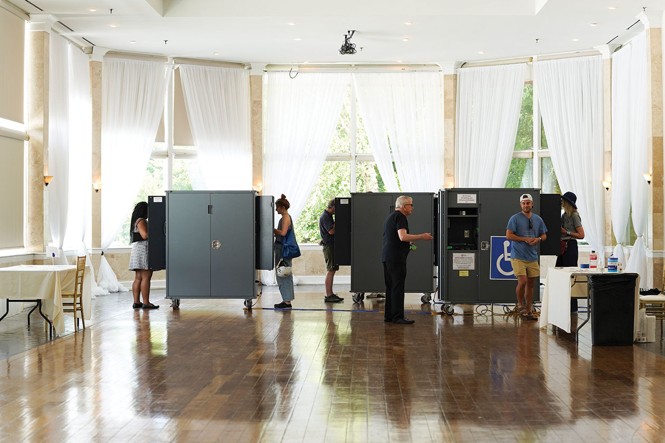
The idea did not come out of the blue. Not only had Janelle King, the state-election-board member, previously floated it, but Republican Party officials had used the primary ballot to ask GOP voters in Fulton County whether the state board should “take over Fulton County elections to protect the integrity of our elections.” And although the results would have no binding legal effect, nearly three-quarters of GOP-primary voters responded “Yes.” Weeks after the primary, an audit would confirm the accuracy of the vote totals that were reported in Fulton County, and throughout Georgia, that night. By then, most of the skeptics had moved on.
However the midterms turn out in November, they will likely tell us something about the integrity of the presidential election in 2028, and the elections beyond that one.
Some of the president’s allies have suggested that despite his stepped-up attention to voting issues in recent months, he is much more focused on 2028. After all, the election of a Democratic successor could easily wipe away much of his legacy. It would also, presumably, end the government’s extraordinarily favorable treatment of his family’s businesses, through which the Trumps have enriched themselves by billions of dollars since his return to office. And it would likewise increase his legal risks.
According to States United Action, a nonpartisan group that supports state and local election officials, dozens of election deniers will be on the ballots in November for positions including governor and secretary of state,roles that could prove pivotal in the certification of the 2028 contest. (In Georgia, the GOP candidate for governor is Rick Jackson, who has denied the validity of the 2020 election; in Arizona, the Republican nominee for that same position is Andy Biggs, who as a state representative voted against certifying Trump’s loss.) Many of these officials owe their ascendance to Trump. It would take only a small subset of them to disrupt the peaceful transfer of power.
“If we have a corrupted election in America, I don’t know if we ever go back to normal,” Senator Mark Warner, a Democrat from Virginia and the vice chair of the Senate Intelligence Committee, told me. The country is built on the premise of free and fair elections, he said. “You unwind that, and you are in a very different America.”
The truest danger this November may not be Trump attempting to cancel the vote or ordering troops to barnstorm polling places, but the smaller, quieter ways that democracy could continue eroding in towns, counties, and state capitals. As millions of Americans prepare to cast their ballots in the coming weeks and to settle in on Election Night to await the results, they should be ready to hold their local officials accountable for what happens next. Those officials, under the watchful eyes of the people who entrust them with power, must choose whether to use that power to reinforce the democratic system that has sustained America for 250 years or to bend it, little by little, further out of shape—until what remains is chaos.
This article appears in the October 2026 print edition with the headline “The Election Deniers Are Now in Charge.”
The post The Election Deniers’ Long Game appeared first on The Atlantic.