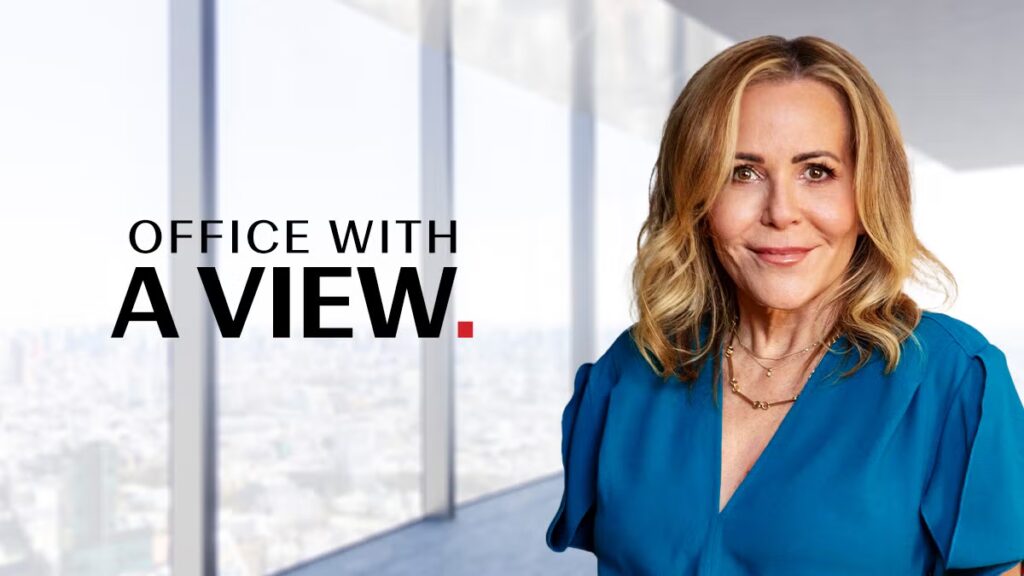
Producer Denise Di Novi knew what making a hit film felt like from the jump.
Right out of the gate, her first movie as a full producer was 1988’s “Heathers,” which exploded into the zeitgeist with its quippy take on high school life and a star-making performance from Winona Ryder. And while her career hasn’t been devoid of misses in the ensuing four decades, one key to her success (and longevity) has been crucial: keep calm and carry on.
“You can learn all the technical aspects of filmmaking, but staying calm and keeping your wits about you when all this stuff is thrown at you, it’s the fun part of the job, but it’s the most challenging part of the job,” Di Novi told Office With a View.
Di Novi produced all of Tim Burton’s early hits – from “Edward Scissorhands” to “Ed Wood” – and subsequently steered productions both big (“Catwoman,” “Batman Returns”) and small (“The Sisterhood of the Traveling Pants”), obsessively beloved (“A Walk to Remember,” “Crazy. Stupid. Love”) and Oscar-winning (2019’s “Little Women”).
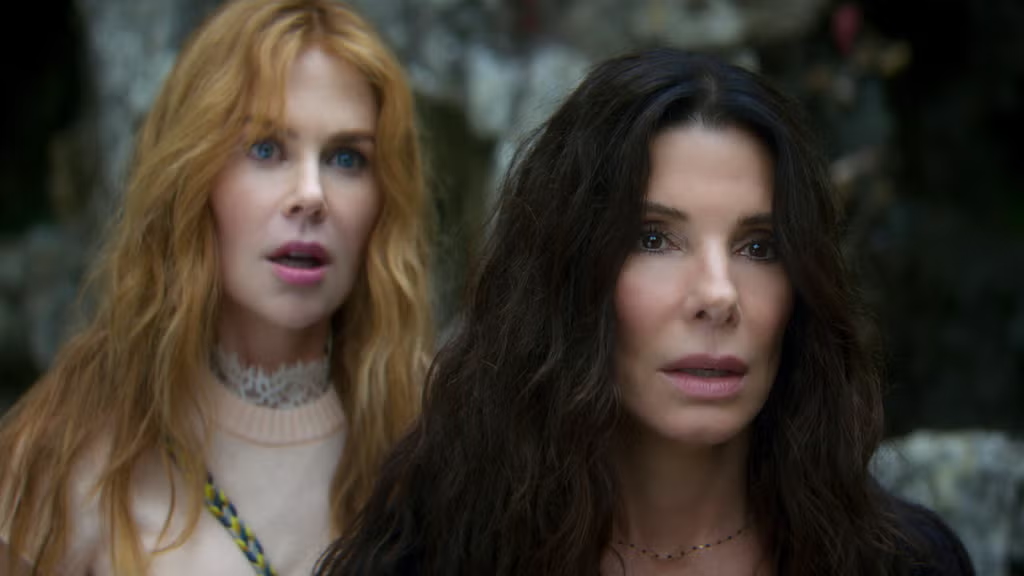
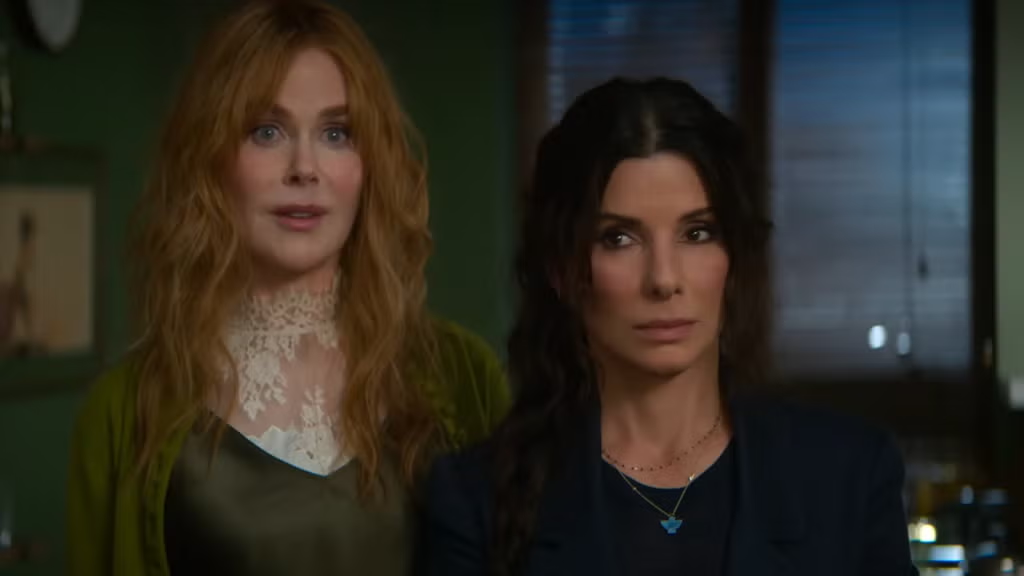
But few films in her career struck a nerve like “Practical Magic.” The 1998 film based on the Alice Hoffman novel starred Sandra Bullock and Nicole Kidman as sister witches navigating love and loss in a cozy New England town. It was not a hit when it came out – the movie grossed $94 million against a $65 million budget – but it quickly gained a foothold on home video and cable, becoming a perennial favorite for millennial women and their mothers everywhere, only growing in popularity once it hit streaming.
“Thank God for streaming. It just became this incredible groundswell on TikTok and on Instagram online of it as a cult movie, and people were demanding a sequel for years, and finally it got so loud that we all thought, is this the right time?,” she said, crediting Warner Bros. Pictures co-heads Pam Abdy and Mike De Luca with pulling the trigger on the sequel once Di Novi, Bullock and Kidman all agreed now was the time to make “Practical Magic 2.”
And now it’s here. “Practical Magic 2” hits theaters this Friday, nearly three decades after the first film, with most of the creative team intact in front of and behind the camera.
Below, Di Novi explains how the sequel got off the ground, recasting Evan Rachel Wood’s character and what about the industry has changed since they made the first film. She also discusses the “sexist” reviews that plagued the original, her career as a producer and why she’s choosing to remain optimistic in the face of the Paramount-Warner Bros. Discovery merger.
The following is our conversation, slightly edited for clarity and brevity.
I know you started as a reporter, as a journalist. What inspired the initial shift to movies?
I always loved movies, but back in the day I did not have a lot of role models where I saw women doing things in the movies besides being an actress or occasionally a writer, and I knew I wasn’t going to be an actress. I wrote film reviews for my college newspaper, and then I decided to be a journalist, and I was a TV reporter in Toronto when they started doing tax shelter movies. There were tons of movies in town, so I started interviewing the people making the movies. I was fascinated by what producers did.
I met Arnold Kopelson, who was in town, and he was the first movie producer I met. I ended up working for him; he offered me a job as a unit publicist, and I left journalism to do that. Then I worked in development at a Canadian production company, and then I moved back to where I was from, back to LA, and worked for Arnold, and then my career really took off with my first movie, “Heathers,” and that was just really a lucky, lucky break.
What do you remember about that film hitting? What was going through your head when you had your first hit film as a producer?
I mean, it was everywhere, and it wasn’t a hit movie. It was released right when the company that made it, New World, was going out of business, but somehow it became this cultural phenomenon at the time, and it remains so. But me, the director Michael Lehmann and the writer Dan Waters were like a trio, and we were just on every movie magazine and stuff. It was the cool movie of the year, and it really catapulted me right out of the gate. Every week or two, somebody will mention “Heathers” to me. Then through that, through Winona Ryder, I met Tim Burton, and pretty much every movie he makes is a hit. All the movies we made together were hits, and I had a really lucky, good run.
But it’s inevitable to have failures. It’s funny because a couple of movies that did not do well — I wouldn’t call them failures, but did not do well at all — were “Catwoman” and “Practical Magic.” “Catwoman” on its 20th anniversary was lauded as one of the most popular streaming movies and Gen Z has adopted it as one of their favorite movies, and it was a disaster when it came out. It was just vilified. And then “Practical Magic” did just OK, and did not get great reviews.
The reviews felt personal.
We had a lot of very sexist reviews, to be honest with you, and that was kind of heartbreaking at the time. But thank God for streaming. It just became this incredible groundswell on TikTok and on Instagram online of it as a cult movie, and people were demanding a sequel for years, and finally it got so loud that we all thought, is this the right time? I think it’s the right time because we really have something to say now. The sequel book that Alice Offman wrote, “The Book of Magic,” was wonderful and successful and we thought we’ve got IP, we have source material and the studio saw the potential for this based on the amount of online conversation about it. When we announced the sequel, the level of emotional intensity of the fans was crazy.
It’s a generational film. Those who watched it with their moms back in the ‘90s are now watching it with their own children. But as I understand it, it wasn’t a super easy production. There are stories of a push-and-pull between director Griffin Dunne wanting it to be a darker film, and it is tonally a very varied film. It goes a lot of places.
People said it was a problem at the time. Now, people are fine with that because streaming is full of horror-comedies and thriller love stories. There are a lot of mashups of genre now. But back then it was very confusing because movies were very categorized. From the ‘80s into the ‘90s, they were either very specific genres or they were high concept commercial movies, or they were art films. So it was a very unusual combination, and the critics just tore into us.
Was there concern on the studio’s end that it was too dark at the time? In your role as a producer, how do you mitigate that?
Well, we all loved the movie. The actors, the director, the writers. Alice Hoffman’s books combine magical realism with darkness and heartwarming love and emotion, and that’s why people love the books. So we followed the lead of the book, and it wasn’t really until the final movie and maybe the first preview that people were a little confused or surprised when it got darker. But I don’t know if that’s why the movie wasn’t a huge hit. The critics were super negative out of the gate, and there was the famous review that I bring up all the time because it’s hard to imagine it happening now. It shows you how much progress we’ve made. A major critic actually said, at the start his review, “How many women can you fit in a movie? In ‘Practical Magic,’ too many.”
Whoa!
We had a lot of reviews like that.
When did the sequel conversation start?
Not that long ago. The book came out, and I reached out to — Sandy and Nicole have the same agent, Kevin Huvane at CAA — and I reached out to Kevin, and neither one of us thought it would be that easy because I had run it up the flagpole a few times over the years, and it was kind of too soon. But the stars aligned, and I think that all of us, particularly Sandy and Nicole, had been getting more and more feedback from people about how much they loved the movie. So we all kind of thought, “Wow, maybe this is the right time.” Pam Abdy at Warner Bros. is a huge fan of the first movie, and she was a real supporter right from the get-go. Pam and Mike (De Luca) are very tuned in to the online representation of the marketplace and what’s going on in the zeitgeist, and I think they really saw an opportunity.
You got the whole gang back together, including Akiva Goldsman to write the script. Was it easy? Hard?
It was very easy, because we all loved the first movie. We all had this excitement to just go to that place again because we loved the house, we loved the story, we loved the characters, so it was really a gift and a blessing to do something 27 years later, again, that you love.
I know Evan Rachel Wood said she wasn’t asked back. What was the decision there?
It was the perfect cast in the first movie, and in terms of the story of the second movie, with the girls being in their early 20s in the book, that’s what we did. I mean, it wasn’t age as much as they were different characters. We love Evan. Who doesn’t love Evan Rachel Wood?
Tell me about bringing in Susanne Bier to direct.
We really wanted a female director, and we wanted a director that was comfortable in a lot of genres. She’s done thrillers and love stories. She hadn’t done comedy really, at least in American film. But we could see her wit and her humor, and she’s a very kinetic, energetic female director. She brought that energy and that understanding of the family relationships and the characters to the movie. And both Sandy and Nicole had worked with her before, which is a nice comfort zone.
Does it close this chapter or does it leave it open for a “Practical Magic 3?”
I hope it doesn’t close it. I think Alice Hoffman might be cooking up something for another book, and if the movie is successful… Listen, I’m a producer. I hope it’s a franchise.
Speaking of, how was producing this movie different from the original? What kind of challenges did this bring that are indicative of how the business has changed?
Well it shot in London, so that right there is indicative of how the business has changed. So much is shot there for economic reasons. Budgets have always been of a concern, but now they’re particularly under scrutiny, and we’re able to make the movie at a much better price in London, so that was a big change. Aside from that, I think the business has changed, and I’ve really noticed it because we were making the movie for Pam and Mike at Warner Bros. I feel like it didn’t feel as different for me because they really put the artists and the movie and the filmmakers first, and they really are supportive of filmmakers in the way that I kind of grew up in the business with.
How are you feeling about the impending merger of Paramount and Warner Bros, as it relates to your job in the business?
Like everybody else, I’m completely confused by what’s going on, so I can’t really speak to it with much authority. All I can say is if somebody 20 or even 10 years ago told me that Warners and Paramount would merge, it would crack my brain open. I could never have imagined it, but there’s so many things happening at lightning speed. But I try to focus on the positive, and this summer I think gives hope that movies are not going anywhere, and theatrical movies are not going anywhere, and no matter how many studios we have, what they’re called, who they merge with, movies are going to remain if not the greatest, one of the greatest businesses and art forms that we have. So that to me is what we have to keep our eye on the ball with. There was a while there where we thought theatrical might completely disappear. That does not seem to be the case, so that’s what I focus on.
What would you say are the essential keys to being a great producer?
I think it is really keeping your center when you are juggling so many hundreds of balls — and I’m not exaggerating when I say hundreds, especially during production. And not letting anything rock your boat too hard, because if you give in to that, even for an hour, sometimes it can reverberate. So finding that strength and resilience to keep your head above the water when waves crash, because that’s just the nature of what we do in the business and filmmaking. That is really the hard part. You can learn all the technical aspects of filmmaking, but staying calm and keeping your wits about you when all this stuff is thrown at you, it’s the fun part of the job, but it’s the most challenging part of the job.
The post ‘Practical Magic 2’ Producer Denise Di Novi on Sexist Reactions to the Original and How the Sequel Got Made appeared first on TheWrap.