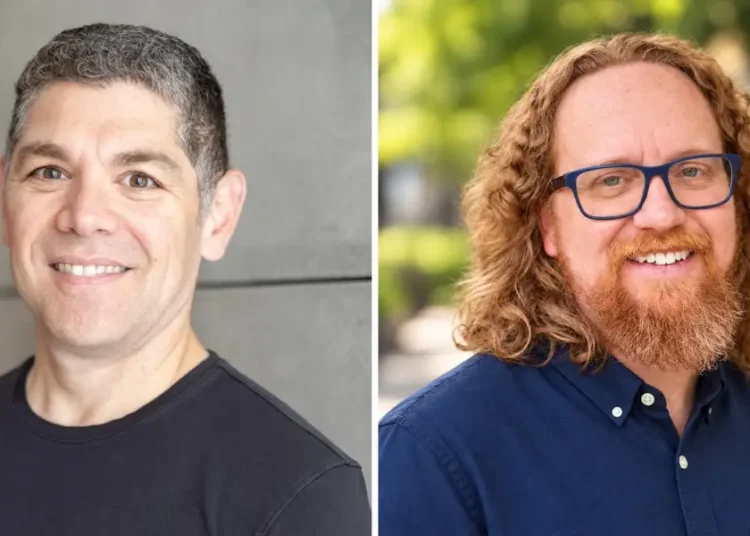
Lolita Jackson was in a meeting in the South Tower of the World Trade Center when the North Tower was hit by the first plane on Sept. 11, 2001.
She and her colleagues at Morgan Stanley heard an announcement telling them to take the elevator to the lobby and wait for instructions, so she and her friend Tom Swift headed that way together. But then Swift stopped and said he wanted to go call his wife.
“I said, ‘I’ll meet you down there.’ And I left him and I took that elevator,” she said.
She and most of her colleagues made it out, but Swift didn’t. He was one of the nearly 3,000 people who died that day. Jackson is still haunted by it, and so is the rest of their friend group who was there.
“For the life of me, I just don’t know why he died on 9/11 and I didn’t,” said Doug Brown, who also worked at Morgan Stanley. “It just was so random.”
Brown, Jackson and several other members of their friend group took a hard look at themselves and radically changed their lives after 9/11. Jackson left finance and went into public service while also dedicating herself to her passion outside of work: jazz singing.
Brown started volunteering, tutoring elementary school students in reading. He found it so fulfilling that he left finance behind several years later and started working for literacy nonprofits.
Another colleague of theirs, Nancy Karole Kennedy, went to work for the Red Cross, then devoted her days to fundraising for cancer care and research.
Jackson said the whole team was so affected by losing Swift because they had all been very close.
“It was like a family,” Jackson said. “A lot of business trips together, a lot of late nights together.”
She said she and her friends were rocked to their foundations, and that made her think deeply about working on Wall Street.
”People recognized, okay, working at these firms, making the money I was going to make, maybe that’s not all there is,” she said. “I think for a lot of us, particularly those of us affected by someone we knew really well dying, that was enough to shake people up.”
‘I’m a kinder person than I was before’
Kennedy was 39 and a manager at Morgan Stanley, having started as an intern and working her way up.
“I think as a woman on Wall Street, I felt like I had to be tough,” Kennedy said. “After 9/11, I didn’t care whether I was supposed to be tough or not.”
Kennedy didn’t leave finance immediately, in part because she felt like her team needed her emotionally. She said she never counted anyone’s sick days after 9/11.
“I went to conferences on dealing with post-traumatic stress and I read everything I could, all for the purpose of helping our staff,” Kennedy said.
Many of her team members were in their 20s and early 30s, and Kennedy felt responsible for them.
“We weren’t sleeping,” Kennedy said. “Losing Tom was awful. And we lost our head of security, Rick Rescorla, who really was the guy that put the policies in place that saved us.”
Rescorla died after going back into the building to search for anyone left behind.
Like Brown, Kennedy struggled with survivor’s guilt, and she couldn’t stop thinking about something she saw after evacuating the building.
“The Red Cross was there,” Kennedy said. “I knew they were there to help people.”
About a year after 9/11, Kennedy became a disaster response volunteer with the organization, showing up after fires, floods and hurricanes to help set up shelters.
“I hauled ass out of that building as fast as I could. Passing firemen going up. That still haunts me,” Kennedy said of the South Tower on 9/11. “I wanted to be a person running in instead of a person running out.”
Kennedy became a full-time employee at the Red Cross and later went to the cancer center at Hackensack Meridian Health, where she is now the director of development. Over the years, she has watched as 9/11 survivors and first responders have become sick because of exposure to debris and toxins from the attacks.
“I’m a kinder person than I was before,” Kennedy said. “It made me more compassionate.”
Kennedy keeps in touch with the people she worked with at the World Trade Center, including Brown and Jackson. She’s hosting a gathering for them at her house in October.
Making meaning
Many people who live through traumatic events experience post-traumatic stress disorder, or PTSD. But psychologists and researchers have found that people who survive terrible things can experience post-traumatic growth, too.
“We’ve been focused in mental health on symptoms of disorder for a long time and not looked at the other side of the picture,” said Richard Tedeschi, a psychologist and the executive director of the Boulder Crest Institute for Posttraumatic Growth.
Tedeschi said many survivors experience both stress disorders and growth because traumatic events can shatter core beliefs, including the idea that the world is safe. The process of reconstructing a system of beliefs can be painful.
“In the immediate aftermath of going through adversity and trauma, many people report some degree of growth,” said Eranda Jayawickreme, a psychology professor at Wake Forest University who studies post-traumatic growth. “So when something bad happens, believing that you’ve learned from it gives you more control over the event, so you don’t feel like this passive victim of the cosmos.”
Jayawickreme said this can help people cope and make meaning out of what they’ve experienced.
After the attacks, Jackson struggled with knowing she could have died that day at work.
“I recognized that while I liked what I was doing, I didn’t love it enough to die for it,” Jackson said. “So I felt that maybe it was time to step away and figure out something else.”
She had money saved to take time off from working, and she threw herself into volunteering and hobbies, including singing in multiple jazz bands.
Eventually she landed in the New York City mayor’s office, where she was in charge of public affairs after Hurricane Sandy, and helped train city employees working in communities where people had lost loved ones and homes.
“My personal experience weighed directly into that,” Jackson said. “I said, ‘Hey, these people are really going through a lot.’ So I knew to be sensitive to that.”
Tedeschi said one of the things that often helps people after trauma is finding a way to help others.
“When they go through something that seems horrific and impossible to live with, it’s not the end of the story,” Tedeschi said. “The story looks pretty grim at times, but I’ve just seen so many examples. There’s a pathway through it that leads to things that are just surprising. … I guess that’s the thing I like people to realize so that they don’t give up on themselves.”
The post They survived 9/11. Then they devoted their lives to helping others. appeared first on Washington Post.