Sitting across from a 30-something single mom working to pay off $80,000 in student debt, we opened her bank statements for the past 12 months to see where her money was going.
As we went through each month, line by line, something became clear. There weren’t any large, reckless purchases draining her bank account. Instead, her statements were riddled with what I call “ghost charges.”
Just about every month, there were dozens of transactions she had either forgotten or consciously ignored.
She isn’t alone. She is one of many Americans caught up in an epidemic of budget amnesia. The culprit is modern payment technology, which has made it far too easy to swipe, spend and suppress.
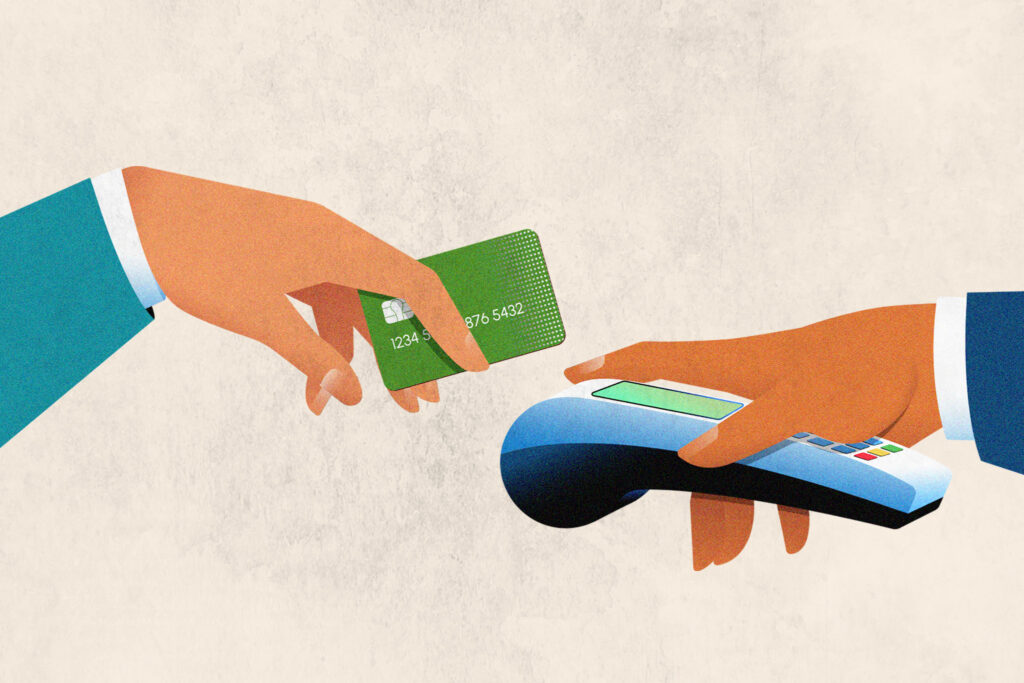
Frictionless transactions — including one-click pay, tap to pay, mobile payment apps and saved autofill credit card prompts — have made buying so effortless that in many instances we don’t feel the psychological pain of paying.
As the use of biometrics expands, using a phone or plastic payment card will be completely optional. You’ll be able to smile and pay. In 2024, J.P. Morgan announced a partnership with PopID that allows shoppers to use their face to shop.
Companies sell consumers on the technology by promising faster checkout times.
In hawking its iPhone X, Apple produced a pretty fly commercial. Three seconds. That’s all it took for the actor to pay for a hat that flies off the rack and onto his head. Another quick eyeball on his screen, and he’s bought some cool sunglasses. The shopping spree continues with multiple suits, shirts, stylish shoes, a chair for mama and jewelry.
The tagline: “Pay with a glance.”
Businesses don’t want you to pause. Pay with your face and be in debt within seconds.
For those old enough, we remember when paying with a credit card was a pain.
The cashier pulled out a clunky manual machine from under the counter, inserted your credit card and pressed it to make a carbon copy imprint. As you signed the receipt, customers waiting in line behind you would be blowing out their breath or tapping their feet, wondering why you didn’t just use cash.
Now, this tech-induced amnesia siphons away the money people need to save, pay off debt or invest for retirement. They zone out and later stare at charges they barely remember making.
It gives rise to the often-heard refrain: “I have no idea where all my money goes.”
To break free from this digital fog, you need to conduct a financial audit. Here’s how.
Use pen and paper. If you have access to a printer, download and print out the last six to 12 months of your credit card and bank statements. Yes, all of them.
Get a pen because you will be doing a lot of circling.
I don’t want you to rely on your banking app to check your numbers. These dashboards sort your spending into tidy graphs that make it feel like it’s under control. But a pie chart showing $400 in food spending doesn’t tell the full story. In reality, spending $60 on a McDonald’s delivery undercuts what you say is your goal to pay down debt or save more.
Hunt down every line item. Think of this as an archaeological dig. Review every single charge and backtrack to figure out where that cash actually went, including ATM withdrawals.
You will circle and label every purchase. (See the next step.)
For every obscure vendor name or confusing line item, search or log in to the specific platform, such as your Amazon or PayPal order history, to match the purchase and the exact dollar amount you paid.
Categorize your purchases. Your goal is to look for stealth splurges or ghost spending. You might recall the $60 Uber Eats delivery, but you don’t remember the Zelle payment you made to reimburse friends after you went out for drinks and dinner.
You will need to circle all your purchases and categorize them — gas, utilities, groceries, eating out, delivered meals, etc.
Make a note of spending for convenience. Expensive premade hot bar food from the grocery store should be labeled “eating out,” even if you took it home to eat on your couch while binge-watching your favorite cable series.
Calculate your amnesia tax. Tally the total dollar amount of every debit or credit card charge you can’t recall. The cash you forgot about is the price you pay for failing to track your actual purchases. It’s money that could be available for the things you say you value.
After your deep dive, force yourself to answer the following three questions.
What specifically was this for? Question all purchases, asking yourself, “Was this a need or want?”
Why did I buy this? When faced with multiple Grubhub orders, you need to ask: Were you out of food? Did you budget for the expense, or did you act out of impulse because you didn’t want to eat leftovers?
Is mindless digital spending sabotaging my long-term financial goals? Frictionless payment technology obscures the true cost of your choices.
By the end of her audit, the single mom found hundreds of dollars she could have used to pay off her debt.
The tech companies want you to smile, glance and tap your way into financial oblivion. But if you don’t pause before paying, it will derail the money goals you set for yourself.
The post Tapping makes it easy to pay and to forget how much you’re spending appeared first on Washington Post.