Shawn Regan is a senior fellow at the Manhattan Institute.
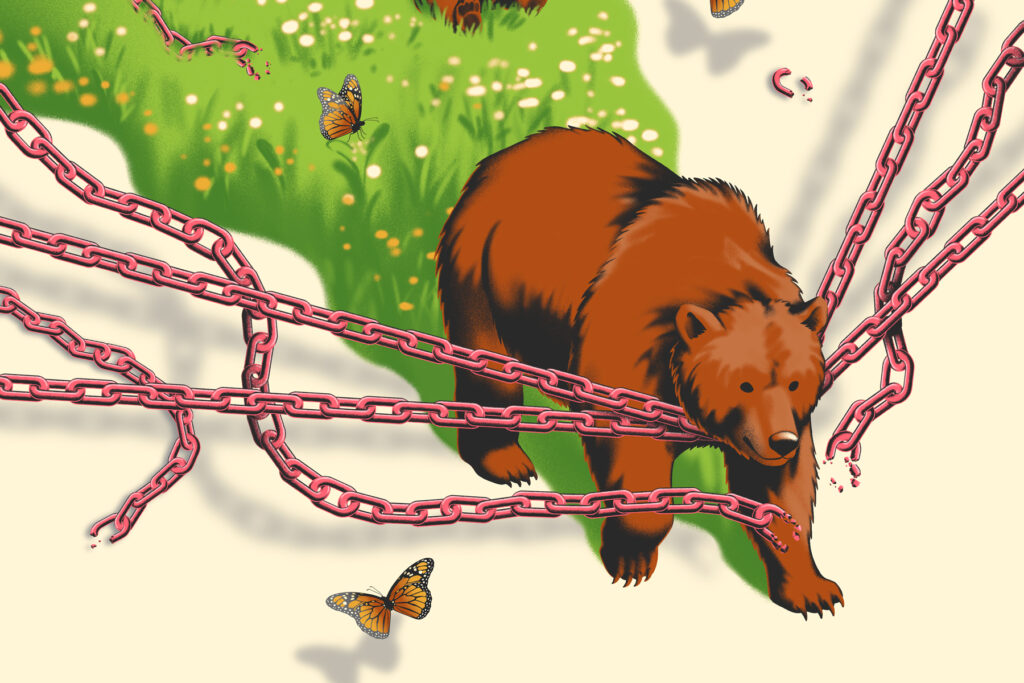
Grizzly bears are a recovery success story, and the federal government is finally acting like it. The Trump administration recently proposed giving states more authority to manage their grizzly populations, unveiling a novel plan to boost the bears’ recovery in the Lower 48. Predictably, environmentalists are up in arms, charging that loosening federal regulations could lead to “more dead grizzly bears.” But the complaints ignore an important truth about conservation: Aiding the recovery of endangered species often requires cutting regulations, not adding more.
The federal government’s plan would gradually give Montana, Idaho and Wyoming more authority to manage their surging bear populations as conservation benchmarks are met. Grizzlies would remain protected under the Endangered Species Act, but hitting these goals could bring lighter regulation and greater management flexibility for the states.
The approach, together with another rule finalized in July by the U.S. Fish and Wildlife Service, could mark a new chapter in endangered species policy by giving states and landowners concrete rewards for helping populations recover rather than relying indefinitely on punitive regulations.
Legal scholars have described the Endangered Species Act as “one of the most powerful environmental laws ever enacted.” Its provisions prohibit the unauthorized “take” of endangered wildlife, a broad category encompassing actions that kill, injure, harass, hunt or capture protected animals. The act can halt projects and restrict hunting and other land uses that threaten a species’s survival.
For the most fragile species, it works — to a point. Ninety-nine percent of species listed under the act have avoided extinction. But the law has proved far less effective at the recovery part of its mandate. Only about 3 percent of listed species have bounced back enough to come off the list.
That’s because the tools needed to help a species recover are not the same as the ones needed to save one from extinction. Punitive restrictions can stop someone from destroying the last remaining habitat of a rare species. But they cannot motivate the difficult work that is required to help species thrive, such as restoring and maintaining habitat.
Congress recognized this distinction when it enacted the law in 1973. It created two classifications. Endangered species, those currently at risk of extinction, automatically receive the act’s strictest protections. Threatened species, those likely to become endangered in the foreseeable future, would be governed by custom regulations based on their recovery needs — often with greater flexibility for human activities that pose little risk or actively improve habitat. Looser regulation could mean allowing prescribed burning that might incidentally harm a few animals but restore the fire-dependent habitat their population needs. Or it might exempt grazing, mowing or farming that could technically “take” an individual animal but maintains valuable habitat across a much larger landscape.
For most of the act’s history, however, the federal government has largely ignored Congress’s distinction. Instead, the Fish and Wildlife Service’s “blanket rule” has automatically applied the most stringent endangered-level protections to threatened species by default, unless the agency created a special exemption. When the same restrictions apply whether a species is declining or recovering, states and landowners have little reason to undertake the work needed to improve its status.
In July, the Fish and Wildlife Service finalized a rule that restored Congress’s distinction between threatened and endangered species. Now, the agency will determine which regulations are “necessary and advisable” for each threatened species’s recovery.
The grizzly proposal shows how that flexibility can be turned into a genuine path to recovery. Grizzly populations have far surpassed their original recovery goals since receiving federal protection in 1975, yet the current system gives states little additional authority as bear numbers improve. The proposed rule would increase flexibility for state-level stewards as a reward for recovery. For a Montana rancher losing cattle to grizzlies, that could mean state wildlife officials relocating or killing a problem bear without needing to seek federal approval.
Environmentalists worry that loosening federal restrictions could allow states to kill too many troublesome bears and that traps set for other animals could harm grizzlies. But removing grizzlies that repeatedly kill livestock can help communities’ tolerance for the bears, and federal officials would still retain authority to intervene if progress reverses. That creates an off-ramp from permanent federal control and gives states and landowners a reason to keep helping the bears recover.
A similar approach could help other imperiled populations. The monarch butterfly, under consideration for a threatened-species listing, depends on milkweed habitat on farms, ranches, roadsides, utility corridors, parks and backyards. A regulation-heavy listing could backfire by making monarch habitat a liability and discouraging people from creating it. The Fish and Wildlife Service is considering custom regulations with exemptions intended to avoid that result.
The agency could go further by setting clear habitat or population targets and easing restrictions as those benchmarks are met, similar to the grizzly bear rule. This would reward farmers, utilities, transportation agencies and other landowners for creating the milkweed habitat monarchs need.
The reality is that more stringent rules are not always the best way to help a species recover. Recovery depends on giving the people who live with wildlife a stake in its success, and that often means cutting regulations and offering better incentives.
The grizzly bear proposal shows how that can work: As populations improve, states gain more flexibility; if they decline, federal controls can tighten again. The Endangered Species Act has spent half a century proving it can prevent extinction. The next step is to give more animals a path off the list. Sometimes, that means loosening the rules.
The post Grizzlies are thriving. This is the next step. appeared first on Washington Post.