With an insulted and angry nation solidly behind him, Prime Minister Mark Carney of Canada is charging ahead in a bitter trade war with the United States, risking a further fraying of what once was one of the world’s closest friendships.
Retaliatory tariffs, set to take effect at 12:01 a.m. Eastern time on Tuesday, demonstrate Mr. Carney’s defiance toward increasing bombast by President Trump, who has been trying to humiliate Canada economically after more than two weeks of finger pointing and threats.
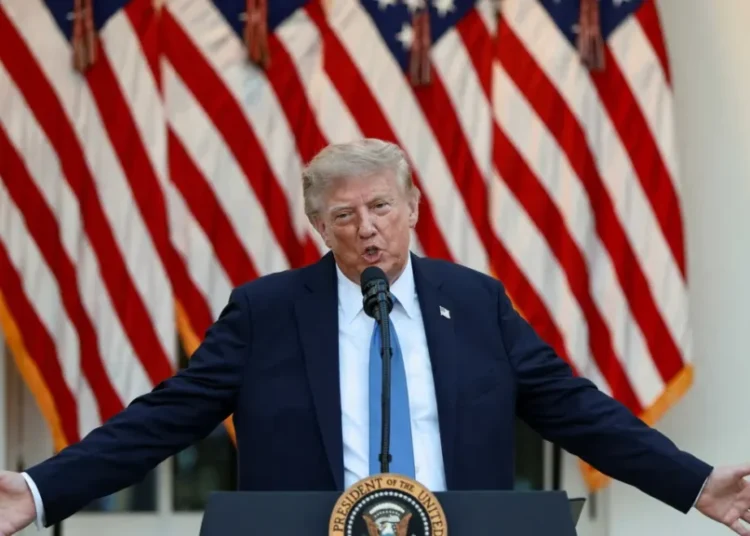
Mr. Carney’s response has distinguished him as one of the few world leaders standing up to Mr. Trump as he lashes out at American allies on a range of issues.
The new measures will double the rate of existing tariffs that Canadian businesses pay on imported American steel and aluminum products and affect about 700 products, including aluminum foil, railway locomotives and steel bridges.
Polls show that Canadians strongly back Mr. Carney’s decision to end trade talks with Washington last month and hit back with tariffs on about $20 billion in American products entering Canada. But there is also concern over what might happen next. Mr. Trump has repeatedly threatened another round of American tariffs if Canada follows through on its plan.
Some in Canadian industry say they are inclined to take Mr. Trump at his word, at least on this threat.
People in the Trump administration “are willing to hurt themselves, their own sectors and industries, in pursuit of their goal, however misguided I think it is,” said Flavio Volpe, the president of the Automotive Parts Manufacturers’ Association of Canada. “So they may escalate. I hope that we don’t end up in a tit-for-tat situation.”
In what appeared to foreshadow Mr. Trump’s latest intensions, he announced on Monday that Bombardier, the Montreal-based aerospace company, would be banned from selling in the American market unless it built in the United States.
“They live off American Buyers, American Companies, American Airports, and American Service — All while Canada blocks our GREAT American Banks, and Companies, throughout the U.S.A.,” Mr. Trump wrote in a social media post announcing the ban.
Mr. Carney announced Canada’s new tariffs after he pulled Canadian negotiators out of talks in Washington last month — an ultimately unsuccessful attempt to stave off 50 percent American tariffs on $20 billion in Canadian exports and to reduce or eliminate tariffs of up to 50 percent on Canadian steel, aluminum and automobiles.
The Trump administration said the tariffs it imposed last month were in part a response to retaliatory tariffs Canada placed last year on some U.S. imports, particularly autos. American officials have repeatedly noted that only China and Canada retaliated against the United States since Mr. Trump began upending global trade.
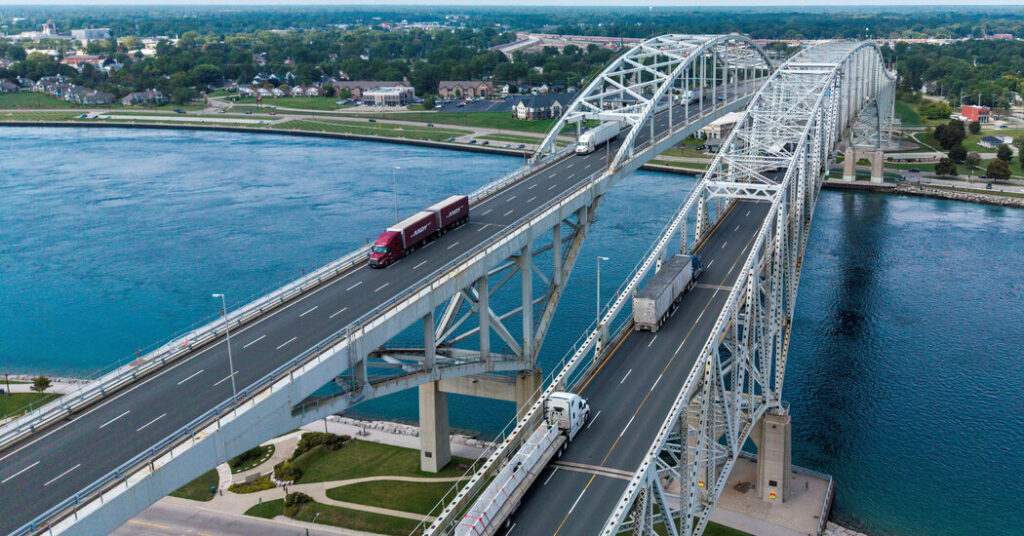
Since trade tensions began to rise with Canada at the start of Mr. Trump’s second term, the United States has lashed out in ways both substantive and symbolic, including threats to block the reopening of a U.S.-Canada bridge and an executive order to rename Lake Ontario to “Lake America.”
At a news conference after a sternly worded speech announcing the tariffs, Mr. Carney declared that Canada had been attacked by the United States and that the two countries are now “at war.”
Last week, Scott Bessent, the U.S. Treasury secretary, rejected that framing, arguing that Canada is too small an economic power to battle the United States. “I don’t think you can be in a tit-for-tat with someone who’s 13 times larger than you are,” Mr. Bessent said on CNBC.
On Friday Mr. Trump escalated his trade rhetoric even further. He said that he might “end all trade with Canada” and other countries that have trade surpluses with the United States. Mr. Trump has frequently made dramatic threats during trade negotiations that have gone unrealized, such as floating the idea of a 100 percent tariff on Canadian goods in January.
Separately, the U.S. commerce secretary, Howard Lutnick, said Mr. Carney had shut down the talks to gain “political leverage” at home, not because of what the U.S. side had offered.
Mr. Carney made clear last week that he was in no hurry to return to negotiations and was focused instead on diversifying Canada’s trade and expanding its domestic economy.
“At the appropriate time, the conversation will happen,” he said. “But the most important thing we can do is not to spend all our time waiting by the phone, waiting for a call, refreshing on social media to see what’s coming across.”
Many of the American items that will soon face Canadian tariffs of 15, 25 or 50 percent mirror the Canadian exports that now face 50 percent American tariffs, particularly clothing and wood products. Canada revised the list to remove dozens of fish products after the Canadian fishing industry said that tight cross-border integration meant its members would also be harmed.
Canadian officials have suggested that many of the targeted American items come from states where voters supported Mr. Trump, though some political analysts question how much pressure that will actually put on the White House. The list also includes items with little significance for the Canadian economy, including the metal bands that attach erasers to pencils, migratory bird identification bands and fish egg incubators.
Mr. Trump has not imposed tariffs on some of Canada’s largest exports, including oil and gas and many minerals, and has exempted many products with enough North American content to move duty free under the United States-Mexico-Canada Agreement. Auto parts, for example, are subject to a 25 percent tariff but generally cross the border without incurring it.
As a result, Canada’s overall average tariff rate remains low compared with what most other countries face and the majority of its trade, by dollar value, is still duty free.
After the talks collapsed, Mr. Trump threatened to impose 50 percent tariffs on autos and auto parts in January, apparently without the U.S.M.C.A. exemption — a move most analysts believe would be devastating for Canada’s auto industry. Mr. Trump has not taken formal steps to carrying out the threat, though some in Canada speculate that rather than target new products or raise existing tariff rates, the Trump administration may instead strip away the U.S.M.C.A. exemption for many goods.
Mr. Volpe said that auto parts makers were not intimidated. He said that last year, when the Trump administration proposed collecting tariffs on Canadian auto parts, “they understood that it would shut down the auto industry in a week.”
He added: “Ultimately, I think they will back off that. But if they don’t, they can have at it.”
Zane Irwin contributed reporting from New York.
The post Brushing Aside Trump’s Threats, Canada Retaliates on Tariffs appeared first on New York Times.