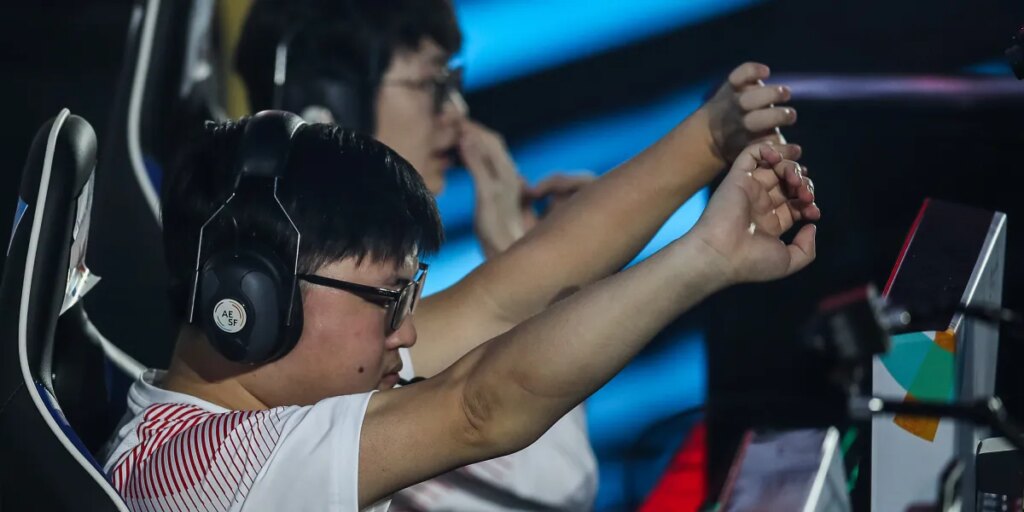
Chinese esports player Jian “Uzi” Zi-hao was more than a star “League of Legends” player: He was so talented that his team structured its entire strategy around his abilities, funneling resources to him and another teammate, Shi “Ming” Sen-Ming, so the duo could lead the team to victory. Over the course of his career, he earned more than $500,000 in tournament prize money.
And yet in 2020, Jian announced his retirement, his storied career cut short by chronic wrist and arm injuries.
He was 25 years old.
Video games have a reputation for keeping people glued to the couch. But for those who compete against the best players in the world, gaming can be surprisingly physically and mentally taxing.
The strain of ‘climbing the ladder’
The best esports players often have grinding schedules. They’re expected to regularly practice, participate in scrimmages and compete in official matches. Even at the recreational level, esports players cite the mental toll: playing for hours a day, every day, to hone their skills so they can “climb the ladder.”
A 2021 study of Portuguese esports players found that 37% experienced anxiety and depression, and 45% experienced sleep disturbances. The most common physical injuries in esports generally fall under eye problems and musculoskeletal issues.
Prolonged screen time leads to many types of vision problems in gamers, from the more common eye fatigue to a decreased ability to focus. Furthermore, the light emitted from screens appears to contribute to sleep disturbances by disrupting the release of melatonin, the hormone that helps regulate your sleep-wake cycle.
Many esport players – professional or otherwise – also battle hand and wrist pain, with repetitive button-smashing causing injuries such as carpal tunnel syndrome, tendonitis and “gamer’s thumb,” which arises from overuse or irritation of the tendons around the thumb and wrist. Many of the overuse injuries seen among video game players are also familiar to assembly-line workers, whose jobs can involve similarly repetitive movements.
Then there are the back injuries. Players can remain seated for three or more hours without a break, and this prolonged sitting can take a toll on the lower back and spine.
The sedentary nature of esports has also led to a lesser-known – sometimes fatal – injury called deep vein thrombosis: a blood clot, often in the leg, that can become life-threatening if it travels to the lungs. In 2011, British gamer Chris Staniforth – who would play for as long as 12 hours at a time – died of the condition.
Preventative measures
As more esports injury research has been published, more treatment and prevention strategies have emerged.
Top esports teams now have physical therapists, performance psychologists, athletic trainers and even massage therapists on staff to optimize the performance and recovery of their players.
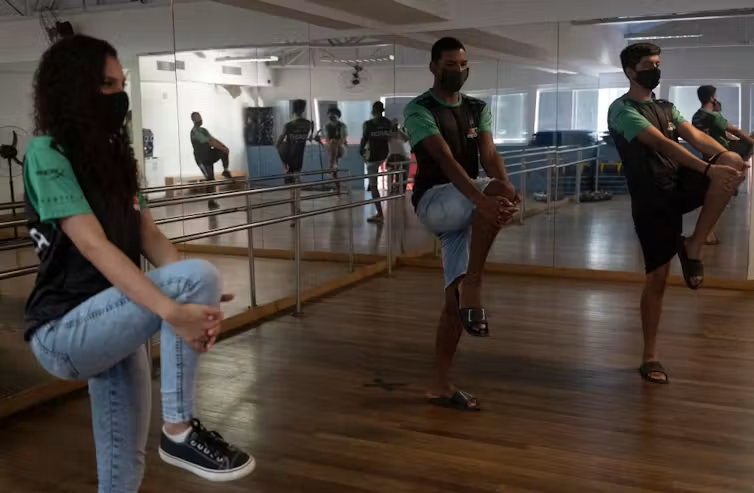
Teams often incorporate group exercise activities to both build rapport among players and reduce the risk of injuries. During competition, proper positioning of the spine and limbs has become an essential injury prevention strategy. For example, selecting a chair that encourages an upright posture can reduce pain and injury risk, especially when gamers couple ergonomics with an exercise program that centers on functional strength, mobility and stretching of the upper limbs.
Looking to the stage
When esports began gaining mainstream popularity in the 1990s and early 2000s, its proponents were eager to draw comparisons to traditional sports and athletic competition. The parallels helped establish esports’ legitimacy and gave non-gamers a familiar framework for understanding the competition.
As esports became a big business and a lucrative career path, players and teams hired a web of support staff – trainers, coaches and therapists – that mirrored the structure of professional sports. In this vein, a lot of esports injury research has pulled from the training methods of traditional sports.
However, as a scholar of exercise science, I think injury treatment and prevention strategies could be further improved by seeing esports competitors as more like musicians and dancers than football players and basketball players.
Performance optimization and injury research on professional performing artists has existed for centuries, and I think it represents a valuable, untapped resource. That’s because the physical and mental stresses experienced during musical performance have a lot in common with esports competition: long stretches of sitting; small, dexterous hand movements; and performing without the real-time input of a coach.
For example, biomechanics research has found similar patterns of forearm muscle fatigue among esports players and piano players. However, no studies to date have directly compared the two groups.
And what if the interest in joint hypermobility or hand size among performing artists were translated to esport populations? Could popular piano warm-up exercises be effective for esports athletes who use keyboards?
Even research on sports like car racing might offer valuable insights. As with gamers, many people overlook how physically demanding car racing can be – and yes, that includes sitting for extended periods of time.
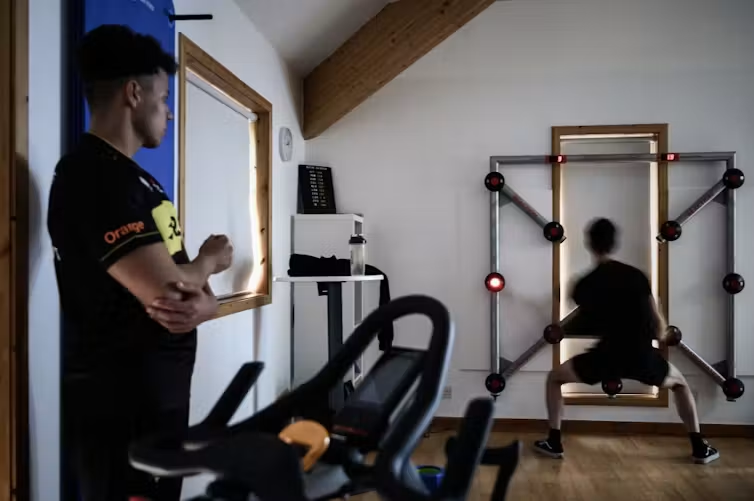
Prevention and rehabilitation techniques continue to improve. Even Jian, the player who retired in 2020, returned to play for a few splits, or partial seasons, in 2022 and 2023.
In July 2023, “League of Legends” star Lee “Faker” Sang-hyeok was relegated to the bench due to cubital tunnel syndrome, an injury that emerges from arm and hand overuse.
Through a treatment plan that included changing his gaming posture and intensive physical therapy, Lee was able to return to play just a month later. He went on to win three consecutive world championships, with his support team helping prevent recurrence of injury throughout each season.
Thanks to his rehabilitation, Lee’s fans will be able to follow his hunt for his fourth “League of Legends” World Championship, which kicks off in October 2026 in the United States.
Sienna Cinti assisted with the research and writing of this article.
Erica D. Henn, Assistant Professor of Kinesiology and Exercise Science, Temple University
This article is republished from The Conversation under a Creative Commons license. Read the original article.

The post A $500,000 career, gone at 25: esports’ injury crisis is forcing teams to build sports-medicine staffs appeared first on Fortune.