MINAB, Iran — This will never be a school again.
Its bright blue gate is still painted with the symbols that once welcomed children: Iran’s map, oversized pencils and portraits of legends in science and literature.
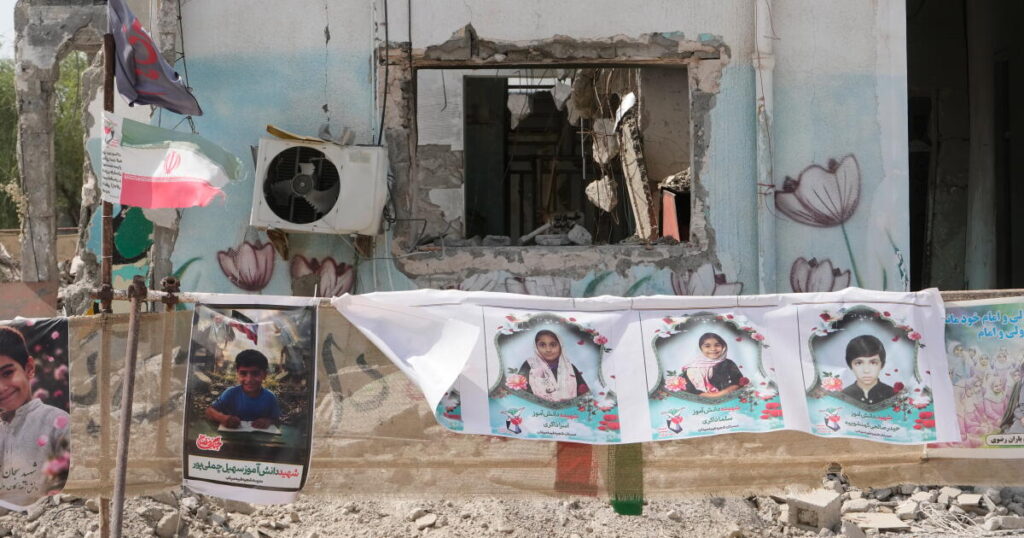
But now, the walkway beyond it guides visitors past rows of photographs. They show children busy living, at birthday parties and more. Then come the same small faces on black banners of mourning.
This is the emerging memorial to the schoolchildren killed in the attack in the earliest moments of the war that the United States and Israel began across Iran on Feb. 28. Strikes hit the Shajareh Tayyebeh school in Minab. At least 156 people, including 120 students and 26 teachers were killed.
Months later, the Trump administration still has not directly accepted responsibility for the strike or released the Pentagon’s findings. An Associated Press investigation found evidence that at least one U.S. missile hit the school, a finding corroborated by other independent investigations.
Attention turned to Minab again in the last week when a new round of U.S. strikes along Iran’s southern coast struck a wedding and other areas, sending some of the injured to a hospital in the community. At least six guests at the wedding — including a 6-year-old boy — were killed, and scores were injured, according to news reports citing the Iran’s Red Crescent Society.
The AP visited the badly damaged two-story school building whose classrooms remain frozen mid-lesson, with desks half buried and ceilings collapsed.
There have been calls to preserve the ruins as a historical record. Hormozgan Gov. Mohammad Ashouri Taziani has said the building would be turned into a war museum and memorial.
Nearby, a section of Minab’s cemetery has been dedicated to those killed. Families and others move quietly across the grave-marked artificial grass.
Residents said three bodies still have not been found.
Vahdat writes for the Associated Press.
The post The Iranian school struck in the war’s earliest attacks is now a memorial for children appeared first on Los Angeles Times.