The Trump administration wants to limit who counts in the next census. Its immigration crackdown risks making some of the people who would still count afraid to answer. These are not separate problems. A census depends on people trusting the government enough to tell it who lives in their homes. An administration that makes immigrant communities fearful of encounters with federal officials could undermine that trust.
In September, the administration proposed limiting the population counted for congressional apportionment to citizens and lawful permanent residents. Undocumented immigrants would be excluded, along with many people living lawfully in the United States without permanent resident status. The change is not yet in effect, but its consequences would be pernicious. A deadline for public comment is quickly approaching.
The administration argues that residence involves more than physical presence. Its proposal invokes allegiance and enduring ties to justify excluding immigrants without permanent status from the apportionment count. But the census has never been a voter roll. It is a tool to help plan public policy. The 14th Amendment bases apportionment on “the whole number of persons in each State.” A person can lack the right to vote and still need a functioning school, hospital or emergency system. Immigration status does not make those needs disappear.
Immigration enforcement could deepen the undercount by making some households afraid to answer at all. Even people entitled to be counted might hesitate to make themselves known. Census Bureau researchers have studied a closely related problem. A 2024 working paper analyzing the randomized 2019 Census Test found that adding a citizenship question reduced participation and increased the undercount of households containing noncitizens. The results included omitted household members and abandoned online questionnaires.
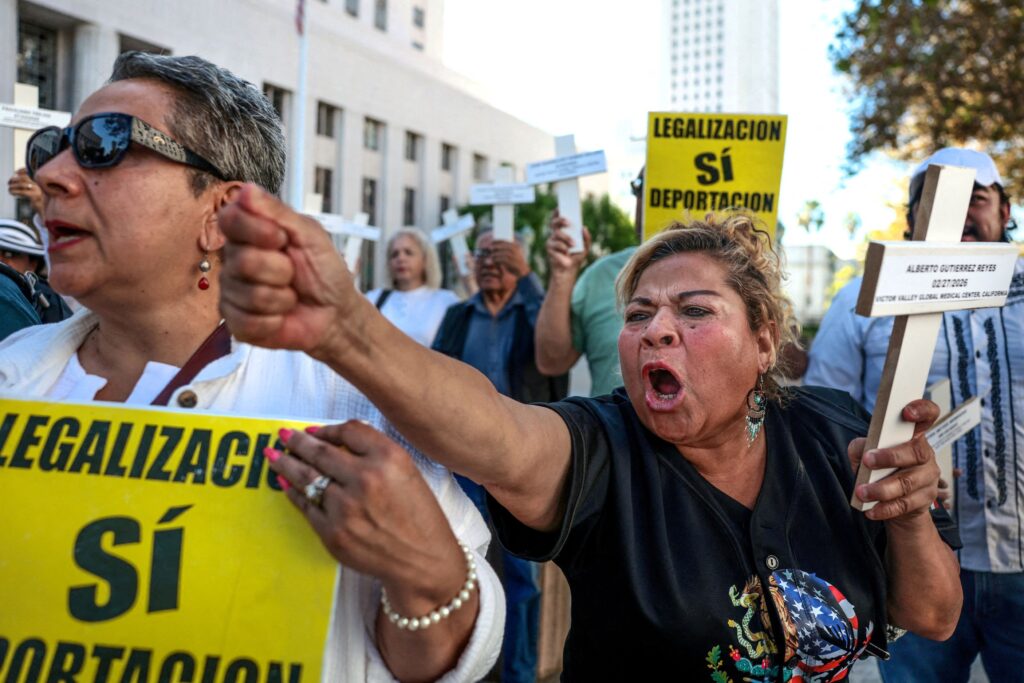
Earlier this month, immigrant communities across California experienced a surge in federal immigration enforcement — reportedly known inside U.S. Customs and Immigration Enforcement as “Operation Safe California.” According to reporting first published by the Washington Examiner, officers were instructed to arrest undocumented immigrants they encountered regardless of criminal history. Gov. Gavin Newsom (D) called it a “campaign of fear.”
In the San Joaquin Valley, at least 100 people were detained over three days, according to activists. Gilbert Antonio, a lawful permanent resident from El Salvador, said agents stopped him near a pharmacy in Mendota and demanded his papers. He said he believed they had singled him out because he was Latino. He described streets emptied by fear and parents afraid to leave home to collect their children from school.
In Santa Ana, community patrol volunteer Jackie Córdova described an encounter with federal agents that left her with a damaged tooth and a split lip. She told La Opinión that agents chased her, sprayed her with pepper spray and pushed her against a wall. The Department of Homeland Security accused her of striking ICE vehicles with a metal object and characterized her injuries as minor.
The Census Bureau has extended the public comment deadline to Nov. 2. LatinoJustice PRLDEF, a national civil rights nonprofit organization, has urged the public to make themselves heard. Christian Arana, vice president of policy at the Latino Community Foundation, told me the proposal “merits a vigorous and robust response.” Public comment, he said, is “a critical way to demand that our government respect the constitutional right to be counted in the census.”
A census should describe the country that exists, not the one an administration wishes existed. That means counting the people who live here. And governing a society requires earning people’s trust, not making them afraid to engage with authorities. Whether exclusion happens by rule or by fear, the result is the same: People remain part of America while disappearing from its official portrait.
The post Trump’s two-front war on the census appeared first on Washington Post.