Regarding the Sept. 3 news article “World is certain to cross climate threshold, U.N. warns”:
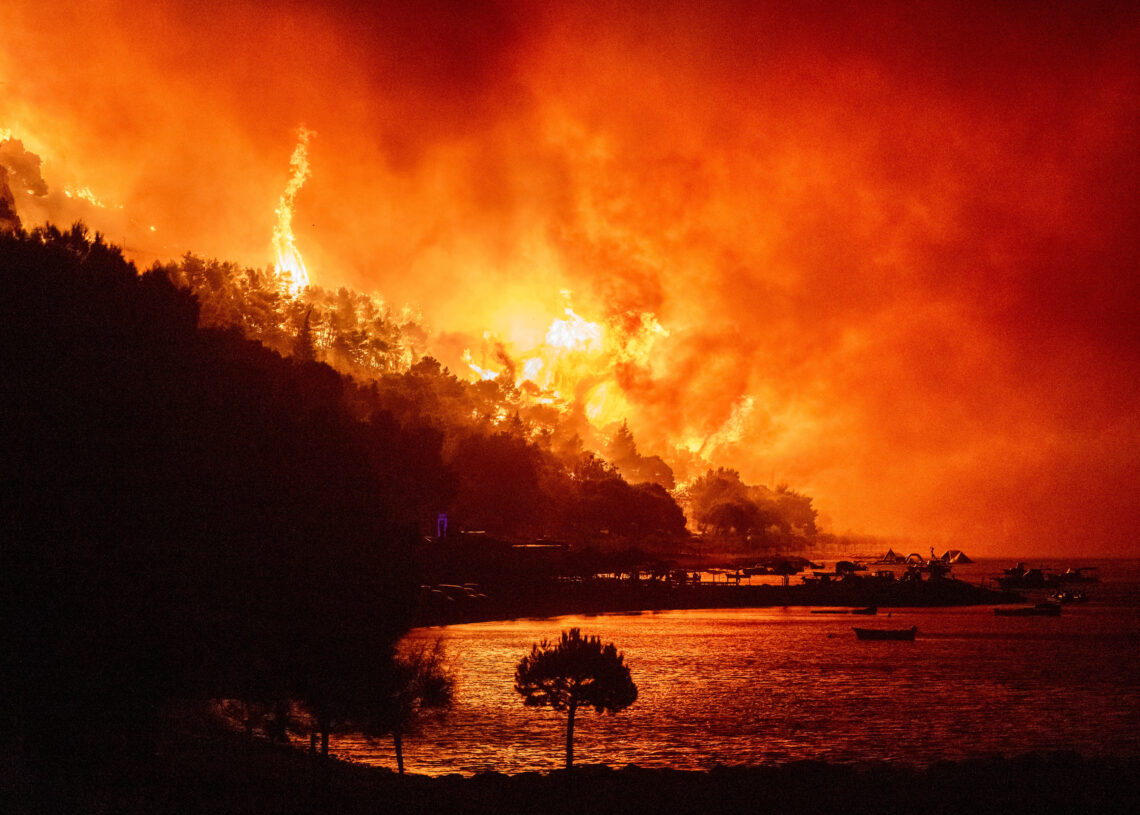
It’s no surprise that the world will rocket past its climate targets. As the article noted, to bring temperatures back down, all aspects of society would need a dramatic overhaul.
However, President Donald Trump and the United States keep marching in the wrong direction. Trump has prioritized fossil fuel generation during his administration, and the U.S. produced more crude oil than any other country last year.
But fossil fuels are the true culprits of this deadly, destructive climate crisis, and phasing them out should be kept front and center.
It’s true that natural carbon dioxide removal, through protecting and restoring ecosystems, needs to be a part of creating a safe climate future. And the world shouldn’t bet on dangerous, expensive failures like bioenergy with carbon capture and storage, or BECCS.
Keeping heat-trapping carbon out of the atmosphere is the surest, safest way to avoid more catastrophe.
U.S. leaders must do more to combat the climate crisis and stop putting polluter profits first. They can start by accelerating production of affordable, clean energy like solar and wind. It’s what many Americans want, and it will save many lives and trillions of dollars.
Shaye Wolf, Oakland, California
The writer is climate science director at the Center for Biological Diversity.
Nuclear regulation needs a reset
Vincent Ialenti’s Aug. 26 online op-ed, “U.S. nuclear campuses could power a renaissance. Except for one problem,” rightly credited the Trump administration with bringing new momentum to nuclear energy and spent fuel policy. The administration is pressing ahead with Nuclear Lifecycle Innovation Campuses, meant to make use of the more than 95,000 metric tons of used fuel sitting in casks across the country. This approach turns a storage liability into an energy asset. However, Ialenti undercut this monumental achievement by misidentifying regulatory reform and reductions in the federal workforce as dangers.
Nuclear energy and the fuel that powers it should be held to demanding safety standards. But safety and bureaucracy are not synonymous. Too much red tape has made the nuclear industry so sclerotic that the United States has added almost no new nuclear capacity for decades, even as electricity demand has skyrocketed.
President Joe Biden’s Energy Department squandered $24 million on building public trust in an inefficient spent-nuclear-fuel-storage model. Instead, the Trump administration plans to attract up to $50 billion in capital investment to generate new nuclear fuel production that will reduce U.S. nuclear-waste liability.
The Trump administration is asking the right questions: Which requirements address real risks, and which merely add cost, delay and uncertainty? Updating rules for modern reactor technology and fuel reprocessing is not an attack on safety. It is how America can again build and fuel nuclear power at the scale the country needs.
Joe Grogan, McLean
The writer is a former director of the Domestic Policy Council and assistant to President Donald Trump.
The case for more American aluminum
The portrayal of the Inola, Oklahoma, aluminum project as a cautionary tale of “populist economics” in the Aug. 22 editorial “Industrial policy meets red state politics” misses the larger economic and national security stakes.
For decades, America allowed its aluminum industry to contract to the point of strategic vulnerability. As the editorial noted, the United States has not built a new primary aluminum smelter since 1980.
In 2000, the country had 23 in operation. Today, only four remain and the country has become heavily reliant on imports. Roughly half of all aluminum used in the U.S. is imported. The result is a structural dependence on foreign sources for an essential metal used every day by the Pentagon in mission-critical equipment, as well as thousands of lost jobs for highly skilled American workers. The project in Inola is a step toward reversing that trajectory.
With planned production of 750,000 metric tons of primary aluminum annually, the facility will be the largest of its kind ever built in the U.S. and will more than double current production.
Aluminum imports pose a national security threat to U.S. supply chains and defense manufacturing; the federal government has specifically adopted policies intended to encourage new domestic primary aluminum production for this reason. Accepting dependence on foreign supply for military-grade aluminum, or any essential material, is a risk not worth taking.
Mark Duffy, Washington
The writer is president of the American Primary Aluminum Association.
A lesson in kindness from a jellyfish
The Aug. 30 Metro article “‘Perfect storm’ of conditions allowing jellyfish to thrive along Atlantic Coast” caught my attention. Jellyfish may not have “bones, brains or hearts,” but they are living creatures. I was sad to read about the children who were collecting them and “chopping them up with gruesome aplomb.”
Jellyfish may not be cute and cuddly like pet dogs and cats, but they deserve the opportunity to live out their existence without being cut up as “rough justice.” Parents can use these moments to talk to their children about respect for all living beings, whether they are cute or not.
We should incorporate respect for all beings into our daily lives. Animals are worthy of protection. Maybe if each of us tried to do this, we would live in a less stressful, violent world.
Jennie Gosché, Kensington
Letter submissions
Send letters to [email protected].
Submissions must be exclusive to The Post and should include the writer’s address and day and evening telephone numbers. Letters are subject to editing and abridgment. Please do not send letters as attachments. Because of the volume of material we receive, we are unable to acknowledge submissions; writers whose letters are under consideration for publication will be contacted.
The post The climate target is slipping away. Stop adding fuel to the fire. appeared first on Washington Post.