Inflation has been eating away at Americans’ paychecks this year.
For most of the past six months, inflation has been beating wage growth, which fell in August to the slowest pace since the pandemic, according to data released Friday by the Labor Department.
Wages rose 3.1 percent in August compared to a year earlier, while inflation picked up by 3.4 percent for the year ending in July, according to the latest data.
And for young people looking for their first job, as well as the unemployed, starting wages are particularly grim. Advertised pay for new job postings has fallen well behind average hourly wage growth for workers, according to an analysis of Bureau of Labor Statistics and Indeed jobs data by Appcast, a job-recruiting platform.
“For new workers — say you’re unemployed or you’re a recent college graduate — what you would think you’d get in terms of wages is less than people experienced in the past,” said Andrew Flowers, chief economist at Appcast.
What makes it feel so bad is that it’s a familiar story, economists say. It wasn’t so long ago that Americans’ earnings lost ground to inflation. From 2021 to 2023, prices for gas, food and housing soared due to a combination of increased demand and supply chain shocks. That pain weighed heavily on households across the country, even helping President Donald Trump retake the White House.
“This is one of the reasons consumers hate the economy. They’ve never recovered from the inflation that started in 2021,” said Dan North, economist at Allianz Trade North America, a credit insurance firm. “If you, cumulatively, look at that inflation, wages have never caught up to prices, and that’s why prices still feel so high.”
Relief did come in early 2023 as the economy normalized and Americans saw real wage gains for nearly three straight years. But that all changed after the United States attacked Iran in late February, disrupting global oil markets and raising prices at the pump. Now inflation is once again dragging down Americans’ costs.
To be sure, the budget crunch could be much worse. Wage growth would look pretty solid, if it weren’t for high inflation. Wage growth, though declining, has hovered above 3 percent this summer — a healthy pace similar to the years before the pandemic.
That growth is partially being driven by some employers who have been raising wages to fill labor shortages in industries that lost foreign-born workers to Trump’s tightened immigration policy, said Diane Swonk, chief economist at financial firm KPMG.
For example, labor shortages are pushing up wages, especially for skilled workers in construction, according to data from the regional feds in Atlanta, Cleveland and Kansas City, Missouri, published in the beige book out this week. In August, wages grew the fastest in leisure and hospitality, construction and transportation, all immigrant-heavy industries that have had to replace workers, as well as finance, Swonk said.
But inflation still wiped out wage gains. And there are signs that inflation could be worse in September with diesel fuel prices hitting a record high on Friday. Fuel inflation trickles out into the broader economy, from transportation and warehousing to food and then grocery stores and restaurants.
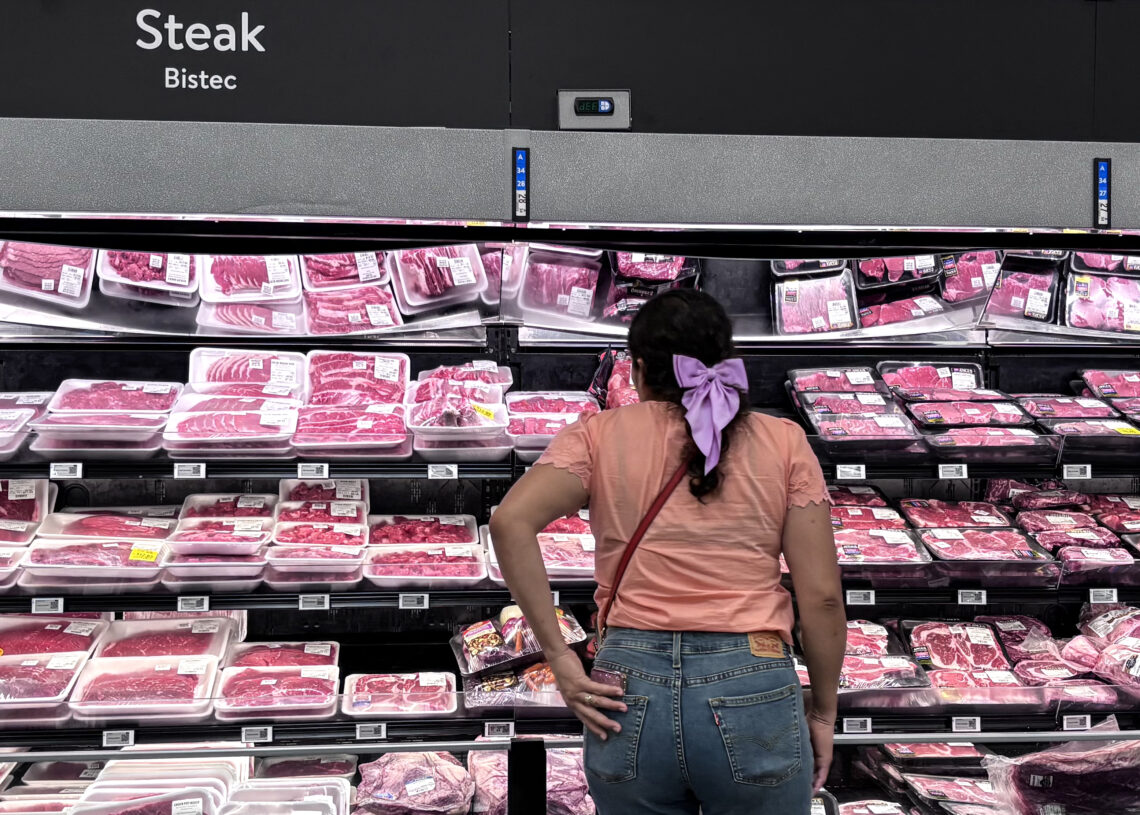
The financial pain is the greatest, economists say, for middle- and lower-income households that lack investments in the financial markets, which are up by double digits for the year so far. Rising prices are playing a big role in consumer sentiment, which also sank in August, according to a long-standing University of Michigan survey.
“People are falling behind,” said Mark Zandi, chief economist of Moody’s Analytics. “That goes most fundamentally to the general anxiety that many Americans feel about their financial situations. They’re just not keeping up.”
Despite falling wages, Americans mostly kept spending this year, showing a reluctance to significantly change their overall habits even as inflation eats into their budgets. Spending was bolstered this spring and early summer by larger-than-usual tax refunds and big events like the World Cup and Amazon Prime Day. As those taper off, Zandi said the real test is now.
“Given what’s going on with income, there is reason to be nervous that consumers will need to become even more cautious, pull back even more,” he said.
Consumer spending is the underlying force of the U.S. economy, making up about two-thirds of economic activity. It can determine overall economic health and growth.
Cracks are starting to show in consumers’ spending habits. Retail sales fell unexpectedly in July, reflecting that consumers may not be as resilient as they have long seemed. Other signs have begun to pile up: Walmart, a cornerstone of budget-friendly American shoppers, reported its weakest sales growth since the pandemic recession in 2020, and federal data showed consumer spending cooled in July.
Also, people are dipping into their savings, with the personal savings rate falling to a four-year low in June, recovering only slightly in July.
Walmart blamed some of its slow growth on falling prescription drug prices, and July’s numbers followed a strong June full of sales events. But some experts say that as the Iran war drags on, and wages lag behind prices, consumers will look for more ways to cut back.
Jamie O’Brien, 25, who runs an education program at a botanical garden in Richmond, said that they have received one pay raise since they got hired almost two years ago, bringing their pay to $17 an hour, up from $16 an hour.
“My expenses have gone up far more than that $1 could hope to catch up with,” O’Brien said. “I pay a little over $1,000 [a month] for rent. When I started working at the garden I was living in the same apartment and my rent was about $670.”
O’Brien’s workplace voted to unionize to bring up wages. But until they receive a more substantial pay bump, O’Brien is cutting back on groceries and unable to put any money into savings.
Steve Thompson contributed to this report.
The post Here’s why wages are falling behind inflation, an economic warning sign appeared first on Washington Post.