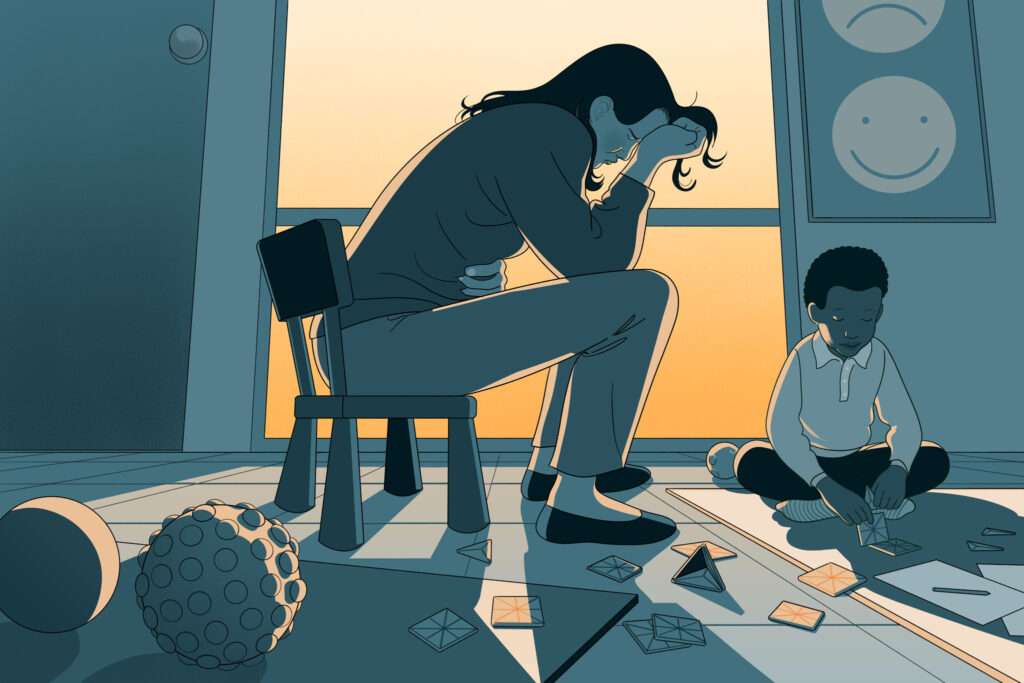
When her back began to ache, Maria Morales attributed the soreness to her job as a therapist for children with autism, where she often moved around and sat in “little kid” chairs.
Then after a week with this pain, the 26-year-old from Miami started to feel like she had the flu, but a test for influenza was negative. The next day, she woke up with abdominal pain. At work, it seemed like her belly kept growing. “I couldn’t button my pants,” she said.
She went home, where later that day her boyfriend checked on her. “He put pressure on my stomach, and I yelled out in pain,” she said.
He took her to the emergency room, where a scan showed a mass on her right kidney surrounded by a pool of blood. Doctors said she had an angiomyolipoma, a benign tumor that is more common in women than in men. After undergoing a procedure to stop the bleeding, she was released from the hospital with a plan to monitor the tumor.
But four months later, her bloating and fatigue persisted, and the mass continued to grow. The diagnosis she eventually received was much more serious, requiring treatments that caused life-changing complications. The diagnosis was also surprising, given that the condition is almost always found in young children.
Scan finds a mass
Morales, now 34, grew up healthy. She ran regularly and participated in CrossFit programs as a young adult. A cousin’s Down syndrome sparked her interest in helping children with special needs, leading her to become a behavioral therapist for kids with autism.
When her back started to hurt in November 2018, she wasn’t surprised, given that therapy sessions can involve lifting children and twisting on the floor. But the abdominal pain she developed made her worry. When she arrived at the ER, doctors initially thought she might have appendicitis.
A CT scan revealed a kidney mass nearly the size of a baseball, with bleeding around it. Morales was admitted to the hospital, where additional scans suggested the growth was an angiomyolipoma, doctors said. The noncancerous tumors, made of fat cells, muscle tissue and blood vessels, are somewhat common, especially in women, typically in middle age. They are often discovered when people undergo imaging tests for other reasons.
Morales said doctors assured her the problem wasn’t serious. “They said it was a very vascular tumor that burst, but it’s nothing to be concerned about,” she said. “We trusted them.”
Four days after Morales arrived at the ER, doctors performed an embolization, using a catheter to insert tiny beads of gelatin into blood vessels around the tumor to reduce the risk of additional bleeding and to try to shrink the mass. The doctors continued to refer to the tumor as a likely angiomyolipoma, even though their report from the procedure said “its appearance was not characteristic” of that.
Five days after the procedure, Morales was discharged from the hospital. Her pain subsided, but she still felt tired and her abdomen still seemed swollen.
The next month, she had clinic visits at separate health systems with two urologic oncologists, who specialize in cancers of the kidneys and the urinary system. Both agreed with the diagnosis of an angiomyolipoma and called for another CT scan in three months, with the first urologist saying it would be better to wait until the bleeding subsided so the image would be clearer.
By the time Morales next saw the first urologist three months later, in March 2019, a new CT scan showed the mass was growing. The doctor said he would continue to monitor the likely angiomyolipoma. He considered doing a biopsy to check if the tumor might be cancerous, according to medical records, but Morales said he didn’t do one. Doctors had not previously suggested she get a biopsy.
Surprising diagnosis
Morales returned to the second urologic oncologist, Mark Gonzalgo, at the University of Miami’s Sylvester Comprehensive Cancer Center. Gonzalgo, noting the large size of Morales’s apparent angiomyolipoma and now suspecting possible cancer, recommended removing the kidney, which would eliminate the root of the problem and allow for confirmatory testing.
But Morales and her parents, having been told by the other doctors that her condition wasn’t serious, were taken aback by the idea of getting rid of her kidney. What if she developed a problem with her remaining kidney?
Gonzalgo referred Morales to an interventional radiologist, who in April 2019 did two embolization procedures, like the one performed earlier in the hospital. When a CT scan showed the mass was still getting bigger, that doctor did another embolization in June 2019.
In July 2019, an additional CT scan was troubling for two reasons. Not only was the mass continuing to grow, but lesions also appeared on her liver. Biopsies of her kidney and liver tissue revealed that she had Wilms tumor, a type of kidney cancer found almost exclusively in children younger than 5. About 600 cases are diagnosed each year in the United States, only about 3 percent of them in adults.
The prognosis for children with Wilms tumor is good, but the outlook for adults is not as promising. A study in 2020 found that nearly 92 percent of children with the disease were alive 10 years later, compared with 70 percent of adults and roughly 52 percent of young adults.
In August 2019, Gonzalgo removed Morales’s kidney and the tumor, confirming she had Stage 4 Wilms tumor that had spread to her liver. The mass had doubled in size from her initial scan nine months earlier, to the size of a large grapefruit. When Gonzalgo saw Morales in March 2019, he thought she might have renal cell carcinoma, the most common type of adult kidney cancer, though the condition is typically seen in older adults. He did not suspect Wilms tumor, which is named after the German surgeon who first described it in 1899.
“It wasn’t at the top of the list, that’s for sure,” Gonzalgo said.
Morales doesn’t have inherited genetic mutations that account for a small proportion of Wilms tumor cases, said Aditi Dhir, a pediatric oncologist at the Sylvester Comprehensive Cancer Center who treated her. She does have some family history of cancer: Her maternal grandmother died of breast cancer at age 62, and her father, a former smoker, was diagnosed with lung cancer last year.
Treatment complications
Morales received two weeks of radiation treatments and an intense regimen of chemotherapy, getting combinations of five drugs over more than a year. The infusions, overseen by Dhir and other pediatric oncologists familiar with Wilms tumor, were delivered at the cancer center’s clinic for children, where nurses wore scrubs festooned with cartoons.
“It was me and a bunch of kids,” Morales said.
A few weeks after the chemotherapy began, Morales’s skin turned yellow. She developed veno-occlusive disease of the liver, also known as sinusoidal obstruction syndrome, a potentially fatal side effect of chemo and radiation. Small blood vessels in the liver become blocked, causing jaundice and a buildup of fluids.
Morales spent 10 days in intensive care, not allowed to leave her bed even to go to the bathroom. She had low levels of platelets, the blood cell fragments essential for clotting, and doctors worried movement might cause bleeding. Even today, her platelet count remains low, and she must be cautious about her activities.
The cancer treatments triggered early menopause and left Morales infertile, with ultrasounds detecting no follicles or eggs. To manage menopausal symptoms, she wears an estrogen patch and has an intrauterine device that releases progesterone. If she wants to have children, she will need to use an egg donor or surrogate.
For now, she and her husband, Octavio Goren, are uncertain about becoming parents. “I’ve had so much medical trauma. I don’t know if I want to experience more,” Morales said.
She wonders if she could have avoided the complications of her aggressive treatments if the cancer had been diagnosed earlier, before it spread. “What would my life have been like if they’d done the biopsy right away and took it out then?” she said.
Dhir said Morales’s cancer has been in remission since she finished chemotherapy in October 2020.
“The five-year mark was a good celebration point,” Dhir said. “The further and further she keeps going on, the lesser chances of it ever coming back.”
Shortly after Morales and Goren got married in 2024, they moved to the Denver area, where they enjoy hiking, camping and exploring parks in the Rocky Mountains. They had visited Colorado in 2017, before Morales got sick, and became enamored with the scenery. When she later struggled with her cancer treatments, she vowed that if she survived, she would relocate and spend more time doing what she loves: appreciating nature.
“You can be on the highway and there’s a hike right there, so we’ll just stop and do it,” she said. “Everything is breathtaking, no matter what angle you look at it.”
The post Her back hurt, then she couldn’t button her pants. The cause was alarming. appeared first on Washington Post.