This is an edition of The Atlantic Daily, a newsletter that guides you through the biggest stories of the day, helps you discover new ideas, and recommends the best in culture. Sign up for it here.
The crypto industry has always moved in cycles: booms and busts; bull markets and harsh, unforgiving “winters.” We’re in something of a lull right now: Bitcoin, the original cryptocurrency, is worth about two-thirds of what it was last fall. Meanwhile, investors are turning their attention to flashier innovations in artificial intelligence. About half of Americans now use AI chatbots, whereas just about a fifth of the country has ever used or invested in crypto.
But the crypto industry isn’t dead—as of today, the combined value of all digital currencies is still more than $2.7 trillion—and neither are its political ambitions. Crypto companies have so far put $206 million toward this year’s midterm elections, more than any other corporate sector, including the AI industry, according to a Public Citizen analysis of OpenSecrets and Federal Election Commission data. Fairshake, the industry’s foremost super PAC, has a giant war chest and a reputation for backing winners from both parties (Senate Minority Leader Chuck Schumer has reportedly warned of the risks of crossing it). Crypto is much further from the spotlight now than it was during its 2024 election-spending spree; back then, the industry was flush with cash, but its reputation was still recovering from the crash of two years prior and from the spectacle of Sam Bankman-Fried’s fraud trial. Even as Americans continue to distrust crypto, they’re now reserving their outrage for other corners of the tech industry, such as data centers and surveillance cameras. Although crypto is no longer as central to the public conversation, it’s still finding ways to flex its power.
Fairshake first established itself as a major force during the 2024 election cycle, spending about $133 million in support of its chosen candidates. It started 2026 with a reported $193 million in the bank and has so far spent close to $70 million elevating politicians with an industry-friendly agenda. Fairshake’s record this year has been incredibly strong. Despite a few fairly significant losses, 50 of the 54 candidates it backed ended up winning their race. Not all of them won entirely because of Fairshake’s intervention: Some were incumbents who didn’t have a serious challenger. But an endorsement from Fairshake and its affiliate PACs tends to come with major financial support. The group spent more than $12 million to get a pro-crypto Republican into the general election for Alabama’s open Senate seat—it was “by far the biggest spender” in the primary, per The New York Times. And Protect Progress, Fairshake’s Democrat-focused PAC, spent more than $5 million to make another pro-crypto politician the party’s nominee for the House in Maryland’s Fifth District.
Some candidates have incorporated these extreme interventions into their campaign strategy, accusing crypto-backed opponents of being in the industry’s pocket. Minnesota’s Peggy Flanagan, who won the state’s Democratic primary for the Senate, bashed her opponent for being pro-crypto and for being “funded by crypto and AIPAC and health-insurance companies.” In Florida’s Twenty-Fourth District, Fairshake spent more than $2 million trying to defeat Oliver Gilbert’s bid for the House, but Gilbert won his primary anyway. “Trump and his crypto con-artist billionaires just put a target on my back,” he said in one ad. Bloomberg reports that political candidates have purchased more ads mentioning the word crypto this year than they have in any of the past five years, and that the majority of these candidates are anti-crypto.
Voters have never been all that passionate about crypto, and the Americans who do care about the tech are still disinclined to trust it. But the country’s attention has been elsewhere lately. Three-quarters of Americans say they’d oppose the construction of a data center in their community. Local governments across the country are now canceling contracts for Flock’s AI-enabled license-plate readers over rising fears of improper surveillance. In a bipartisan effort, 47 states, plus Washington, D.C., and U.S. territories, recently took Meta to trial for allegedly damaging “the mental and physical wellbeing of America’s youth” with its social-media platforms (the company just settled and will pay up to $17.1 billion). Although Fairshake’s spending spree has drawn attention to the role of crypto in politics, there’s been no equivalent public movement this year against the sector. When Politico asked Cynthia Lummis, arguably the country’s most pro-crypto senator, whether voters care about crypto, she replied, “No.”
To get a sense of how much the industry’s public profile has shifted, it’s useful to think back on the past six years. Permit me a short history lesson.
During the coronavirus pandemic, a speculative bubble massively boosted the industry’s profile. Then, in 2022, everything melted down. Bitcoin lost more than 60 percent of its value, and a series of high-profile corporate implosions created chaos throughout the sector. Executives from several major crypto companies were charged with fraud, but it was FTX’s Bankman-Fried who became, at least for a while, the industry’s criminal mascot. Last year, crypto ended up with a new mascot in the form of Donald Trump. Once in office, he threw his support behind the industry, implementing a deregulatory agenda and signing a major crypto bill into law. As cryptocurrencies soared, he also personally made $1.4 billion from his family’s businesses in the sector, leading to widespread allegations of corruption.
As digital currencies have come back down to earth, they have started to feel more mundane. Crypto persists in partnerships with major financial institutions, in exchange-trading funds, and in the payment apps you may already have on your phone. None of this is particularly exciting—we’re unlikely to see an NFT at the Met Gala next year, as we did in 2021, or at the upcoming MTV Video Music Awards, as we did in 2022—yet it’s still a massive industry. Without that same level of visibility, crypto interests aren’t necessarily a public “target the way they were with the fallout of FTX, but on the other hand, they’ve had to struggle to stay relevant,” Mark Hays, an associate director at Americans for Financial Reform (a crypto-critical watchdog), told me; one of their strategies is to “continue to spend heavily to show that they still have clout.” The industry has plenty of battles left to fight, though—and plenty of cash to put toward winning them.
Related:
Here are four new stories from The Atlantic:
- Gloria Steinem: “Everything we do matters.”
- Elizabeth Bruenig on the meaning of the Lindsay Clancy mistrial
- The dark side of mindfulness
- The dead-internet theory is back.
Today’s News
- The judge in Lindsay Clancy’s murder trial declared a mistrial after jurors reported for the third time that they could not reach a unanimous verdict.
- The United States added 162,000 jobs last month, far more than economists expected, while the unemployment rate held at 4.1 percent, according to the Labor Department.
- Mail voting for the 2026 midterms begins today, as legal challenges continue over President Trump’s executive order seeking new restrictions on mail voting; North Carolina is the first state to send out absentee ballots. Election officials say that voting will proceed largely as planned while the courts consider whether the administration’s new requirements can take effect.
Dispatches
- The Books Briefing: Boris Kachka explores what tech titans don’t understand about sci-fi.
Explore all of our newsletters here.
Evening Read

The Missing Ingredient of Modern Life
By Ian Bogost
You have, by now, probably come across the notion of maxxing—looks-maxxing, sleep-maxxing, protein-maxxing, potassium-maxxing, sun-maxxing, testosterone-maxxing. Etymologically speaking, maxxing seems to be a descendant of somewhat recent slang—for those of us who remember the late 20th century, “maxin’ and relaxin’ ” and “to the max” both come to mind—but in practice, maxxing is a reductionist worldview cloaked in expansionist language.
The term is often invoked to describe a narrowly focused goal: If you’re maxxing, you’re likely trying to make yourself smaller, sharper, more chiseled. Maxxing requires sacrifice. It requires careful measurement. And in this way, maxxing is a consequence of our broader optimization-obsessed culture, a fixation fueled by every product, device, app, and service that trains people to collect and analyze data generated by their own behavior.
More From The Atlantic
- OpenAI wants to talk about The Federalist Papers.
- Galaxy Brain: Why so many men are unraveling
- Trump’s antitrust gambit may backfire.
- The Hasan Piker question
Culture Break
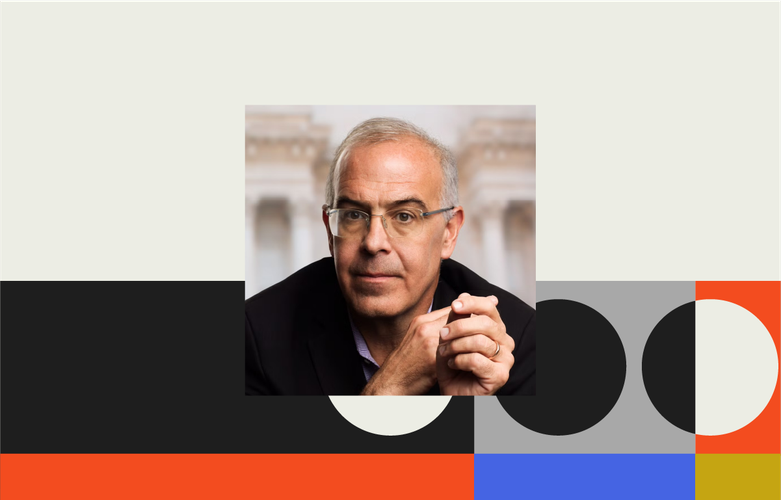
Mark your calendars. The Permanent Questions (launching September 13) is a new podcast featuring the Atlantic staff writer David Brooks in conversation with the world’s deepest thinkers.
Watch (or skip). Onslaught (in theaters now) is a victim of Hollywood’s obsession with turning everything into a franchise, David Sims writes.
Rafaela Jinich contributed to this newsletter.
When you buy a book using a link in this newsletter, we receive a commission. Thank you for supporting The Atlantic.
The post Crypto Money Still Matters for the Midterms appeared first on The Atlantic.