By the time he retired from the Marine Corps, in 1931, Major General Smedley Butler had served in Mexico, Haiti, Cuba, the Philippines, Nicaragua, the Dominican Republic, Honduras, and China. It was the golden age of American imperialism, and Butler was one of its golden boys, among the most decorated fighters in U.S. history.
But over time, Butler began to have doubts about what he was doing. “I spent 33 years and 4 months in active service,” he wrote in 1935. “During that period I spent most of my time being a high-class muscle man for Big Business, for Wall Street and for the bankers. In short, I was a racketeer; a gangster for capitalism.” The costs of these excursions, he wrote, were paid in taxpayer money and soldiers’ lives. The wars that Butler fought also left scars around the world, as the journalist Jonathan M. Katz wrote in a 2022 biography. Little remembered in the United States, these interventions were formative for the populations they affected, fueling enduring anti-Americanism.
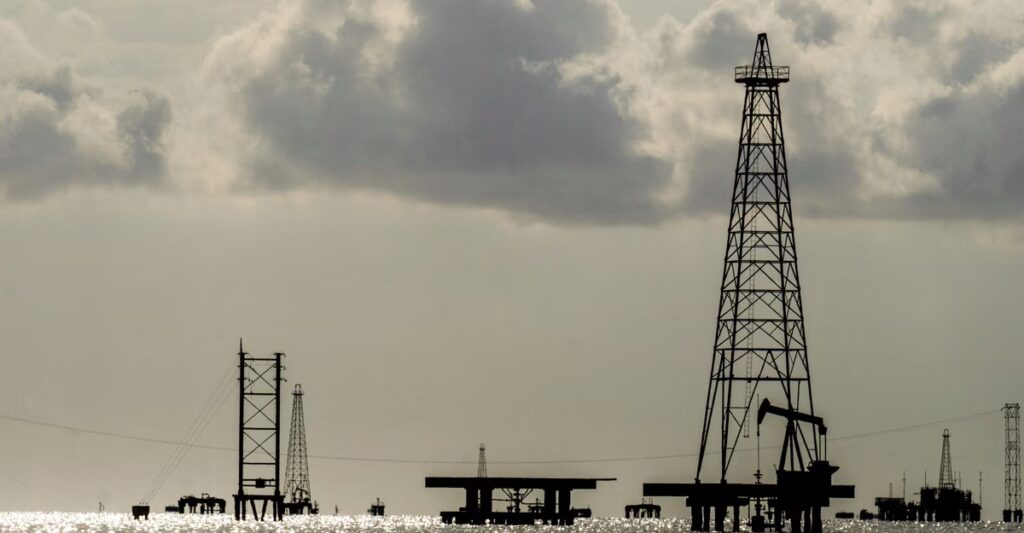
The Trump administration seems determined to re-create the cycle in Venezuela today: military action, puppet government, exploitation of oil reserves, and almost certainly more resentment, fueling further conflict in the future. In January, U.S. troops descended on Venezuela and seized President Nicolás Maduro. Although President Trump offered federal drug-trafficking charges against Maduro as window dressing, he made no secret of the real reason for the incursion: He wanted to seize the country’s huge oil reserves. This week, the president claimed that he would refill the U.S. Strategic Petroleum Reserve with Venezuelan oil, “a Gift from Venezuela to the People of the United States.”
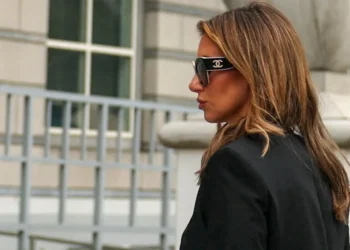
The Trump administration has, as usual, offered few concrete details, but as my colleague Jonathan Chait writes, this is less a “deal” than “a payment by Venezuela of tribute at gunpoint.” The Venezuelan people are in no position to consent to handing over the country’s most valuable natural resource to a richer regional superpower for free, because Venezuela has not had fair elections in years. After deposing Maduro, the United States did not clear away his government or try to install the pro-democracy dissident (and Nobel Peace Prize laureate) María Corina Machado; in fact, it has created barriers to her return. Instead, it has enlisted a former Maduro lieutenant as president, while Secretary of State Marco Rubio oversees her as a sort of viceroy.
Besides, nothing in international relations is as simple as a gift. The current arrangement involves Alejandro Betancourt López, a Venezuelan oil oligarch who has been under investigation in several countries. Betancourt managed to maintain connections with both Maduro’s regime and the U.S. government, and to dodge some charges thanks to help from Rudy Giuliani. Chevron is expanding its footprint in Venezuela, although other oil companies have been reluctant. Investors from other sectors, including crypto, are also getting involved.
Although much money stands to be made, whether and how much ordinary Americans will actually benefit is less clear. Rebuilding Venezuelan production will take years, and the country’s oil is heavy and difficult to refine. That means no near-term relief at gas pumps and years before the U.S. reserve is refilled.
Venezuelan oil and U.S. interests have a long and rocky history. American oil companies invested heavily in the country after World War II, but in 1976, the Venezuelan government nationalized the oil industry. In the early ’90s, the government once again opened to private companies. But Hugo Chávez, who portrayed himself as an anti-colonial hero and liked to use “Gringos go home!” as a slogan, became president in 1999. In 2007, he expropriated foreign assets once more, in what his energy minister called “an act of sovereignty for our country, for our people.” Trump cited the expropriation this year as another reason for U.S. intervention.
Chávez’s approach, maintained under his protégé Maduro, failed. The oil industry, along with the rest of the national economy, has atrophied. In an article last year, my colleague Gisela Salim-Peyer eloquently recounted how Venezuela slid into authoritarianism under Chávez and Maduro. International observers described the 2018 presidential election as rigged, and evidence gathered by Machado convincingly showed that her party had won the 2025 race. A huge number of people fleeing Venezuela have flocked to the United States.
For now, under the rump Chávez-Maduro regime, Venezuelans don’t have much say, but guessing how this might play out doesn’t require a great deal of creativity—just a working knowledge of history. Trump’s expropriation of Venezuelan oil won’t be well received by most people, nor will a Trump-driven gold rush by American businesses, no matter how much Venezuela needs assistance standing up its oil industry. Railing against the deal and foreign oil interests will be an easy populist stance for future Venezuelan politicians; perhaps one will even feel moved to nationalize assets once more—and so the cycle can begin again.
You don’t have to be an anti-colonial peacenik to worry about the risks of Trump’s oil raid. You can just grasp that having hostile demagogues in power in the hemisphere is bad for U.S. interests, driving global instability as well as the kind of mass migration that Trump has described as a crisis.
Such downsides help explain why anti-interventionism had become popular among Republicans over the past decade. Until the Venezuela raid, Trump portrayed himself as “America first,” but the foremost voice was J. D. Vance, who cited his experience deployed in Iraq in his speech accepting the GOP nomination for vice president. “As always, America’s ruling class wrote the checks. Communities like mine paid the price,” he said, sounding much like his fellow Marine Smedley Butler. “For decades, that divide between the few, with their power and comfort in Washington, and the rest of us only widened.” Yet now the Trump administration has embarked on just the sort of adventure Butler led and then decried. Wealthy Americans will benefit today, ordinary Americans will see little immediate reward, and the United States will face the blowback for decades to come.
Related:
Here are three new stories from The Atlantic:
- Gloria Steinem’s feminism for all
- Should we be afraid of our food?
- The Hasan Piker question
- The schism within the Trump administration on Mexico
Today’s News
- The Trump administration proposed rules that would allow the IRS to revoke the tax-exempt status of private schools whose admissions, scholarships, or other programs aid minority students. The rules, which could apply to as many as 18,000 schools, are expected to face legal challenges from education groups.
- Iran fired missiles and drones at Kuwait in retaliation for U.S. strikes earlier this week, and Kuwaiti air defenses intercepted the attacks. Bahrain and Jordan also reported intercepting Iranian attacks yesterday.
- Federal prosecutors charged an ICE officer with lying to investigators about the January shooting of a Venezuelan man during an immigration crackdown in Minneapolis, according to the Associated Press. Video evidence contradicted officers’ initial account of the confrontation, prompting prosecutors to drop charges against the man who was shot and open an investigation into the officers.
Dispatches
-
Time-Travel Thursdays: Technology was once seen as countercultural, Jake Lundberg writes. He looks through The Atlantic’s archives to trace how that identity has evolved.
Explore all of our newsletters here.
More From The Atlantic
- What the floods say about Xi Jinping
- Radio Atlantic: Creating the perfect female monster
- The sexual politics of the “bed trick”
- Alexandra Petri: An alien scholar’s notes on Trump’s Washington
Evening Read
The Netherlands Will Never Be Rid of Louisiana Crawfish
By Hannah Docter-Loeb
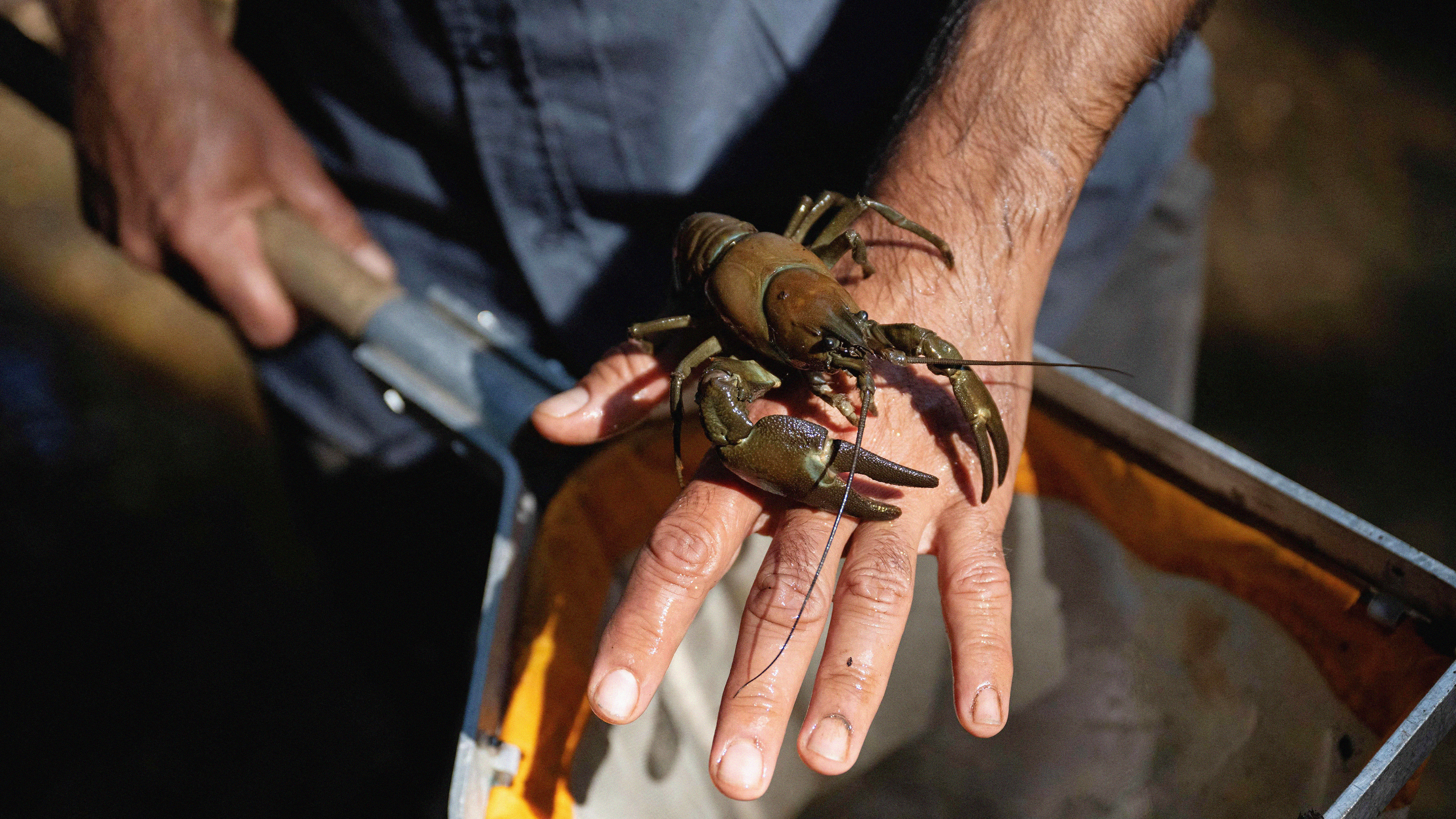
Confronted with a seasoned, boiled, arguably delicious crayfish, some of the people of the Netherlands are not sure exactly what to do. “Do you suck the head out?” I heard from the table next to me earlier this summer, at Two Chefs, a restaurant in Amsterdam that hosts a monthly crayfish boil.
Yes is the answer: The best way to eat a crayfish is to shell the tail, then slurp the flavored juices out of the head, and pick out the remaining meat with your hands.
Culture Break
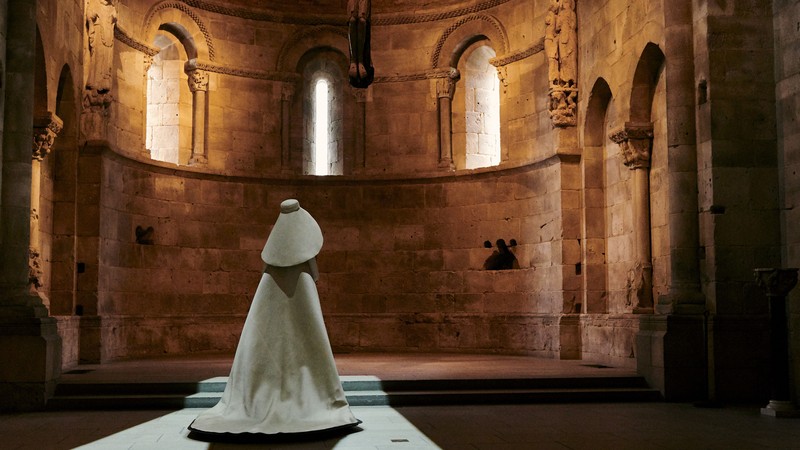
Reflect. The Met’s John Galliano exhibition had problems beyond the designer’s past transgressions, Kimberly Chrisman-Campbell argues.
Explore. Faith Hill explores how “somatics” became the solution to modern life.
PS
The bluesman Son House’s classic “Death Letter” recounts the shock of hearing about a loved one’s death. I felt a little of that shock when I learned of the death of the singer Cassandra Wilson this week. She was just 70. As regular readers may know, I’m a jazz obsessive, but I don’t listen to many singers; jazz vocals too often come off as affected, cutesy, or outdated. Wilson wasn’t like that. She wasn’t like anybody, though she showed the influence of the great Abbey Lincoln. Wilson, a member of the influential collective M-Base, had real avant-garde credentials, but she also loved to adapt homelier material: Bob Dylan, Miles Davis, the Monkees, and old folk songs, all of it made personal and new. Her career was a forceful reminder that although the music we label “Americana” is heavily white and male, it couldn’t exist without Black women. To my ear, Wilson was also the greatest blues singer of our era. Her rendition of “Death Letter” is as haunting, visceral, and deep as any recording in the genre’s long history.
— David
Rafaela Jinich contributed to this newsletter.
When you buy a book using a link in this newsletter, we receive a commission. Thank you for supporting The Atlantic.
The post The Vicious Cycle Trump May Restart appeared first on The Atlantic.