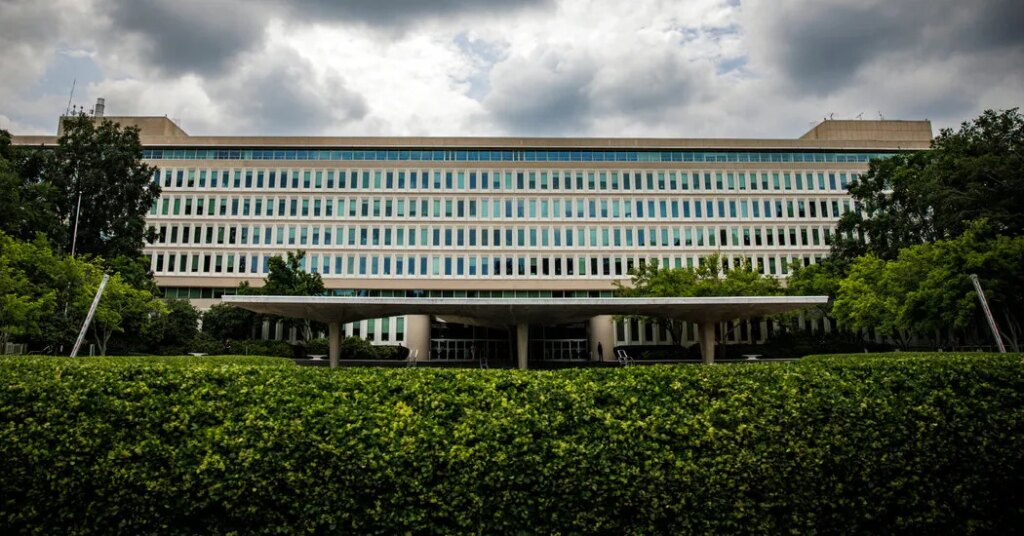
A former C.I.A. station chief who in 2005 pushed to destroy videotapes of terrorism detainees being tortured at a secret overseas prison later told the F.B.I. that he “did not want to leave a mess” for his successor, and viewed himself as “cleaning up multiple loose ends,” newly declassified documents show.
When the destruction of the tapes came to light in 2007, it prompted an uproar and investigations by the Senate Intelligence Committee and the Justice Department. Those inquiries expanded to examine the torture program itself — one of the most disputed aspects of the Bush administration’s response to the Sept. 11 attacks.
The account by the station chief, who appeared to be based in Thailand even though his location and name were redacted, was among 38 pages of F.B.I. interview notes released to The New York Times in response to a Freedom of Information Act lawsuit seeking records from a criminal investigation led by John H. Durham, a prosecutor who scrutinized the program years later.
The interview notes were the first tranche to be released, chipping away at a wall of secrecy around Mr. Durham’s investigative files. The larger trove of F.B.I. interview reports — some 1,900 pages expected to be released in the coming months — could offer crucial insights into the contentious program. Administrations of both parties have fought for years to keep the records hidden.
“There are a lot of unanswered questions about the Durham investigation — why it closed and what it found,” said Daniel Jones, the chief investigator for the Senate Intelligence Committee’s study. “The release of documents is really important.”
Depending on how much is ultimately released, the reports may provide an oral history of the program from the perspective of C.I.A. participants. The most detailed available history — a 525-page executive summary of a study by the Senate Intelligence Committee that otherwise remains classified — relied on documents. C.I.A. defenders sought to discredit it because committee staff members did not conduct interviews.
Mr. Durham’s concurrent investigation explained that omission. Facing potential criminal jeopardy, C.I.A. officials refused interviews with Senate staff members, and Mr. Durham declined to coordinate interviews by notifying the committee when he had finished with a witness who faced no legal jeopardy. Mr. Durham ultimately decided not to charge anyone at the agency.
The New York Times unsuccessfully sued in 2014 for Mr. Durham’s reports and F.B.I. interview records. After Congress revised legal standards for Freedom of Information Act releases in 2016, the paper sued again in 2022.
Judge James E. Boasberg of the Federal District Court for the District of Columbia, who read the Durham reports privately, ruled in 2024 that they could still be withheld. But the litigation has prompted the government to start releasing redacted versions of the F.B.I. interview records.
How much will become public remains unclear. The first installment covered about 100 pages, but 60 were withheld in full, and the pages released were heavily redacted in places. The government is now supposed to produce additional sets every month. The Times may later challenge some redactions and withheld pages.
One newly disclosed report described an F.B.I. interview with Stephen R. Kappes, a former C.I.A. deputy director, who said agency leaders wanted to destroy the tapes for “political” reasons and “did not recall any discussions that the destruction of the videotapes was illegal.”
The Bush administration secretly created the torture program, which it euphemistically called “enhanced interrogation,” to question high-value detainees in secret overseas prisons. Among other tactics, the C.I.A. used a suffocation technique known as waterboarding, shackled detainees in painful stress positions for long periods, stripped them, doused them in water, slammed them into walls and confined them in small boxes.
A secret memo issued by the Justice Department’s Office of Legal Counsel deemed such tactics as lawful under a broad — and disputed — interpretation of the president’s constitutional power as commander in chief. It claimed presidents could override anti-torture laws and treaties.
A C.I.A. official whose identity was redacted later told the F.B.I. that he had discussed the memo with two agency lawyers, the records show. He “noted that the legal opinion was compelling.”
The office later withdrew the memo. An agency inspector general and the Senate found that the C.I.A. had exceeded the approved tactics, including waterboarding more aggressively than it had told the Justice Department it was doing, and using other techniques, such as forced rectal feeding.
In 2005, the C.I.A. destroyed interrogation videotapes even though the Sept. 11 Commission and a court had sought evidence of questioning sessions. Agency officials later said they feared that the videos would become public, endangering agency personnel whose faces were shown in them.
The newly disclosed files also showed that multiple C.I.A. officials were incredulous that the torture sessions had been videotaped. One official involved, whose name was redacted, said it was because “executives wanted to know if we were doing it right?”
The agency later shuttered the program and transferred the remaining detainees from its so-called black sites to the military’s wartime prison at Guantánamo Bay, Cuba. Attempted prosecutions before a military commission of several of the detainees, including those accused of helping plan the Sept. 11 attacks, have been impeded by their treatment in C.I.A. custody. A military judge has thrown out their confessions, ruling that they were tainted by coercion.
Michael Mukasey, the Bush administration’s final attorney general, appointed Mr. Durham in 2008 to investigate the C.I.A.’s destruction of the tapes. In 2009, President Barack Obama’s first attorney general, Eric H. Holder Jr., expanded Mr. Durham’s mandate to examine whether the C.I.A. broke laws by exceeding what the Justice Department had approved in its withdrawn memo.
In a terse announcement, the Justice Department disclosed in 2010 that Mr. Durham had decided not to charge anyone over the tape destruction. In 2012, the department said that no one would be charged over detainee treatment, including of two prisoners who died in agency custody. By then, the Senate report was nearly final, though its summary was not made public until 2014.
The post U.S. Begins Disclosing C.I.A. Interview Reports From Scrutiny of Post-9/11 Torture appeared first on New York Times.