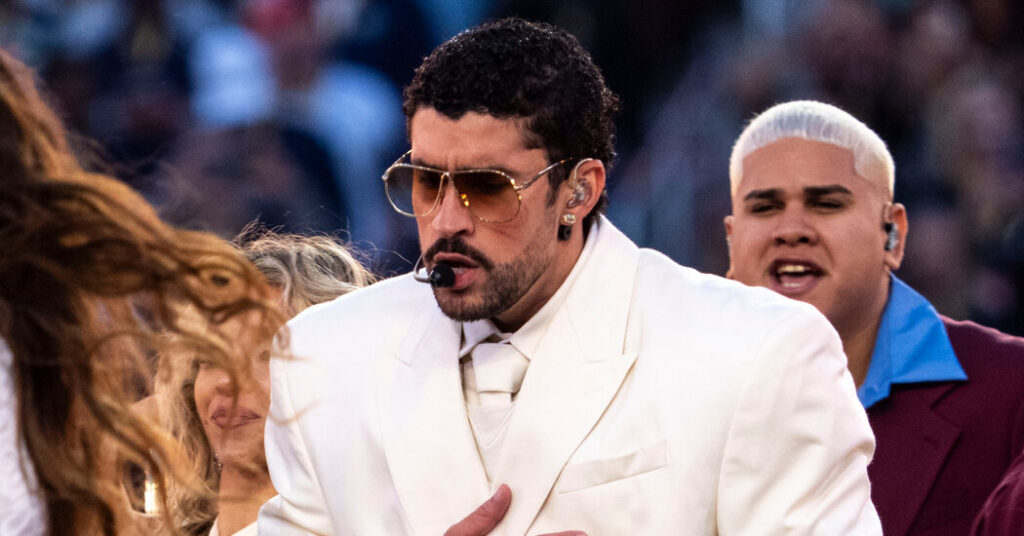
The most closely watched lawsuit in music, which has ensnared Bad Bunny, Justin Bieber, Daddy Yankee, Karol G and dozens of other artists, was dealt a blow on Tuesday by a federal judge.
In a case centered on the stuttered beat that undergirds reggaeton, the judge, André Birotte Jr. of U.S. District Court in Los Angeles, reversed one of his own decisions and made a ruling in favor of the more than 150 artists and companies named as defendants. The decision threw out the most important parts of the suit, though the case is not over yet.
The lawsuit was filed in 2021 by the producers and songwriters behind the 1989 song “Fish Market,” as well as two from 1990 that drew from it: “Dem Bow” and “Pounder Dub Mix II.” The syncopated rhythm behind those songs has been pivotal in the development of reggaeton, a mix of reggae and hip-hop that took root in Puerto Rico and Panama in the 1980s and ’90s.
The plaintiffs argued that their “boom, ch-boom, chick” beat, often called dembow, is protected by copyright. In the decades since, they said in their complaint, the beat has been copied thousands of times, without permission or payment, by other artists, generating “millions (and, for some, billions) of plays and streams.” They sought unspecified damages in the case.
In July, Judge Birotte initially denied summary judgment — a request by the defendants to decide key parts of the case as a matter of law — saying that the case involved questions that could only be decided by a jury.
Then, lawyers for Bad Bunny asked the judge to reconsider that decision, arguing that it overlooked a critical flaw in the lawsuit. The plaintiffs, they argued, were trying to proceed with what they called a “Frankenstein” copyright — pointing to various elements from the three songs in question and attempting to present them as single, copyrightable rhythm.
On Tuesday, the judge agreed with that argument, reversing his earlier ruling. The plaintiffs, he said, could not proceed with the infringement claim at the heart of their case because they could not establish that any one work embodied the compositional elements that they alleged had been copied.
“Upon further review of the record,” Judge Birotte wrote, “the Court concludes that Plaintiffs have not clearly identified what copyrighted work contains the allegedly protectable selection and arrangement they seek to enforce.”
The case has drawn wide scrutiny in the music industry and copyright circles for the breadth of the plaintiffs’ claim and the possibility that, if successful, a small number of people could effectively “stake monopolistic control over the reggaeton genre,” as lawyers for the defendants wrote in court papers.
Judge Birotte’s ruling is “not only a win for Bad Bunny, but for all musicians and even the plaintiffs themselves,” said Jennifer Jenkins, a law professor at Duke University who specializes in copyright.
“If anyone could successfully own fundamental building blocks of music such as the dembow rhythm,” Jenkins added, “this would deprive musicians of the raw materials they need to create in the first place.”
The three songs cited by the plaintiffs are widely credited as being foundational in reggaeton. But lawyers for the defendants argued that the elements of the central rhythm involve generic “building blocks” which are not protected by copyright and instead are free for any artist to employ in their own work.
That argument has been used by a number of defendants in music copyright infringement cases since an influential appeals court ruling in 2020 that sided with Led Zeppelin in a case involving its classic song “Stairway to Heaven.”
Lawyers for the defendants in the reggaeton case also argued that the reggaeton rhythm has deep historical roots that long predate the three songs claimed by the plaintiffs, including the “Habanera” familiar from Bizet’s 1875 opera “Carmen.”
Despite the latest ruling, some aspects of the case may still proceed. Along with their claim about the “dembow” rhythm as a copyrighted composition, the plaintiffs also alleged that many of the songs cited in their complaint had sampled their recordings without permission. (The copyrights for sound recordings are separate from those for songwriting and composition.)
Lawyers for the plaintiffs did not immediately respond to a request for comment about the case and its future.
Kenneth D. Freundlich, a lawyer for Bad Bunny, said in an interview that he was “grateful” that the judge had done “the right thing and not allow a case to proceed that was not based on a single work that the defendants could perceive and litigate against.”
The post Who Owns Reggaeton’s Beat? A Judge Throws Out One Claim. appeared first on New York Times.