As the midterm elections near, the Trump administration is appearing to ramp up its efforts to intimidate journalists and influence public opinion.
President Donald Trump has urged a federal commission to investigate a journalist who commented on his Republican primary endorsements. The administration has banned some journalists from covering a high-profile international financial summit. The military is secretly hiring conservative influencers who appear to be pushing Defense Secretary Pete Hegeth’s culture wars.
“The Trump administration is trying to shape and control the information environment in front of voters as the midterms near,” said Jessica Marsden, a lawyer who focuses on free speech issues with the nonpartisan group Protect Democracy.
“I never thought we’d see a day when we’d start banning journalists from covering things, or threatening journalists,” said Tom Jones, a senior media writer with the journalism nonprofit Poynter and the author of the Poynter Report newsletter.
But the administration’s efforts to restrict free speech have had limited success.
Here’s more about what’s going on.
Get The 5-Minute Fix in your inbox
Trump just threatened to punish a prominent TV journalist
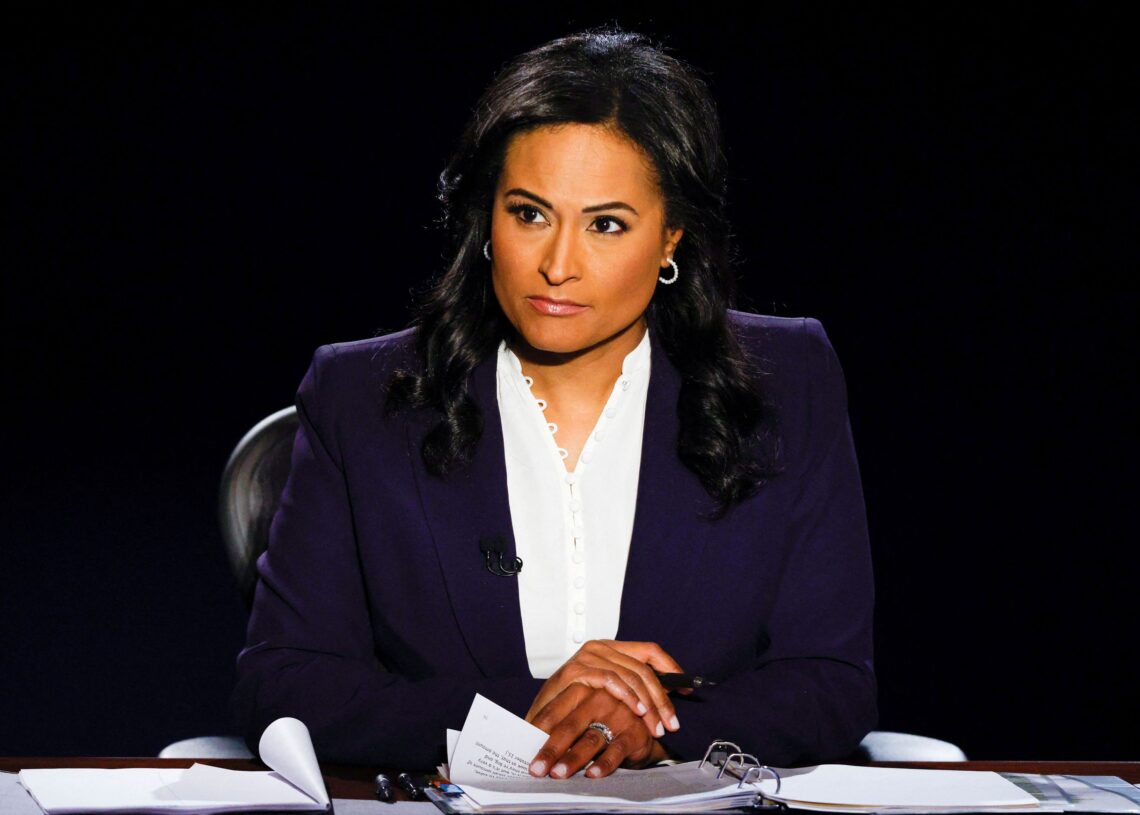
Over the weekend, NBC anchor Kristen Welker made a seemingly factual statement on air that Trump’s endorsements in Republican primaries have had “some mixed results.” Trump angrily posted on social media he’d refer her to his administration for “rebuke or punishment.”
Trump said he’d report Welker to the Federal Communications Commission, a regulatory agency that has launched multiple investigations of networks after Trump complained about content. Last year, ABC briefly suspended late-night host Jimmy Kimmel after FCC head Brendan Carr appealed to the network to do so with “the easy way or the hard way.”
The FCC issues broadcast licenses that allow national programming to air on local TV stations. It can restrict them if programming isn’t in the public interest, and Trump and his allies have argued a crackdown on what they see as “fake news” or liberal media is overdue. But the FCC has had very little success reining in criticism of Trump on TV.
Most media experts agree there is little the Trump administration can do to stop a journalist (or anyone else for that matter) from analyzing the president’s political clout. Political speech is afforded the highest protection under the First Amendment, said Cheryl Bader, a former assistant U.S. attorney now with Fordham University’s School of Law, in an interview earlier this year.
“As I’ve said many times, the FCC has no authority to punish journalists this administration doesn’t like,” Anna Gomez, the lone Democratic commissioner on the FCC, posted on social media.
ABC sued the FCC earlier this month, accusing the network of waging a “retaliatory campaign” because the Trump administration disapproves of its programming. Media law experts see the case as a potentially landmark test of the Trump administration’s attempts to influence TV programming.
The Trump administration has struggled in court to punish speech
In the United States, most speech is protected, and the Trump administration has had a hard time convincing courts otherwise as it seeks to target speech well beyond TV.
This spring, a federal grand jury indicted former FBI director James B. Comey for a social media picture of seashells that the Justice Department argued was a threat to Trump. Comey is fighting the charges.
Also this spring, a federal judge ruled that Trump’s attempts to block funding from NPR and PBS violated First Amendment rights. (Congress ultimately cut those federal funds.)
Last week, a federal judge in California ruled that attempts by the administration to deport international students over their pro-Palestinian speech violated the Constitution.
“Stated plainly, in the United States, freedom of speech belongs to the people,” U.S. District Judge Noël Wise wrote. “It is not the government’s to take.”
Barbara McQuade, a former U.S. attorney now at the University of Michigan Law School, noted in an interview earlier this year that the same First Amendment protections that allow people to criticize the president also protect Trump’s aggressive political rhetoric — such as his statements to “fight, fight, fight” or suggesting former administration officials deserve to be executed.
Trump’s attacks could also be viewed as a distraction from his broader problems
While First Amendment scholars see a real encroachment on freedom of speech in media and beyond, Trump’s threats feel increasingly empty, some say. This weekend, Trump also urged the FCC to come “to the rescue” and rebuke media organizations publishing polls he doesn’t like.
It does serve as a potent distraction from Trump’s struggling poll numbers.
“The FCC can’t do anything about Kristen Welker,” said Jones, with Poynter. “But it may not matter. He’s really good at distracting us. He feels like, ‘I can rally my base around hating the media,’ because he’s losing in other areas. His voters are like, ‘I’m paying a lot for gas, what are you going to do about that?’”
Amber Phillips writes The 5-Minute Fix newsletter, a quick analysis of the day’s biggest political news. Send her an email here, or ask a question that could be featured in an upcoming newsletter.
The post Trump’s attempts to crack down on speech and influence opinion appeared first on Washington Post.