Mikhael Smits served as an Army infantry officer in the Old Guard, 2025-26.
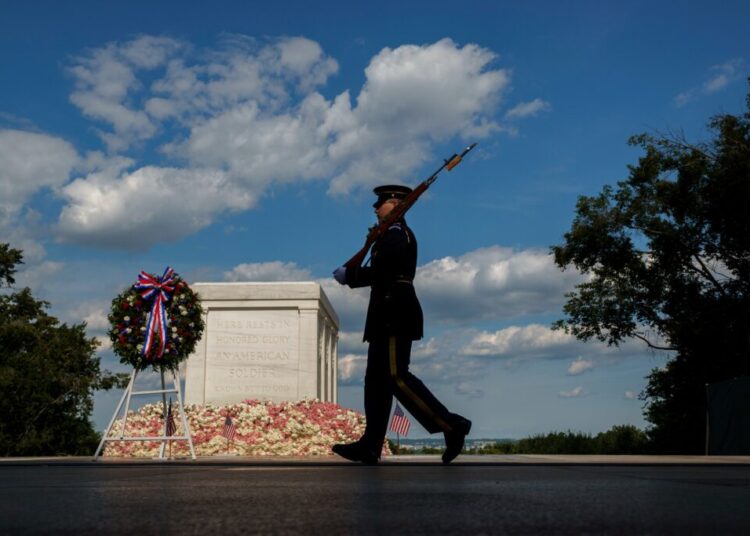
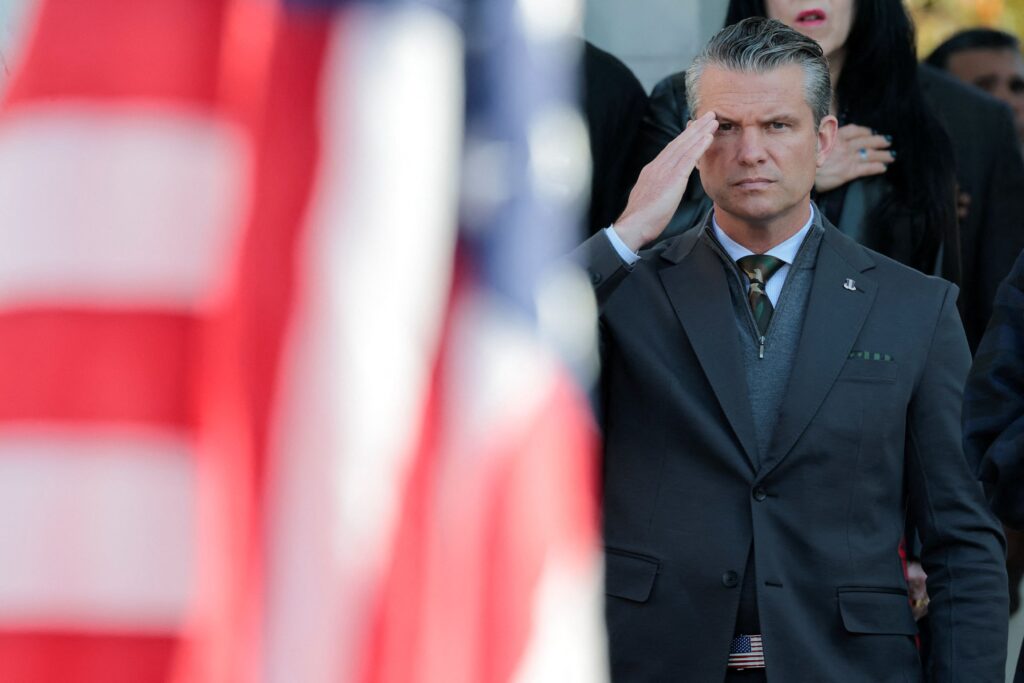
The clip that went viral this week featured only 13 words. On Veterans Day, Pentagon chief Pete Hegseth attended a wreath-laying ceremony at the Tomb of the Unknowns in Arlington National Cemetery. As his delegation departed, a woman’s laugh echoed across the marble plaza. The sentinel on duty, a soldier in the Army’s Old Guard, turned and delivered a booming reminder: “All visitors will maintain an atmosphere of silence and respect at all times.”
I finished military service with the Old Guard several weeks ago, and on Wednesday, my phone buzzed with questions from civilian friends asking about the exchange. Each time, I told them I saw a junior soldier empowered to enforce standards without fear or favor. The secretary saw things the same way. On Thursday, he awarded Spec. Thomas Iglesias the Joint Service Commendation Medal for his intervention. “We love soldiers. We love standards. Well done, Specialist,” Hegseth wrote online.
The episode vindicates something distinctly American. As James Madison explained in Federalist No. 57, the new republic’s laws would apply as much to “the great mass of the society” as to lawmakers “and their friends.” John Adams several years earlier likewise appealed to the virtue of “an Empire of Laws, and not of Men.” It’s the same sentiment Secretary Hegseth expressed in a Memorial Day speech last year: “In America, with our great experiment in self-government, it is fitting that the most honored and closely guarded tomb in the land is that of an anonymous soldier of an unknown rank.” The rule of law admits of no privileges.
American fidelity to that principle finds particular expression in the Old Guard. Officially the 3rd U.S. Infantry Regiment, the group traces its lineage to 1784 as the Army’s oldest active-duty infantry regiment. Today, it serves as the Army’s official ceremonial unit and escort to the president. Its soldiers conduct thousands of funerals in Arlington every year and maintain a constant vigil at the Tomb of the Unknowns.
At that cemetery, standards are the coin of the realm. Soldiers may set foot on the grounds only after rigorous inspection and certification by senior leaders. Uniforms are pleated and pressed, heads shaved close, ribbons measured. Every move is scripted, every word memorized. It is ritual with a liturgy.
But standards are only as valuable as their enforcement. The Old Guard expects men and women of all ranks to correct deficiencies. When I arrived at the unit, even the soldiers I led were senior to me in the only way that mattered: experience in the cemetery. My tactical training, fitness scores and rank were immaterial. Young privates had free rein to scrutinize my uniform or critique my marching cadence. Noncommissioned officers would coach me through endless repetitions of different ceremonial sequences. They were the experts, empowered to uphold the regiment’s standards.
Old Guard soldiers are also expected to self-report any mistake their teams make during a ceremony. Doing so risks removing their entire team from Arlington pending recertification. But failure to report would represent a greater infraction.
Extreme accountability of this kind is in short supply today. Many have been taught to be gentle with themselves and not judge others. Plenty of people avert their eyes in public and stay quiet for fear of causing offense. The Old Guard offers powerful antidotes: high standards, humility to accept correction and the confidence to hold others to account.
Accepting fault where my soldiers found it humbled me. Secretary Hegseth doubtless felt the same this week. And then he pinned a medal on that soldier’s chest. Our republic — of laws, not men — is richer for the example.
The post Pete Hegseth and a cemetery lesson in self-government appeared first on Washington Post.