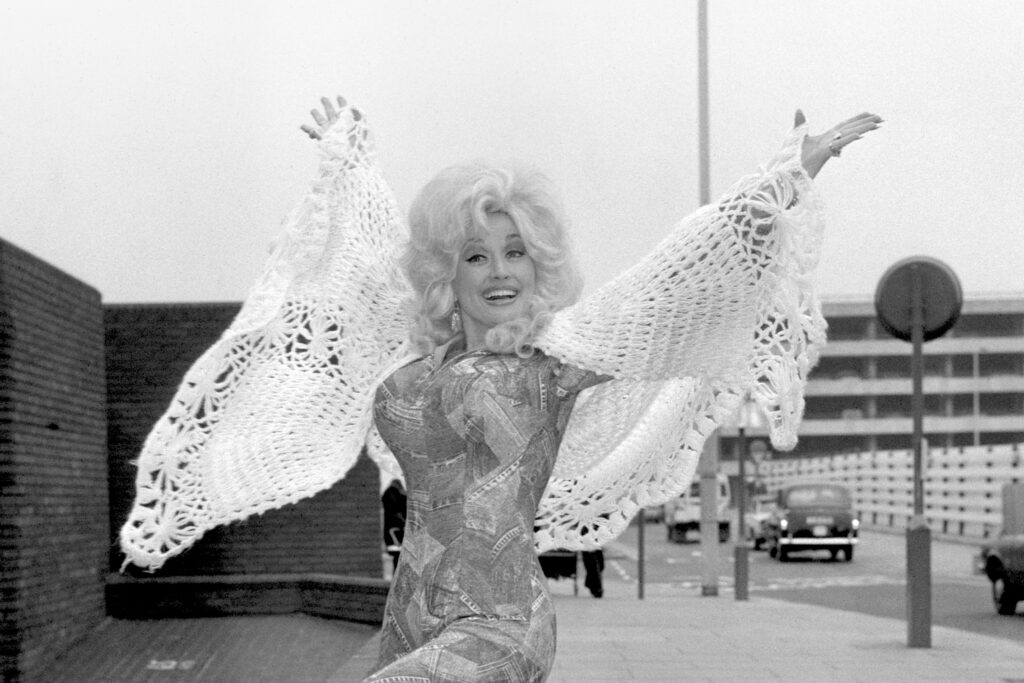
Over the years, Dolly Parton steadily transformed into a mythical figure. Parton, who died Tuesday at 80, was the consummate business executive behind Dollywood, the mastermind behind a book-gifting program, the philanthropic giant whose donation helped spur the Moderna vaccine for the coronavirus. Each of those pieces of her public-facing persona seemed to naturally grow from a vast discography where Parton established herself as hardscrabble, emotionally forthright and full of intuition.
She was that rare singer-songwriter whose unparalleled gifts remained clear across her entire career, no matter if she was dabbling in disco, pop or full-throated rock. But Parton’s dual roles as vocalist and composer were rare for women in the 1960s. “I really couldn’t make a choice: I have to write and I have to sing, and I’d rather do both,” she said in 1967, estimating that she’d already written a few hundreds songs. Here are just six of the plainspoken, infectious classics that Parton was behind, followed by a playlist of more gems:
‘Your Ole Handy Man’ (1967)
Many might point to “Dumb Blonde,” which contained the assertion that Parton “ain’t nobody’s fool,” as an early example of how she built a larger-than-life persona. But “Your Ole Handy Man” remains an astute look at how domestic labor gets undervalued in relationships. A tumbling drum groove and healthy harmonies assist Parton as she rebukes her lover as being “as helpless as a baby.”
‘Coat of Many Colors’ (1971)
One of Parton’s early country hits, “Coat of Many Colors” reflected her meager upbringing in eastern Tennessee. Her mother sewed clothing from rags, resulting in kids at school once locking Parton in a closet. But she got the last laugh with “Coat of Many Colors,” which turns that childhood distress into something hopeful: “Although we had no money, I was rich as I could be/ In my coat of many colors my mama made for me,” Parton sang.
‘Jolene’ (1973)
“Jolene” came from another true-life story in which Parton realized that her husband had a little crush on a local bank teller. She directed anxieties around her potential competition into a galloping, tense number that doesn’t offer a happy ending for its narrator. Parton’s plea to a woman who could “easily take my man” is unforgettably personal, but her desperation has such an intense appeal that both the White Stripes and Miley Cyrus have covered it.
‘I Will Always Love You’ (1974)
Long before it had been supercharged by Whitney Houston into one of the ballads of pop music, “I Will Always Love You” was Parton’s goodbye to the singer Porter Wagoner, whom she spent years performing with as a duo. The airy vocal on the original recording anchors Parton’s heartache, while those tender electric guitars and a doo-wop-esque choir make it clear why Elvis Presley wanted to do a rendition.
‘Light of a Clear Blue Morning’ (1977)
If Parton’s professional separation from Wagoner eventually resulted in one of the biggest songs of all time, it also brought us “Light of a Clear Blue Morning,” which transitions from piano ballad to rollicking gospel sermon with ease. As Parton’s second single to reach the Billboard Hot 100, it only managed to reach No. 87, a shocking status for a song that scales such ecstatic heights.
‘9 to 5′ (1980)
Anyone who’s taken a dead-end job to pay the bills understands the plight of Parton’s tale where she’s just “barely gettin’ by.” It’s an anthem that’s been adopted by a broad swath of humanity — drag queens, soundtrack supervisors for “Deadpool 2″ and “Gravity Falls,” labor unions — thanks to those horn honks and a disco-flavored groove.
The post The essential songs of Dolly Parton appeared first on Washington Post.