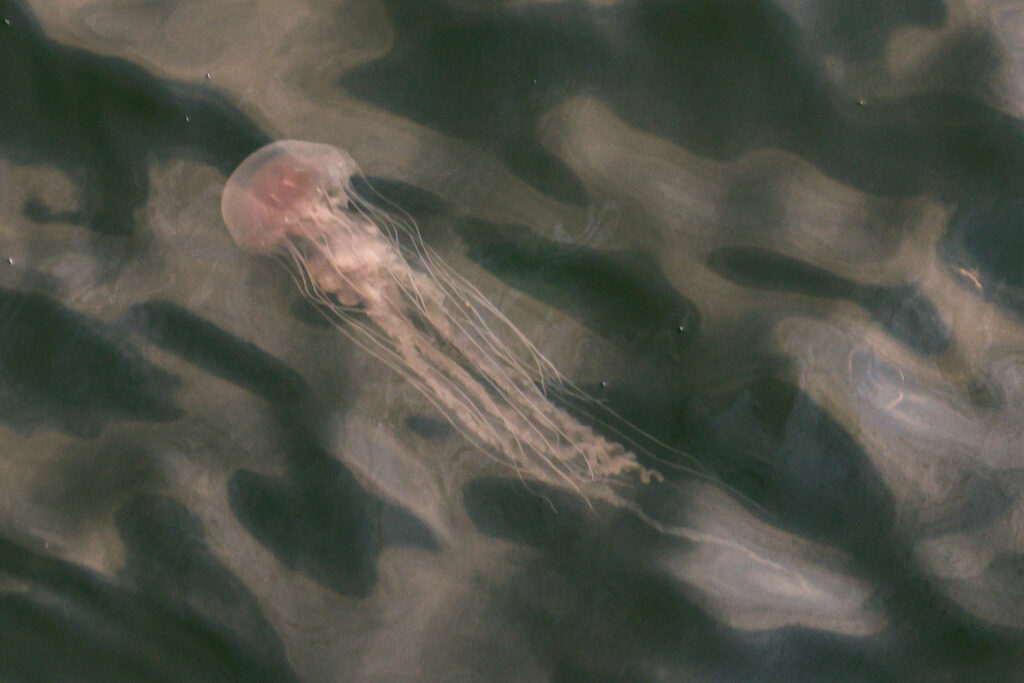
It could be a horror movie called “Attack of the Jellyfish.”
The squirmy blobs that can pack a powerful sting have been out in unusual force this summer along the Atlantic Coast from Cape Cod to popular D.C.-area beaches, lifeguards, swimmers and biologists say.
This summer has been the “worst for this time period that I’ve ever seen them,” said Capt. Melbourne “Butch” Arbin III, who has served for 50 years with the Ocean City Beach Patrol.
“You’ve got tourists who don’t want to go in the ocean because they don’t want to risk it,” he said.
Experts said a perfect confluence of conditions has allowed jellyfish to thrive: warm ocean temperatures and a prolonged drought are keeping salinity high. And fresh water isn’t coming in to churn the current and send the translucent, fragile creatures out to sea.
What areas are affected and how bad is it?
Bethany, Rehoboth and Lewes beaches in Delaware and Ocean City in Maryland — all hot spots for summer escapes — have reported upticks in sea nettles, bay nettles and Lion’s mane types of jellyfish.
It’s tough to get an accurate count of just how many there are, in part because jellyfish are blobs that are mostly made of water and can be hard to spot in the crashing, murky surf, experts said. They gather in dense, uneven clusters, known as blooms, that can form quickly but can also be easily swept away by winds and tides. They also hide under rocks or docks, making spotting them even trickier.
Lifeguards at area beaches said they’re getting multiple complaints — and requests for help — daily from swimmers and beachgoers about stings. Ocean City has seen more than 3,000 first-aid calls this summer, most of them for jellyfish stings, Arbin said.
Joe Donnelly, captain of the Bethany Beach Patrol, said his lifeguards have noticed the uptick this summer. Typically, the season for most types of jellyfish runs roughly from June through October and peaks in the hottest months of July and August, experts said. This year, it’s “lasted longer and with a little more intensity,” Donnelly said.
Chris Petrone, marine advisory service director of the Delaware Sea Grant at the University of Delaware, said we humans are “in their house” when we take a dip in the ocean or bay. This time of year, unfortunately, our quest to escape the heat coincides with intense jellyfish blooms, Petrone said.
What’s causing the spike?
Hot summer temperatures heating the water have combined with an extreme drought this spring and summer, increasing salinity. Plus, there have not been any major coastal storms or even remnants to “dredge up cooler deep water and move it to the surface,” Petrone said. That has created the “perfect storm” for jellyfish to thrive, he said.
While sustained strong winds or currents can blow jellyfish farther off the coast and give relief to beachgoers, experts said they don’t expect that to happen until either the air and water cool or there’s a big coastal storm and heavy rains that could flush them out to sea.
What makes jellyfish sting?
They have been around longer than dinosaurs. They don’t have bones, brains or hearts, but they do have tentacles, which have specialized stinging cells they use to capture prey and defend themselves. When they touch something, those cells fire a little needle that is attached to the tentacle by a thread, delivering a toxin, according to Maggie Sexton, deputy director of the Living Marine Resources Cooperative Science Center at the University of Maryland Eastern Shore.
“It’s not that they want to sting us,” Sexton said, “It’s that they sting anything they touch when they’re trying to find food — whether that’s a rock, a dock, or us.”
What can you do? And what should you do if you get stung?
No need to stay out of the water, but wearing longer swimsuits or a rash guard shirt can help. If you do get stung, it is typically a minor, itchy irritant. Lifeguards are often equipped with sting-relief wipes.
Arbin and other lifeguard officials said they’ve noticed some beachgoers are spending more time playing in the sand, concentrating on castles to avoid unwanted contact in the water. Some kids are collecting the creatures and chopping them up with gruesome aplomb. It’s not a beneficial game, experts said. When some of the larger pieces make it back to the water, they might survive. On a social media page, some beachgoers in Rehoboth Beach threw barbs at each other about the inhumanity of kids messing with the beached animals, arguing it was either a sign of bad parenting or an understandable case of rough justice.
“Enter at your own risk,” Shauna Gaspero wrote on Facebook after her family’s Rehoboth vacation earlier this month. “We all got stung today but my son got it the worst! It was horrible.”
To treat a sting, wash the area, and then apply a vinegar-and-water solution, which helps discharge the jellyfish’s tiny barbs from the skin, lifeguards said.
Another treatment: use a mix of baking soda and seawater to create a paste. Hydrocortisone cream can also help to get rid of itching and burning.
Those who have a more serious reaction, including trouble breathing, chest pain or severe stomach pain, should seek professional medical help.
The post Swarms of jellyfish bring slime and stings to Atlantic Coast summer appeared first on Washington Post.