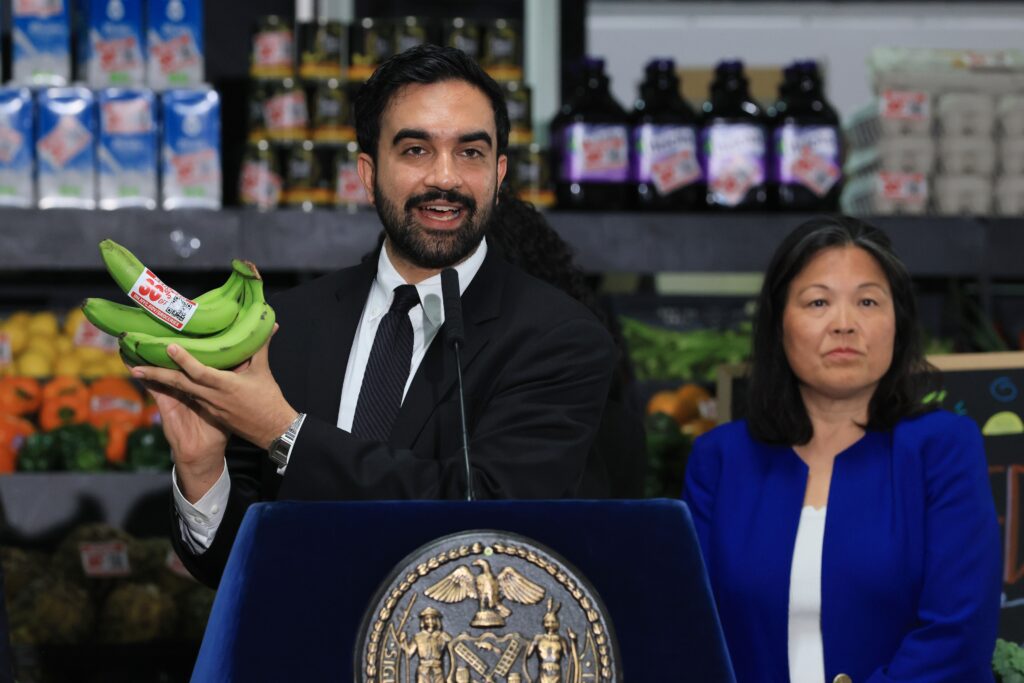
Other than taxpayers, bodega owners stand to be some of the biggest losers if New York Mayor Zohran Mamdani (D) realizes his dream of city-run grocery stores.
The democratic socialist said last month that he wants the new stores to undercut the going market price for a basket of essential staples by 30 percent. But corner markets survive on profit margins that are a tiny fraction of that. Unlike their future state-subsidized competitors, they also pay rent and utilities.
The Multicultural Business Coalition, a nonprofit trade group that represents bodegas, filed two class-action lawsuits this week aimed at blocking Mamdani’s plan. The first argues that the city did not conduct a “proper review” of the effect on independent retailers. The second suit argues that city-run stores violate the civil rights of small-business owners.
The mayor says he is “confident” that what he’s doing is legal. He argues that bodegas will survive the competition because they can sell alcohol, cigarettes, lottery tickets and hot foods, which city stores will not.
Mamdani contradicts himself when discussing his plan. He claims that his stores will reduce every New Yorker’s average grocery bill by 15 percent, or about $1,000 a year. Asked about the new lawsuits, however, he downplayed the effort’s scope. “We’re also talking about delivering five city-run grocery stores in a city of eight and a half million people that has more than 1,000 grocery stores,” he said.
The mayor has put aside $70 million to build the initial five stores, and he has set an Oct. 16 deadline for companies to bid on operating one or more of them.
More competition is good when it’s happening in a real market. It helps drive down prices. Shoppers would benefit, for example, if New York allowed Walmart to open a location in any of the five boroughs. The retailer has repeatedly tried and failed to get into the city.
When the government-run grocery stores inevitably become plagued by shortages and declining quality, the bodegas will step in. Experiments in other places have repeatedly demonstrated this. In the meantime, the process of artificially undercutting prices will hurt small businesses that aren’t propped up by taxpayers. It’s unfortunate that Mamdani is so intent on making America’s biggest city learn such a basic economics lesson.
The post Bodegas of New York unite appeared first on Washington Post.