THE FLYING DEATH: Poison, Plunder, and the Quest for a Miracle Medicine in the Amazon, by Matt O’Hara
In September 1940, a shipment of poison exploded in a Manhattan laboratory. Gallons of sticky black curare, originally produced for hunting by the Indigenous peoples of Central and South America, burst from the steel cylinder where it had fermented on the journey. It coated the ceiling, the walls, the floor. It shot up the nose of a terrified lab tech, who survived only because he didn’t have any open cuts.
Once his colleagues were reasonably sure he wasn’t going to die, they scraped the gunk off their lab and packaged it for sale. Even contaminated by dust and dirt, it was worth thousands. Maybe.
Because, as Matt O’Hara explains in “The Flying Death,” curare was still a cure in search of a disease. For more than a decade, explorers, scientists and researchers at the pharmaceutical companies Merck and Squibb had sought a medical application for the poison’s powerful paralyzing effect. O’Hara’s story shows an industry at the dawn of its golden age, and the study of curare — sometimes known as “the Flying Death” — as an example of the recklessness that bridged the gap between the dark days of patent medicine and the modern age of big pharma.
O’Hara’s protagonist is Richard Gill, a master of self-promotion who spent the early years of the Depression attempting to market his failing Ecuadorean dude ranch as a base for jungle expeditions. Gill first became obsessed with curare in 1934, when a mysterious illness, possibly multiple sclerosis, caused him such severe muscle contractions that he was bed-bound for months at a time. An offhand remark by his doctor, Walter Freeman — later notorious for popularizing the lobotomy — convinced Gill that if curare’s ability to loosen muscles could be tamed, it could cure his disease — and make him rich along the way.
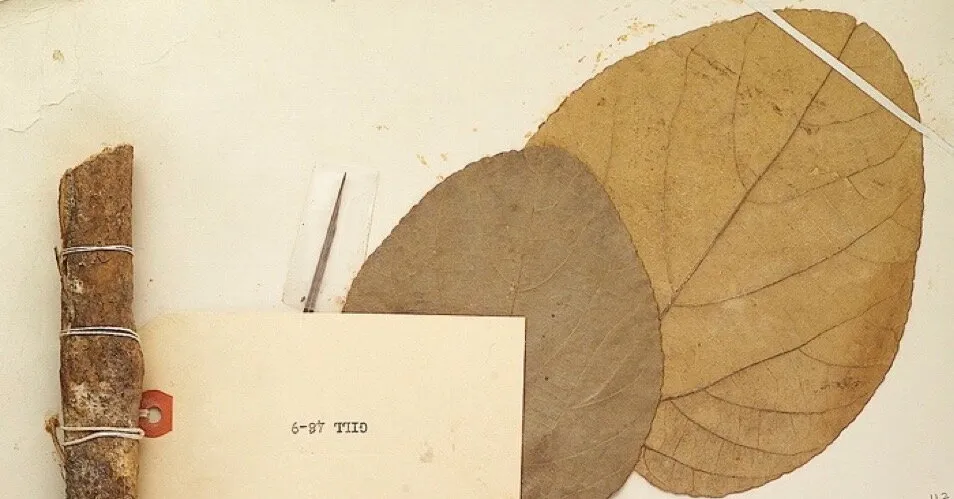
Once he had recovered enough to walk, Gill organized an expedition to the foothills of the Andes Mountains, where he and Manuel Olalla, an Ecuadorean naturalist, traveled to the headwaters of the Bobonaza River in search of Indigenous hunters who could not just provide curare but show them how it was made.
Preparing a batch took weeks of hard labor, from felling trees and crushing vines to the careful distillation that finally resulted in about a pint of ooze that, applied to blow darts, could kill hundreds of animals. Gill collected just over 11 kilograms of the stuff, which he sent north to be tested, sold and — if all went well — used as the basis for a new kind of medicine.
O’Hara’s narrative is at its best when it’s in the jungle. He’s gently scornful of Gill, who imagined his trip “as a journey into a place left outside of history” and extinct traditions. As O’Hara points out, Gill’s trading partners were hardly “outside of history” — they’d been trading with Europeans and Americans for generations — but the exoticism was part of the publicity campaign. While Gill obscured the sources of his curare, O’Hara gives appropriate credit to the Indigenous and South American people whom Gill planned to use to make his fortune — assuming it had any commercial use at all.
Merck was unimpressed by Gill’s carefully collected poison, which they found too toxic and unpredictable to merit future trials, so Gill passed it on to A.E. Bennett, an Omaha neurologist who thought sublethal doses of curare might provide relief to children whose muscle spasms caused paralysis. “Bennett had wanted to start with monkeys, just to be safe, but they were too expensive,” writes O’Hara. “So it was straight to the kids.”
Bennett, who “reveled in the freedom to experiment on patients, almost entirely without oversight,” found the drug relieved symptoms, but only for an hour or two at a time. It was more useful as an aid to Metrazol shock therapy, a precursor to electroshock whose violent effects often left patients with broken bones and fractured spines. A dose of curare administered beforehand reduced spasms to the twitching of a finger. Most chillingly, Bennett also shared the drug with his colleagues at the Nebraska State Mental Hospital, who used it to paralyze female patients in order to force them to undergo pelvic exams.
O’Hara notes these horrors but doesn’t dwell on them, preferring to focus on Squibb’s giddy race to bring the new drug to market, perhaps because it’s the pharmaceutical company that finds the story’s only happy ending. Curare, sold as Intocostrin, would become an indispensable surgical aid, leaving muscles “soft as dough,” in one doctor’s words.
Gill, cut out of the supply chain, never got rich, nor was his own condition ever fully healed.
THE FLYING DEATH: Poison, Plunder, and the Quest for a Miracle Medicine in the Amazon | By Matt O’Hara | Farrar, Straus & Giroux | 390 pp. | $32
The post He Thought Poison Would Change Medicine, and Make Him Rich appeared first on New York Times.