As head of an association representing cities across Colombia, Andrés Santamaría Garrido has a front-row seat to observe China’s economic playbook at the municipal level.
Sitting in his downtown Bogota office containing a model of the city’s red metro train, a project being built by a Chinese-led consortium, Santamaría described Beijing’s commercial diplomacy as aggressive, practical — and hard to ignore.
Chinese firms are cheaper, more persistent and easier to work with, he said. They’re also willing to go around national governments to deal with governors, mayors, local business groups and municipal officials. The result, said the executive director of Asocapitales, is that they are increasingly leaving their U.S. counterparts behind.
“There will be a technological opening to China, because they are simply more advanced,” said Santamaría, listing autonomous vehicles, robotics and drones as particular areas of Chinese expertise.
Santamaría’s experience gets to the heart of a dilemma for Donald Trump and his plans to extend U.S. control over the Western Hemisphere. While the president can point to significant inroads in securing U.S. political influence through a string of aligned leaders from Argentina to Peru, his drive to establish American economic dominance is proving far harder to achieve.
One reason is that China’s investment profile from ports to energy and mining, built over years across Latin America, remains too big and entrenched for the region’s governments to simply cast off on a whim of the U.S. administration. At the same time, Beijing has managed to stay several steps ahead of Washington by moving up the value chain into fields such as electric vehicles, batteries and data centers.
It’s why Ecuador’s President Daniel Noboa, a Trump ally who’s all-in on the security partnership with the US, has just wrapped up a weeklong visit to China, including a meeting with President Xi Jinping. Noboa won commitments to expand solar-power generation and support for Ecuador’s response to the El Niño climate phenomenon via a Chinese AI-driven meteorological system.
It’s an illustration of how, for all the U.S. political pressure, the economic dimension of Trump’s so-called Donroe Doctrine remains unfulfilled.
Economic ties with Beijing have in general “not been affected” by Trump’s plans for hemispheric hegemony, said Mexico’s Ambassador to China Jesús Seade. “That all remains in the political sphere,” he said, while highlighting China’s influence in trade matters, technology, investment and innovation.
“For us, it is very important to protect the relationship with the United States,” Seade said in a video interview from Beijing. “But we don’t do that by picking fights with China.”
Donroe Doctrine
The push to curb Beijing’s dominance over strategic assets has always been at the core of Trump’s version of the Monroe Doctrine. In his inaugural second-term address, Trump claimed that China was operating the Panama Canal and asserted that the U.S. was “taking it back.” Defense Secretary Pete Hegseth followed up by saying that “Chinese influence cannot control our own backyard.”
The 33-page U.S. National Security Strategy released in November codified the doctrine in a section devoted to the Western Hemisphere, laying out the administration’s goal to “restore American preeminence.” It talks of cultivating “regional champions” who share its policy priorities on migration and crime, while shutting out “non-Hemispheric competitors.”
Trump can point to some clear political successes for his agenda, from grabbing Nicolás Maduro out of Venezuela and isolating Cuba to shoring up President Javier Milei with a $20 billion currency swap immediately before Argentina’s midterms. In little more than a year, seven Latin American countries have held presidential elections with Trump-supporting candidates winning all of them, most recently in Colombia.
But beyond challenging a handful of flagship Chinese projects, including Hong Kong-based CK Hutchison’s presence on the Panama Canal and the $1.3 billion megaport of Chancay in Peru, U.S. efforts to curb China’s economic expansion have had limited success.
“China’s economic weight makes it irreplaceable, regardless of the US’s increasingly coercive posture,” said Cui Shoujun, deputy director at the Institute of International Development Studies at Renmin University, which has close ties to China’s Communist Party.
The recent wave of Trump-aligned leaders has generated pro-U.S. rhetoric, but “economic realities have consistently neutralized ideological shifts,” he said, contrasting Trump’s pressure tactics to China’s “mutually beneficial” approach to the region.
Polling appears to bear that out.
The commercial shift toward China in recent years has been dramatic. Goods trade with Latin America has grown from just over $14 billion in 2000 to more than $500 billion in 2024. China has overtaken the U.S. as South America’s top trading partner, even as Washington remains dominant in Mexico, Central America and much of the Caribbean.
While Beijing has railed against U.S. intentions, China isn’t retreating from Latin America in response. But that doesn’t mean China is ignoring U.S. concerns.
It’s becoming more cautious, protective of existing assets, and adaptive in how it pursues new opportunities, according to Christian Reyes, a Beijing-based political risk analyst originally from Ecuador. That entails a shift from more exposed government-to-government deals and toward private-sector channels.
It’s also moving away from headline-grabbing infrastructure projects to advancing through quieter deals in sectors Beijing has spent decades cultivating.
The Pitinga tin mine in the Brazilian Amazon, some 200 miles north of the state capital Manaus, shows how China continues to deepen its critical minerals and rare earths grip by positioning itself in assets that are technical, remote and harder to turn into diplomatic fights.
When Peru’s Minsur agreed to sell Mineracao Taboca in November 2024, Chinese state entity CNMC outbid rivals, paying about $340 million for the company. Along with tin operations at Pitinga, the company gained potential access to a broader set of strategic minerals and rare-earth elements.
One Brazilian investor who evaluated Mineracao Taboca and asked not to be identified, discussing confidential deal talks, said the asset looked unattractive on conventional terms, describing it as a tin business close to break-even, with significant environmental liabilities, heavy spending needs and limited return prospects.
CNMC was willing to take the risk. In January, the miner deepened its bet on Pitinga with the announcement of a $100 million plan to modernize operations and expand production.
By contrast, the Trump administration lacks a coherent economic engagement strategy for the region, according to Margaret Myers, senior adviser to the Asia and Latin America Program at the Inter-American Dialogue.
“China’s influence in the region derives from a wide set of factors, especially trade,” she said. “Of course, leaders make political decisions with their top trade partner in mind.”
China’s foothold is deep in electricity grids, distribution and generation assets in major South American markets. In Chile, Chinese companies control more than half of power transmission and distribution, while in Peru’s capital, Lima, two Chinese state-owned firms now distribute electricity to the capital’s 10 million residents.
That’s becoming more of a strategic presence as the global race for power intensifies, driven by artificial intelligence, data centers and the electrification of transport and industry. China recently set up the World AI Cooperation Organization, with Brazil, Venezuela, Nicaragua and Cuba among its 29 founding members.
While the U.S. is narrowing its focus to what it calls strategic assets and critical infrastructure, China is diversifying into other sectors Washington has paid less attention to, like batteries, financial services and consumer products. Pharmaceuticals, aerospace and machinery, which are all strong in Latin America, are also a focus. Chinese automakers meanwhile account for some 20% of the region’s market in value terms.
Trump’s protectionist turn has had an unintended effect in Brazil, bolstering China’s appeal in Latin America’s largest economy and one of two main regional holdouts — along with Mexico — against his pressure to fall in line.
Where China’s advance can often be deliberately quiet, its push into consumer economies across the region is loud, colorful and increasingly hard to avoid.
In Brazil, BYD, which has a dealership in every state, capital and major city, has poured money into prime-time television, telenovelas and soccer sponsorships. Brazilians’ phones are looking increasingly Chinese: Shein, AliExpress, Temu and TikTok Shop in online shopping, Didi’s 99 in ride-hailing, and 99Food and Meituan’s Keeta in food delivery.
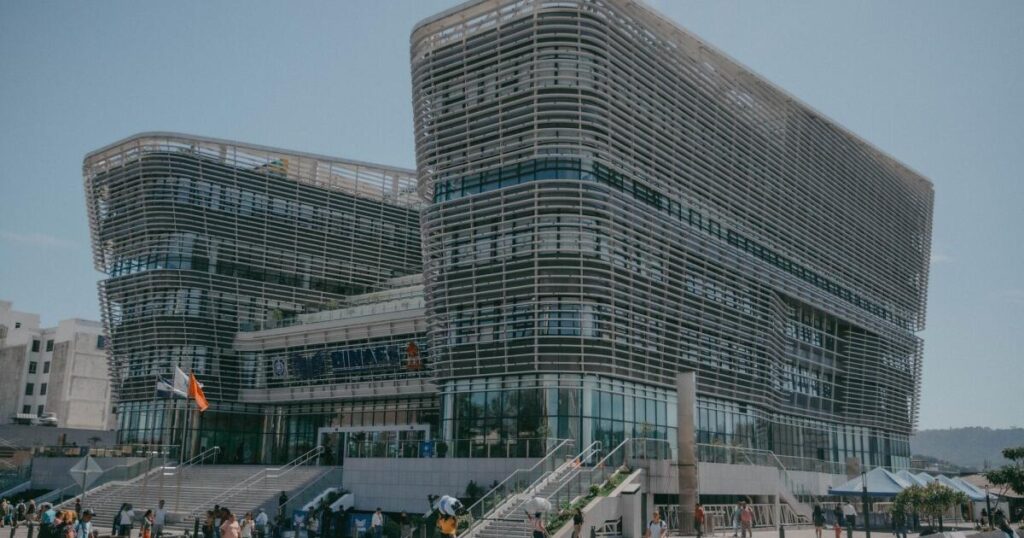
China also charms its way in through gifts. In San Salvador, the capital of Nayib Bukele’s El Salvador, a gleaming national library rises near the presidential palace, while cranes work on a 50,000-seat soccer stadium and crews prepare the ground for a nearby convention center — all Chinese donations.
The US-led Shield of the Americas coalition — whose members include Argentina, Bolivia, Chile, Ecuador, El Salvador, Guyana and Panama — is attractive to governments as a vehicle for deeper regional security cooperation with Washington. Yet all its members continue to depend on Chinese trade, financing or investment.
There is still a risk of resentment fueled by Chinese firms outcompeting domestic producers.
Mexico’s government approved tariffs of as much as 50% on more than 1,400 product categories from countries like China that are not party to free-trade agreements. Jorge Guajardo, a former Mexican ambassador to China, said the move reflected demands for action from Mexican industry rather than U.S. pressure.
“The region has been slow to understand this deindustrialization threat,” Guajardo said. “The U.S. understood it quickly.”
Ultimately, Latin American countries face “almost unbearable economic costs” if compelled to back away from their relationship with China, said Carlos Vasquez, Peru’s ambassador to China.
“We are forced to maintain a balance for the benefit of our national interests and our people,” he said. Align completely with either superpower, and “you’re going to lose.”
Dahl and Murphy write for Bloomberg.
The post Why Latin America won’t abandon China despite Trump’s pressure campaign appeared first on Los Angeles Times.