In the film and television business, writers are on the front line. We are often the first hired and the first to experience the harms of studio consolidation, which then impacts the projects that get made and what ultimately reaches the public.
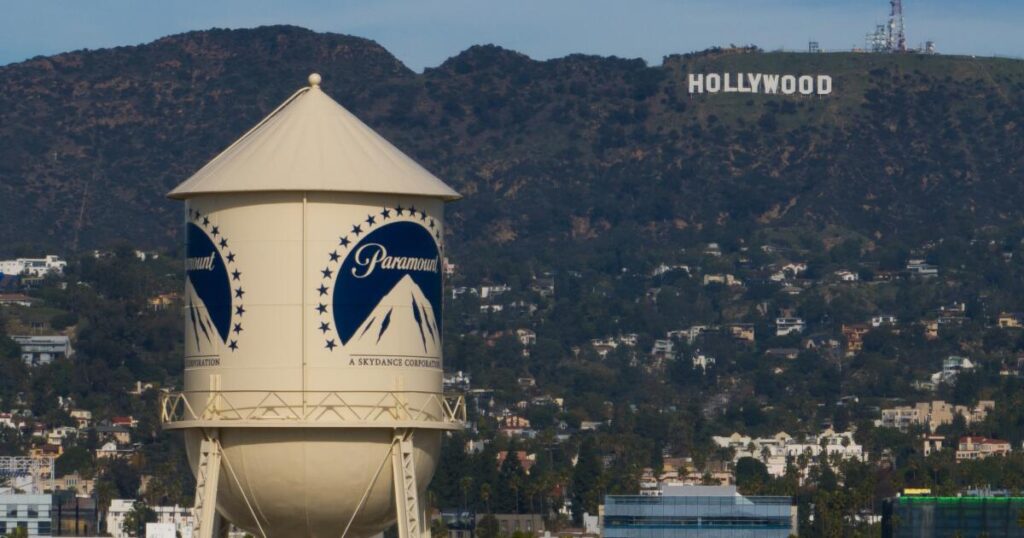
As experienced writers and leaders of the Writers Guild of America East and West, the two unions that represent our nation’s film and television writers, we have seen up close the harm that these mergers can do to our industry. That is why our unions filed a lawsuit last month to block Paramount Skydance’s proposed takeover of Warner Bros. Discovery.
Paramount has called the merger “industry defining.” At $110.9 billion, this deal would be among the largest transactions in entertainment history, combining two major studios into the industry’s largest buyer of film and television writing in the United States.
Our opposition to this merger is not about politics or anything other than preventing the unlawful concentration of market power in the hands of one company. We believe the deal violates federal antitrust law and would harm our members as well as limit choices for the public.
As we allege in our suit, Paramount and Warner Bros. together would control 35% of writing for big-budget theatrical films. The merged company also would dominate the market for television writing talent, becoming the largest employer of writers in episodic series and overall deals, gaining significant control over the careers and compensation of many of the industry’s most sought-after talents.
Paramount argues that it must merge to compete in an abstract market of “screen time” that includes user-produced online videos and social media content. The argument makes the market seem more competitive than it actually is. As our complaint says, this merger is illegal because it combines two major film and TV studios that compete for our members’ work, which companies like YouTube and TikTok do not do.
For writers, we do not sell our work as screen time. We sell individual scripts, negotiate deals and build careers in markets shaped by a small number of major studios that compete with each other to create the next global blockbuster or hit series. When a major studio buys its direct competitor, a bidding opportunity disappears, along with our leverage. This leads to lower compensation for all industry workers, inferior deal terms and reduced programming choices and diversity for audiences.
This proposed merger is the latest step in a decades-long wave of consolidation across the entertainment industry, one that has left a handful of companies in control of a vast collection of intellectual property, studios, networks and streaming platforms.
These companies make billions each year off of the films and television series we write, and this consolidation has increased their power to capture even more of the profits from our creative labor, as we have fewer options to negotiate with.
Audiences will pay a price as well. As the state attorneys general have alleged in their lawsuit to block the deal, the merger would result in Paramount controlling 30% of top-grossing theatrical film distribution and lead to three distributors controlling 75% of wide-release films. That means less choice for American audiences and fewer shared American theatrical touchstones.
Disney’s $71.3-billion acquisition of Fox in 2019 highlights what eliminating competition through corporate takeover can mean for writers and for audiences. Before the transaction, Disney and Fox’s 20th Century label combined to release an average of 25.6 wide-release films per year, according to Cinema United. After the merger, that number fell to just 12.6 wide releases per year, even excluding the pandemic years.
David Koepp, the screenwriter behind “Jurassic Park,” “Mission: Impossible” and, most recently, “Disclosure Day,” said the consequences were “immediate and categorical.” He added that the “buyer that Fox represented did not migrate to Disney. It disappeared.”
The Warner Bros.-Discovery merger followed the same pattern. In 2022, Warner Bros. justified the deal with promises of more investment into original content and opportunities for underrepresented storytellers. Instead, it led to billions of dollars in write-downs, thousands of layoffs and the cancellation of numerous films and series, including completed projects that never were released.
Paramount’s own recent history tells the same story. Its 2025 acquisition of Skydance was followed by $2 billion in cost cuts and the elimination of roughly 10% of its workforce.
To sell its next acquisition, Paramount has been making a new round of promises, including that the deal will lead to 30 theatrical films and 170 television series annually.
Those of us in the industry have heard these promises before: A larger company will invest more, create more and strengthen the industry. It does not bear out. Consolidation has not made the jobs better in this industry, it has made them worse.
Congress enacted the Clayton Antitrust Act a century ago to stop this kind of concentration before it happens. Under long-standing precedent, a merger of this scale and market share is presumptively illegal. Let’s not ask our enforcers to cave to a pressure campaign only to hasten the harms that will come to entertainment workers. The merger of Paramount-Skydance and Warner Bros.-Discovery must be blocked.
Tom Fontana is the president of the Writers Guild of America East. Michele Mulroney is the president of the Writers Guild of America West.
The post Why writers are fighting Paramount’s takeover of Warner Bros. appeared first on Los Angeles Times.