Rabbi Elie Kaunfer is the president and CEO of the Hadar Institute.
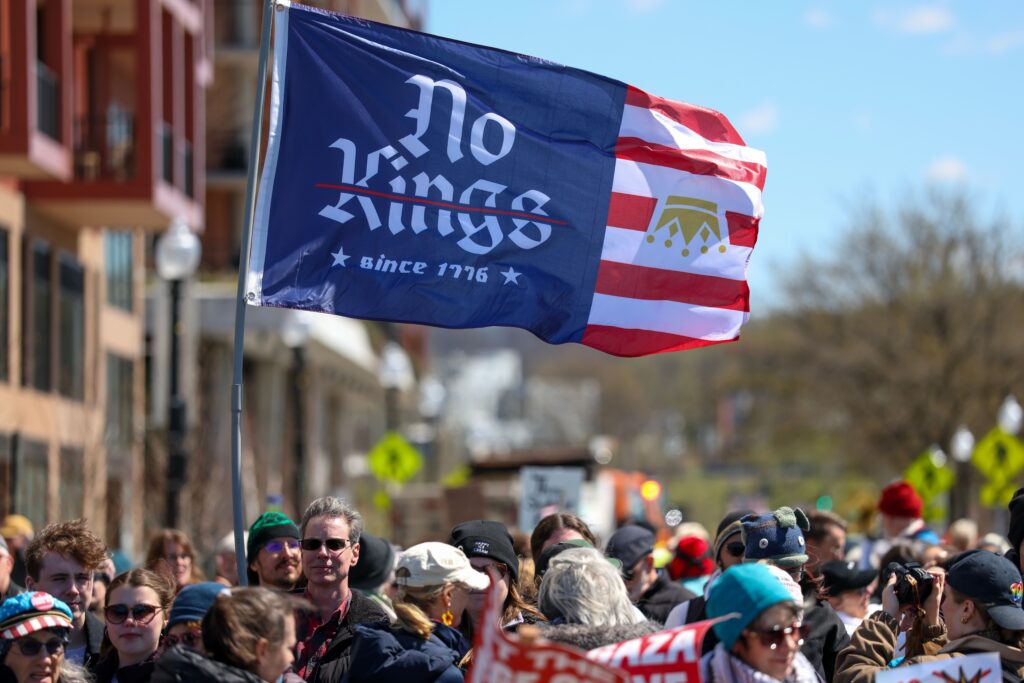
This has been a year of crowds chanting “no kings” in the streets of American cities. Whatever you think of the politics behind the slogan, the sentiment it expresses is both ancient and entirely reasonable: a suspicion of unchecked power.
I’m a rabbi, and in a few weeks, Jews in my community and around the world will observe Rosh Hashanah, the Jewish new year, and ten days later, Yom Kippur, the Day of Atonement. At the emotional center of both holidays is a word that recurs in their liturgies: king. We will crown God, ceremonially, as ruler of the universe. We’ll recite a prayer called Avinu Malkeinu — “Our Father, Our King” — numerous times.
To modern ears, especially American ones, this language may sound strange. We are suspicious of kings. Now we’re asked to bow before one all over again.
But 2,000 years before anyone printed a protest sign, the ancient rabbis who composed these words wrestled with the same discomfort we feel today.
Indeed, the rabbinic approach to God as King can be summed up simply: Whatever you think a human king is, God is the opposite.
Consider an old rabbinic legend about the moment before the world was created. God is deciding whether to make human beings, who will turn out to be, frankly, a great deal of trouble. The Torah itself, personified as a kind of adviser, makes the case for “yes,” and the argument is telling: If there’s no nation to praise the king, where is the honor of the king? God can’t be a king in a vacuum. A crown needs a kingdom. From the beginning, then, divine kingship is imagined as a two-way relationship. A king without a people is no king at all.
That idea became central to Jewish tradition through the “Our Father, Our King” prayer. According to a story in the Talmud, this appeal was born during a drought. One rabbi, Eliezer, performed the entire formal prayer for rain. Nothing happened. Then a second famous sage, Rabbi Akiva, brought forward a much more daring plea: Our father, our king, we have no king but you. Our father, our king, act for your own sake, and have mercy on us. The rain came.
Rabbi Akiva didn’t ask to be rescued for his own sake. He reminded God that God, too, had something invested in the relationship. And he fused two potent images: that of a father, whose bond with his child is unconditional, and that of a king, whose power is supreme. Put them together and you get the suggestion of something godlike: omnipotence attached to unconditional love.
Beyond softening the king into a father, Jewish tradition subverts human expectations of power. In the Bible’s most famous act of chutzpah, when Moses argues God out of destroying the Israelites after the sin of the golden calf, the text doesn’t say God was humiliated. Rather, it implies God was relieved to lose the argument. An autocrat hates to be challenged, but this king seems to welcome it.
To be sure, history remembers some human kings who cared for their subjects, including the downtrodden, but many others have been proud, cruel and self-aggrandizing. God models a different kind of kingship, one in which concern for the poor and the suffering is a defining feature. The divine ruler surrounds himself not with the famous and fashionable but with those who are in need. The author of Psalm 17 says to God, “In righteousness I will behold your face.” Because charity and righteousness derive from the same word in ancient Hebrew, rabbinic tradition reads this passage as, “In giving money to the poor, I will behold your face.” Even the poor are created in the image of God, and when we support them, we draw closer to God’s presence. Charity is an imitation of divine kingship.
Americans are understandably wary of kings. On the 250th anniversary of the Declaration of Independence, it may seem downright strange to celebrate a king during the most important Jewish holidays. But God’s kingship serves to highlight the insufficiency of any human king. His justice is a rebuke to every form of oppression. Long before crowds shouting “no kings” conflated kingship with tyranny, the rabbinic tradition proposed the opposite: that the true king was the furthest thing from a tyrant. Rather than mistreat his people, he draws close to them. Instead of ignoring their distress, he looks on them with kindness and mercy.
That’s a strange kind of king. It might also be the only vision of power worthy of respect.
The post Amid No Kings protests, I celebrate a different kind of kingship appeared first on Washington Post.