Andrew Lownie is the author of “Entitled: The Rise and Fall of the House of York.”
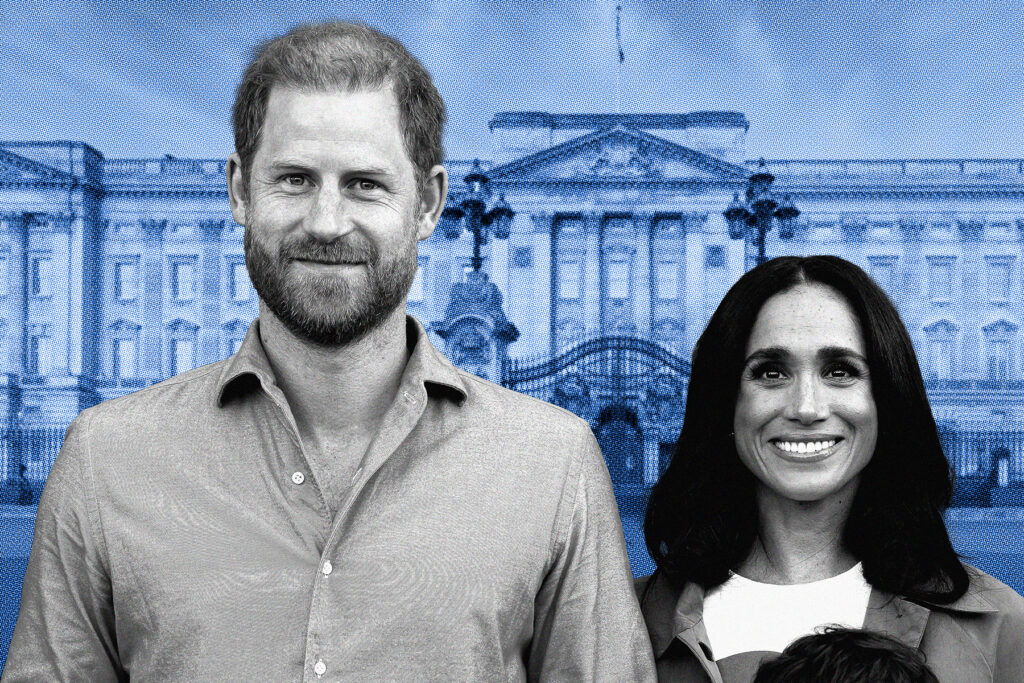
The surprising news that the Duke and Duchess of Sussex — Prince Harry and his wife, Meghan Markle — will be moving back to Britain after six years of self-imposed exile in the United States has sent shock waves through the royal family and the media.
Information is presently scant and more details are likely to emerge in the coming days, but the move is ostensibly to put their children, Prince Archie, 7, and Princess Lilibet, 5, in British schools. The family will live in a private, nonroyal residence, though whether they have bought or will rent is not clear. I’m told they are likely to live near Charles Spencer, the late Princess Diana’s brother, with whom they discussed the move some time ago. He lives at the Althorp House estate about 75 miles northwest of London.
Though the news hit like a thunderclap on Tuesday night in Britain, and King Charles III reportedly was informed of his son’s plans only on Sunday, the move must have been planned for some time — enrolling children in schools has to be done months in advance. The king undoubtedly will be pleased to have the chance to spend more time with grandchildren he has seldom seen. This is the culmination of “Project Thaw,” entrusted to Charles’s assistant private secretary, Theo Rycroft, to bring Harry back into the fold after years of estrangement following the couple’s “Megxit” from Britain.
So the news should not have caught everyone off guard. There have been signs for the past year that Harry was keen to set up his own alternative royal court in Britain. The royal commentator Richard Eden revealed Project Thaw last December, outlining how it involved not just the king but also government officials. That same month, American journalist Rob Shuter quoted a source close to Prince Harry as saying, “Harry wants legitimacy. He wants to operate in the U.K. on his own terms — meetings, charitable work, high-level engagements — without being treated like a guest in his own country.”
Harry’s return may be occasioned simply by a desire to be closer to a father, who is 77 years old and has been treated for an undisclosed form of cancer at least since 2024. But the move may also be an opportunity for Harry to get his feet under the royal table while his father is still in power and before his brother, Prince William, assumes the throne. The two brothers remain estranged, and William seems likely, as monarch, to remove Harry’s titles and those of his children.
The royal family has a recruitment crisis. The only working royals under age 60 are Prince William and Princess Catherine of Wales. Their eldest child, George, is only 13. William’s uncle, the former Prince Andrew, is now just Andrew Mountbatten-Windsor, disgraced and exiled for his involvement in the Jeffrey Epstein sex scandals. Plans to enlist Andrew’s two adult daughters, Beatrice and Eugenie, as working royals have been suspended amid concerns about their business activities. There is a need for royal reinforcements.
After moving back to Britain, Harry and Meghan may finally achieve the semi-royal “half in, half out” strategy they argued for six years ago but were refused by Queen Elizabeth II. He will likely focus on charity work, including next year’s Invictus Games, the international sports event he founded for wounded, injured and sick military personnel and veterans. Meghan is almost certain to continue overseeing her lifestyle brand, As ever, which she launched last year in conjunction with Netflix, a partnership that ended in March.
The couple’s apparent hope is that they will be called on to fill in at royal garden parties as the palace tests the public mood, with an eventual return to royal duties.
Given the scathing comments Harry and Meghan have made in the past about the royal family and Britain, alleging racism and mistreatment, their new U.K. restart attempt may seem cynical and hypocritical, but rewriting their narratives comes easily to them. In the end, Harry and Meghan’s American experiment did not work out; now comes another chapter, with the prodigal son’s return.
The initial reaction by British commentators and the public to news of the couple’s return has been overwhelmingly negative, but the British royal family has always played the long game. The present queen, Camilla, was once vilified; now she is a national treasure. As Harry has tried to mend relations with his father, the prince’s approval rating rose six points in the past year, with 33 percent of the British public viewing him favorably, according to YouGov polling last month. But that’s still far from a majority, and Meghan’s favorability rating languishes at 22 percent.
The couple must hope that attitudes within the family and country will eventually change. Perhaps they will be helped by a wave of sympathy next August as the nation marks the 30th anniversary of Princess Diana’s death.
The post With Prince Harry’s reverse ‘Megxit,’ the prodigal royal son returns appeared first on Washington Post.