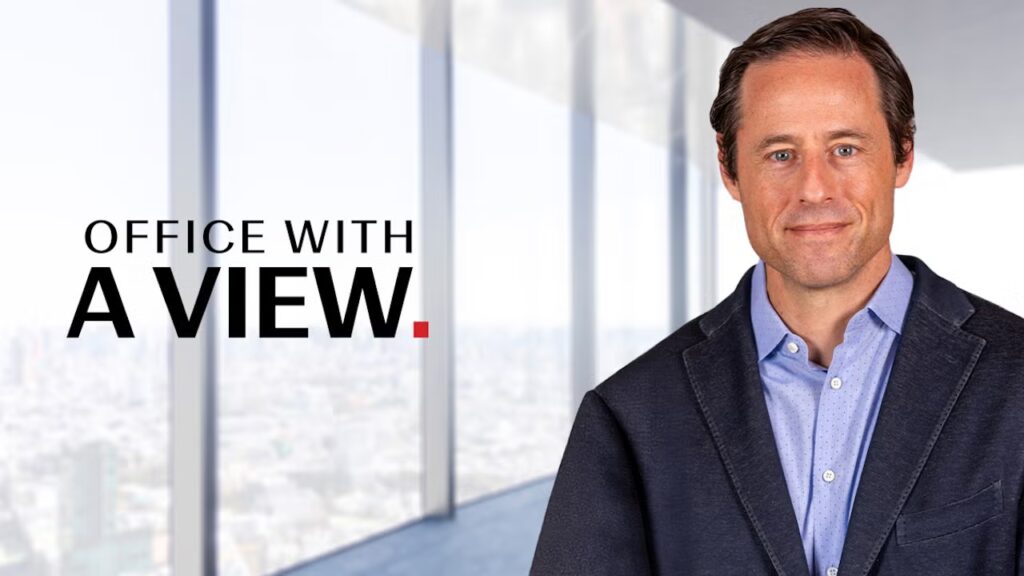
Jesse Sisgold has been a lifelong fan of both sports and movies, which makes him the perfect person to lead the team at Paramount Sports Entertainment.
As former president and chief operating officer of Skydance Media and chairman of Skydance Sports, the president of PSE is now in charge of sports storytelling for CEO (and friend) David Ellison’s media company — even if those stories wind up landing somewhere other than Paramount+ or CBS.
The division has projects like Hulu’s “The Land,” Apple TV’s “The Dynasty: UConn Huskies,” Netflix’s “WWE Unreal” and biopic “Mr. Irrelevant: The John Tuggle Story” in various stages of production, with much more on the way. Plus, Sisgold & Co. even received a 2026 Emmy nomination for Outstanding Documentary or Nonfiction Series for “Rafa,” based on tennis icon Rafael Nadal.
And while the executive also admitted it’s “pretty odd” seeing Ellison’s name pop up on the local news daily, he is confident Paramount Sports Entertainment will remain laser-focused on delivering commercially and critically appreciated content and experiences at scale.
Check out TheWrap’s full conversation with Sisgold, slightly edited for brevity and clarity, below:
How did you get your start in Hollywood before landing at Skydance and now Paramount?
I had an unorthodox path because, honestly, Skydance was my first true Hollywood job. I was born in a hippie household in Marin County; surf, skate kid. I thought, “Wow, how could I ever be Jerry Maguire?” I’ve always been a huge sports fan, watching movies every day after school. Sports agent or producer — I don’t know if either of those are real jobs, I don’t know if they’re attainable, I don’t know anyone in those worlds. That’s how it started, the passion was there.
In college, I studied both econ and theater. But I come from a humble background and didn’t know people here, so I went to law school, not necessarily to be a lawyer, but maybe to skip some steps and actually get into this game that we’re in now. So I come out of law school and I start practicing. I got moved to L.A. because the dot-com bubble had burst from the bay, which was one step closer to the action, but not quite sure how I get into it. In Hollywood, so much of it is relationships. So over time, doing hard work, doing legal work I didn’t care to be doing, eventually I was introduced to David as a client, and that’s how it started. I first started advising and helping David from the outside in 2013 and then joined him full-out Jan. 1, 2014. Twelve people, bungalow on the Paramount lot, ironically, and built an incredible ending of that growth stage by merging with Paramount and now, obviously, an opportunity to expand there.
In that is some of my passion, which is sports, storytelling and building. I realized I really love putting the pieces together. Part of why I’m so excited here with Paramount Sports Entertainment, which houses the Skydance Sports label, is we have this opportunity to be part of a big rocket ship but still be entrepreneurial and innovate something from scratch, which this Paramount Global universe didn’t have. So that’s where I get really excited.
So what is the difference between Skydance Sports, Paramount Sports Entertainment and CBS Sports?
The biggest difference is that we are complementary, in essence. CBS Sports is, I would argue, the highest-quality offering for live entertainment. What they do with the NFL, March Madness, what they’ve been doing for nearly 100 years for the PGA and the Masters, we’re not touching that; we are meant to supplement that and bring in a broader demographic.
We are really focused on where sports meets entertainment, meets culture, meets music, meets food. It’s not pure live sporting event, it’s everything else that touches sport. We are the primary unifier of sports storytelling at the company, and live events and experiences, and really supporting the overall family. CBS Sports and Paramount+ are primarily focused on putting out incredible live sporting opportunities for audiences. Together, we have the opportunity to really fulfill the complete ‘flywheel,’ which I think gives us a competitive advantage to some of the other platforms that we compete against.
When you’re doing scripted, are you trying to make something for a sports fan that an average viewer might also enjoy, or are you trying to make a “real” TV show that a sports fan might happen to like?
More of the latter. If we go back to the Skydance Sports origin story, we saw real opportunity where streamers were actively looking at live sports and news as kind of the last bastions of traditional cable. In making moves as they’ve been doing with live rights, you’re potentially bringing in a much bigger, broader demo than you maybe had for a per show-type analysis, so that’s a great opportunity for storytellers to expand that demo that may already — or not — have an interest in the sport.
One of our primary relationships is with the largest league in America. The NFL and NFL Films are incredible partners to us, and we believe the combined expertise of NFL Films and Skydance Sports is paying dividends for a broadening audience. Case in point, we currently have over a dozen projects with NFL in various stages of production.
They look at us as the high-premium global storyteller and an opportunity to expand their demographics. Playing games overseas certainly helps, but learning about the players and learning about their experiences in a way that’s more relatable — whether you’re a big football fan or not, in this case — all of a sudden, you’ve just extended your audience. Then longterm, ideally, that audience may now have more reason to tune in, in our case, to a game on CBS on Sunday than maybe they had prior.
And where are you at currently in production?
When we were putting together the thesis for building out Paramount Sports Entertainment, which already had a premium sports storytelling brand in Skydance Sports, we thought we could expand around it with live event opportunities to distinguish us from Sunday sports. We really wanted to focus first on the audience and what its viewing habits are doing, where its trends are going and how we can best satisfy it where sport meets entertainment.
The great news for us is since 2019, sports viewing has gone up significantly. There’s often an argument that there’s been a glut of sports storytelling and sports docs, etc. I would argue that has expanded the fandom significantly in multiple sports, and everyone’s happy about that.
We have 20+ projects slated to release within the next year across 12 distributors — covering scripted film, scripted TV, documentaries, formats and immersive narratives. We’re profitable, we’re prolific. I hate to focus on the critical side of this, but it is something we pay attention to as a sign of our growth and the acknowledgement of the audience and those that judge our content: We’ve seen our Sports Emmy noms go from one to two to 10 this year, and we just earned an incredible primetime Emmy nomination for our “Rafa” documentary.
When making unscripted, what’s the secret to doing something that the audience wants to see related to sports when the sports themselves are already unscripted?
If we’re just trying to capture that same exact duplicative audience that sits down on Sunday and watches that game, it’s a very fair question. Our goal is: Let’s get that audience and go well beyond that audience, because we’re bringing human elements. I had more people appreciate and really lean into “Rafa,” not because of an incredible set of tennis clips — they know he’s a champion, but they got to see what a champion has to endure. What are you willing to do to still continue to chase that dream? That’s a relatable concept, that’s a way in for people. Then, in a perfect world, they see the French Open on and maybe they tune in when they never were before.
You have “Mr. Irrelevant” and “The Land” both this season. How do you see things moving forward with other sports outside of your NFL partnership?
We couldn’t be more excited. “The Land” is our first scripted series for Skydance Sports, and we’ve seen all the cuts and we are incredibly excited about what’s coming for Hulu. I think that will be an opportunity to really bring in a broad audience who loves Dan Fogelman, who loves drama, and you will learn something about what it takes to be a football player in a football organization as part of that.
We’ve done movies before, including “Air.” Again, I don’t have to be an incredible basketball player or a basketball fan to connect with those characters, so we loved it as an initial calling card. I think “The Land” will serve as something similar, while “Mr. Irrelevant” is just an incredible, heroic underdog story that I think will make you cry. Could we have something that touches basketball next year? Of course. I mean, probably three-quarters of our slate is non-football.
Why do sports seem immune to the contraction that other forms of entertainment face?
I don’t have the perfect answer for that, but what I know is it’s a pretty intense time on the planet right now and sports hit at every emotion. For me, I am such a sucker for an underdog story, and I’m not sure they are better or more dramatic anywhere else than what you find in sports. There’s something that is just so emotionally gratifying. There’s also a massive unifying factor; we can all watch it come together. It’s emotionally really satisfying even through the many hard things that people are going through right now.
As a champion of sustainability, how have you implemented that concept here?
I should credit my wife, she is on the board of Conservation International. But it’s pretty simple: We just want to make sure there’s enough food, water and air for everyone going forward. Once we have that, then we can sort of settle everything else, hopefully. Also, I grew up a surfer, I’m a big ocean and mountain person and want to preserve that for my kids and beyond. So we always have a mindset towards it, we utilize our board roles, we bring in those consultants.
How does your current job title and role compare to your prior work at Skydance?
They’re similar in that I still am absolutely focused on staying close to the content and building both an organization and significant value for the ownership organization. That’s a total parallel. The difference here is I’m not across multiple divisions and multiple disciplines. I’m just focused on building the ultimate sports entertainment platform, which is of course to the benefit of us, but also to the benefit of all the leagues, teams and subject matters. We are obviously a key, No. 1 priority supplier for our home team and home channels, but we are focused on finding the best platform for the project, and a significant amount of our content is for third parties.
How has it been seeing the Paramount-Warner Bros. Discovery merger dominate the news cycle as of late?
A mentor told me that your success is directly attributed to how comfortable you can be in times of total discomfort. So, if you follow our company’s growth, you know that I’ve had a few years to really work on those skills and I feel really appreciative of what I have, who I get to work with, what I get to work on … and yet I think it’s fair to say we are ready for more headlines on the work and less on the rest. I wish the merger wasn’t the natural first conversation, but we certainly understand.
Lastly, what’s next on the horizon?
I think we have a force mentality. We have to operate as if we are going to be a standalone. It doesn’t mean we can’t dream, it doesn’t mean we can’t make plans. But we here at Paramount Sports Entertainment are just primarily focused on building our business plan as we want, as we were. We will always be offering scripted film, scripted television series and a slew of docs and formats. We are really seeing a lot of growth in the live event business … we actively partner with the Skydance Games and Paramount Games groups.
I can see moving to three or four significant events next year, so we like that as a growth engine. We see the interactive business picking up. We see opportunities with CBS Sports and CBS Digital to be coming together around how we can layer in more on the fantasy embedding side. We see a lot of upside, merger discussion aside. Obviously, if the merger were to happen, there’s just more turf, more opportunity, more of an international presence. These are all great for storytelling.
The post Paramount Sports Entertainment Chief Ushers in New Era of Storytelling and Experiences appeared first on TheWrap.