
It’s 1 a.m. in Tuscaloosa, Ala. and a coven of barely legal coeds are divining the fates of their peers in the basement of a sorority mansion.
They pore over data sheets, interview notes and custom-made “grading” software that ranks wannabe sorority sisters in a carefully calibrated scoring system.
They cross-reference the social media channels of 17-year-old girls, swiping through grids of tanned, smiling teens on Instagram and TikTok.

And then with a nod from their leader, they wordlessly delete the “bottom girls” who won’t make the coveted sorority’s final cut — even though they’ve never even met them.
Welcome to the world of the “Basement Girls,” a secret society of young women who eat data for breakfast like Pop Tarts, and lounge in Parke sweatshirts and Uggs while their sisters are upstairs performing wildly acrobatic dances for potential recruits — and of course, for TikTok viewers — wearing corset tops, heels and more makeup than an Ulta Beauty kiosk.
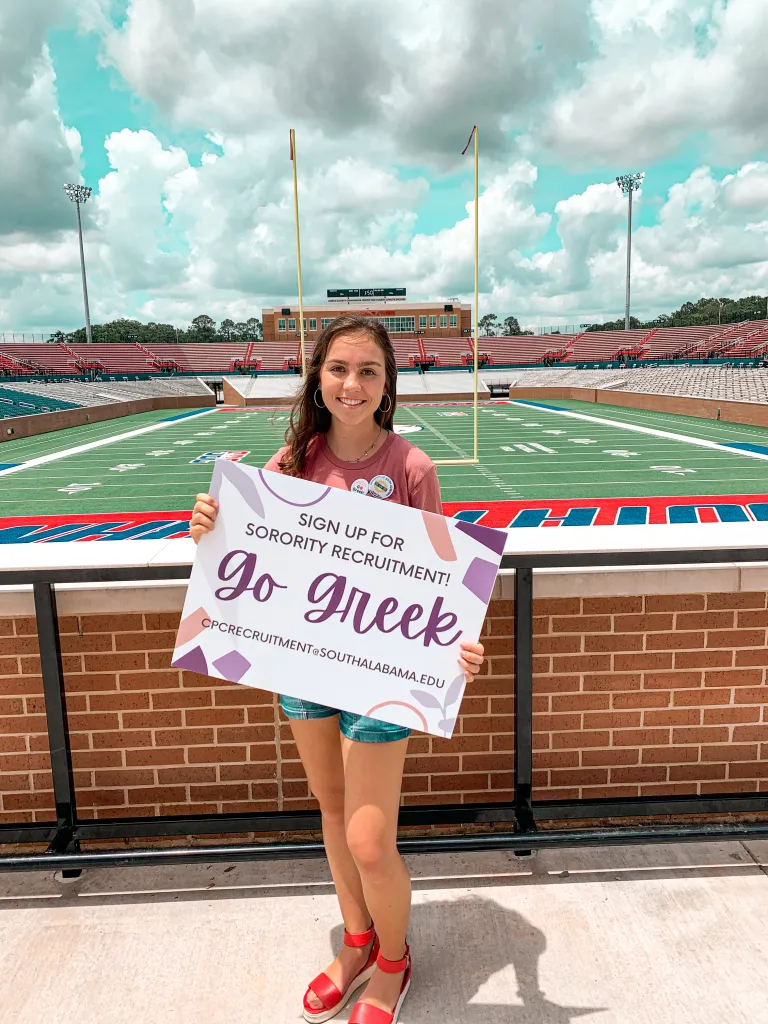
The silent power imbued in these Basement Girls makes it a coveted gig, said Olivia Bourgeois, a former sorority girl at the University of South Alabama. The social media executive now makes TikTok videos explaining the behind-the-scenes of rush to sorority hopefuls.
“You got to know everything that was going on,” she told The Post, including “what every conversation was about, who was talking to which [girl], the results of the voting.”
Bourgeois explained that during a typical sorority rush, most collegiate members are the “floor girls,” tasked with making their chapter look the most exclusive (or at least, the most fun and popular) to potential new members and TikTok swipers alike.
But it’s the Basement Girls, those hidden from the prying eyes of Instagram, that select the recruits of the country’s most exclusive sororities.
These groups teem with young women who are hand-selected for their brains and social know-how to manipulate every move of a collegiate hopeful’s rush experience, from the sisters they meet to the topics they discuss and the dirty laundry that’s either swept under the rug — or not.

“We are the puppeteers of rush week,” an Iowa native named C. told The Post. She pledged an elite sorority at a large midwestern college and served as a Basement Girl in her chapter for three years — elaborating that everything from rush “talking points” to conversation timing was carefully controlled by the Basement Girls.
C. would know. Now a consulting executive for a top-ranked corporate firms, she also serves as a volunteer “recruitment advisor” — or in her words, a “professional basement girl” — for the national headquarters of her college sorority, which she chronicles on her website, The Rush Guide. She estimates that she has run “over 40” sorority rushes from the basements and back rooms of exclusive, palatial houses across the country.
C. cannot share her full name because national sorority organizations are famously secretive — and litigious — when it comes to recruitment processes. Her name, occupation and background have been independently verified by The Post through pay stubs, business cards and LinkedIn.
“You can say that Basement Girls are like the CIA of sororities,” said Bella Lee, 24, who served on her chapter’s secret circle of “logistics consultants” during her college years, but declined to reveal the chapter, citing the same confidentially concerns as C.
“We know everyone coming and going from the rush rounds, even though they’ll never meet us. We know where you went to high school, what sport you played, what your major might be,” she said.
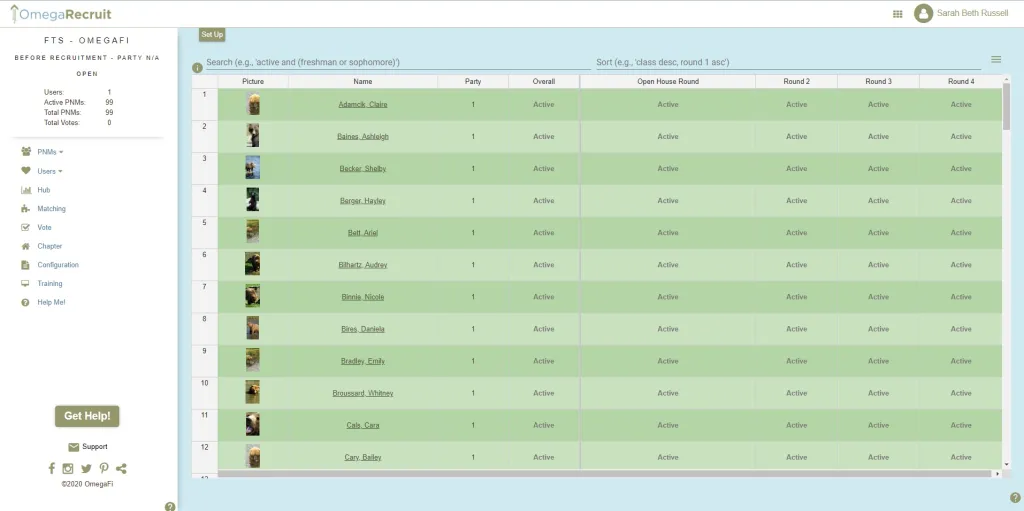
Lee explained that months before rush even starts, that intel is compiled by the Basement Girls into confidential portfolios of each member, which include photos, biographical information, social media highlights, and any notes from existing sorority sisters about their potential.
“It was our job to see which girls, from the looks of it, would be great in our chapter,” she told The Post.
Trisha Addicks, a professional recruitment coach for wannabe sisters and author of The Rush Bible, told The Post that Basement Girls give potential new members — called PNMs — an initial score before they even walk through the house.
“It’s based on her high school GPA, her social media accounts, her application and her letters of recommendation from alumni,” Addicks explained. “Then during rush, these PNMs get a daily score that needs to be analyzed in real time.”
Like a reality TV audition, the teens are then evaluated by sorority sisters on their conversation skills, ability to connect with their peers and their appearance — or in Addicks words, “how they present themselves.”
That includes how appealing they might be to fraternity chapters, whose tacit approval often determines a sorority house’s standing within the Greek system.
It’s up to the Basement Girls to track the girls’ impressions, positive or negative, and develop a “callback list” that determines who lives to see another Lululemon-clad day.
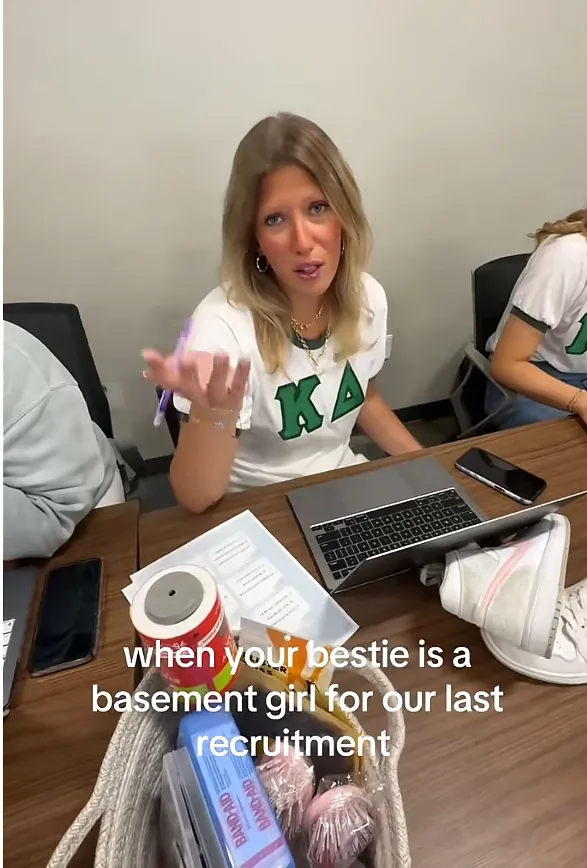
Most importantly, Basement Girls have veto power if a young woman charms her way through rush while hiding an addiction, an undesirable romantic partner — e.g., a sugar daddy — or a past high school scandal like cheating or bullying.
“You’d be surprised how often cocaine comes up,” C. sighed, noting that for some houses, frequent drug use is automatic grounds for dismissal. For others, it might be seen as a boon that gives the recruit a leg up on her “social graces” score.
C. also recalled a time when the Basement Girls did some online investigating on a “great girl who didn’t seem to have much of a resume” and realized she’d been trying to hide a key fact about her background: This potential sorority girl was the daughter of a billionaire CEO.
“She didn’t want to be judged differently for her money!” said C. “I respect that, but of course, we found out… That was our job.”
Bourgeois said the Basement Girl assignment was a “dream” for most sorority sisters, even though videos mocking the unseen women as “chopped” and “unc” — Gen Z slang for gross and ugly — have millions of views on TikTok.
“Some people think that the ‘less attractive’ girls are put in the basement,” she conceded, “but these are actually just the most organized, most responsible girls.”
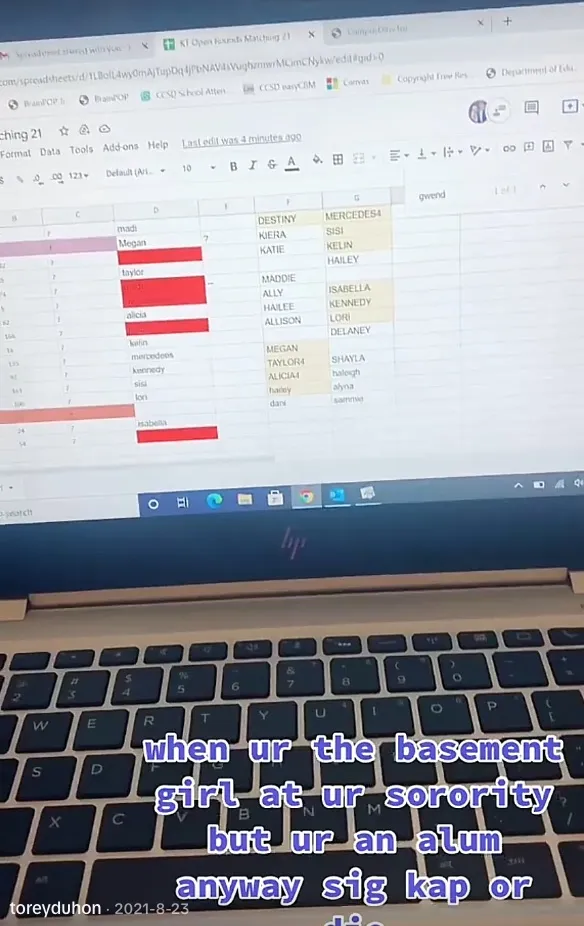
“I have seen very beautiful girls, model girls, be Basement Girls,” said Addicks, the recruitment consultant. “There’s no correlation. You’re not down there because you’re hiding. You’re down there because you’re the one with the power.”
“It’s the biggest badge of honor,” said Lee. “Not having to do TikTok dances? Not having to smile for 10 hours straight? Almost everyone wants that, especially if you’re the type to have your social battery drain a little quicker. But to lead a sorority logistics team, you have to be the smartest and most trusted girl in your whole house.”
In fact, Basement Girls are so fearsome that corporate recruiters often seek them out post-college.
As corporate assistant Libby Basham told her TikTok followers, “As someone who does hiring, I think that if it came down to two applicants and one person was 100% qualified for the job and the second person was 75% qualified, but one of their skills was that they were a basement girl, I would give it to the basement girl… If you can handle that, you can handle anything.”
Basement girls rule the world. #fyp #foryou #rushtok #rush #secrush #basementgirls #sorority #sororityrecruitment #hiring #hiringmanager
Professional rush consultant C. agreed.
“After college, I worked at a global workplace consulting firm — a company harder to get into than Harvard. At 19, I had run a team of 10 people in a high-stress environment using data. I used my experience being a Basement Girl to get the job.”
The post Meet the ‘Basement Girls’ who run college sorority rush’s secret power structure: ‘We are the puppeteers of rush week’ appeared first on New York Post.