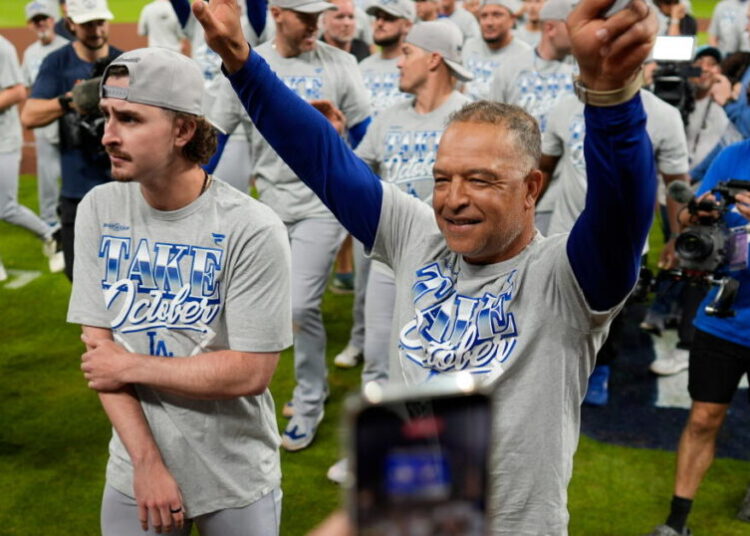
You can buy “Support our troops” T-shirts, baseball caps, garden flags, magnets, throw pillows, stickers, key chains and dog toys.
That’s all swell, but … what does it mean to actually support the troops? What do they really need?
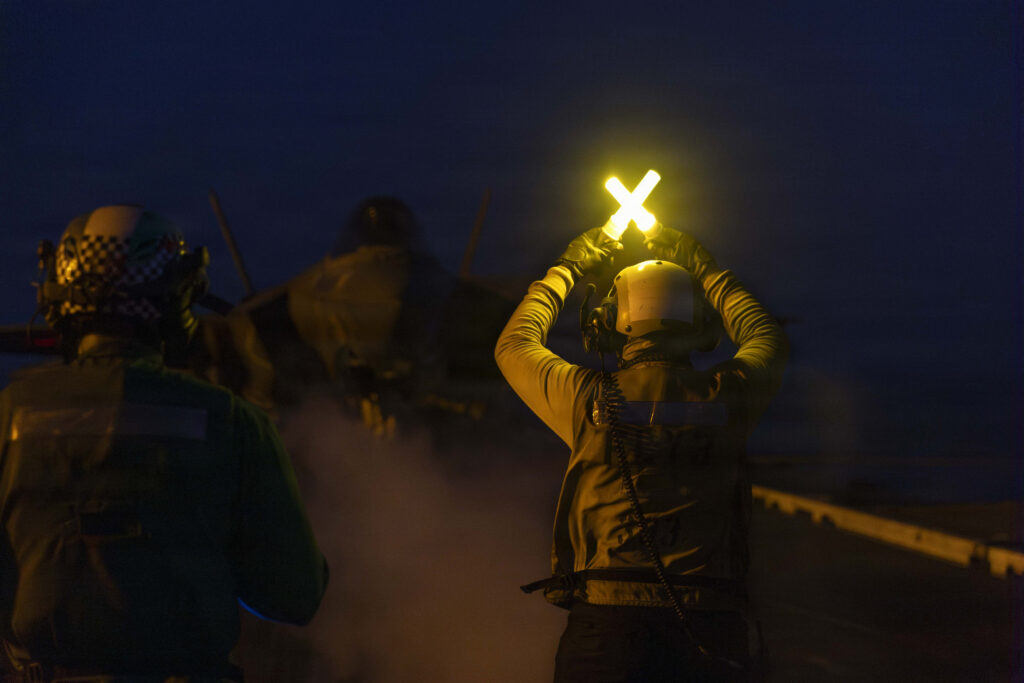
The aircraft carrier USS Abraham Lincoln and its crew of roughly 5,000 sailors and Marines are on a deployment that began Nov. 21, 2025 — approaching nine months. On July 6, the ship marked its 207th consecutive day at sea, breaking a record set by the aircraft carrier USS Dwight D. Eisenhower in 2020.
The Lincoln is finally making its way back to the United States. On Sunday, Adm. Brad Cooper, head of U.S. Central Command, wrote about his weekend visit to the ship in the Wall Street Journal. “The crew is tired,” he wrote, “but they continue to fire on all cylinders. History will record this deployment as one of the most operationally intense and consequential of the modern era.”
Not every ship sets a record like the Lincoln, but long deployments aren’t as rare as they used to be. The USS Gerald R. Ford set the post-Cold War record for longest deployment, with port calls, departing from Norfolk on June 24, 2025, and returning on May 16, 2026, after 326 days — the longest carrier deployment since the Vietnam War.
A standard U.S. Navy aircraft carrier deployment typically lasts six to seven months. In February, Adm. Daryl Caudle, chief of naval operations, said the Navy’s aim is to establish predictable schedules that include a “seven-month deployment.”
Last week, the Military Times and Stars and Stripes reported that sailors on the Lincoln were attempting to throw themselves overboard. From the outside, it’s hard to tell whether these individuals are extreme outliers or deeply troubling signs of a ship, and a larger Navy, under the intense strain of being asked to do far too much with far too little for far too long.
During a press availability, Defense Secretary Pete Hegseth declared that the reports are “completely misrepresented. Listen, we make sure that every ship, every crew, every captain has everything we can provide them at every single moment. Some deployments are longer than others, and I have more respect and gratitude for those sailors than anybody.”
Friday, President Donald Trump responded to questions from reporters about the long deployment and sailors’ conditions with all the grace and empathy we’ve come to expect from him.
Q: Family members of U.S. service members are concerned about the conditions on board the USS Lincoln.
Trump: Well, no, that ship is moving. No, they’re not. That ship is moving right now, or very shortly, and it’s being replaced with another very similar ship.
Q: Have deployments gone on too long? Are you worried about the mental health?
Trump: No, not nearly long enough.
In March, the Government Accountability Office released a new report concluding that “U.S. military readiness has been degraded over the last 2 decades due to a variety of challenges, including maintaining existing systems while acquiring new capabilities.”
Very few people in Washington pay much attention to 65-page GAO reports, and the GAO’s methods leave no stone unturned. But the report — designed to focus on problems — paints a pretty grim picture of the conditions our armed forces deal with: short-staffed ships, insufficient training, “poor living conditions in some military barracks — such as the presence of mold, broken fire alarm systems, and extreme temperature” and non-combat accidents attributable in part to “inattention, lapses in supervision, and not following procedures.”
In 2024, the GAO reported that “for over a decade, DOD surveys have found that the majority of service members report sleeping 6 or fewer hours per night.” According to the current report, “the Navy also cited fatigue as a factor in recent investigations into the loss of an F/A-18 Super Hornet and a collision between aircraft carrier USS Harry S. Truman and a merchant ship in 2025. The Navy’s investigation into the Truman collision, in particular, cited fatigue as a key factor … and cited ship personnel who described a ‘just get it done’ atmosphere aboard the carrier. While no sailors were injured or killed …, the carrier experienced considerable damage, and the Navy relieved the Truman’s commanding officer following the incident.”
Every GAO report includes tall stacks of recommendations, and according to that March report, some have been adopted while others have not. But judging by the reports coming from the Lincoln and the pattern of longer deployments, the basic problem of exhausted, overstretched soldiers and sailors persists.
It’s easy to look at a Pentagon budget of nearly $1 trillion for the current fiscal year and a proposed $1.5 trillion for the next and assume that the U.S. military has all the resources it could ever need. Alas, that is not the case. Our troops deserve funding, but they also merit a realistic operations tempo — a pace shaped in large part by the decisions of whoever is sitting behind the Resolute Desk in the Oval Office.
It would probably mean more to the troops than a throw pillow on your couch.
The post The best way to support our troops? It takes more than a T-shirt. appeared first on Washington Post.